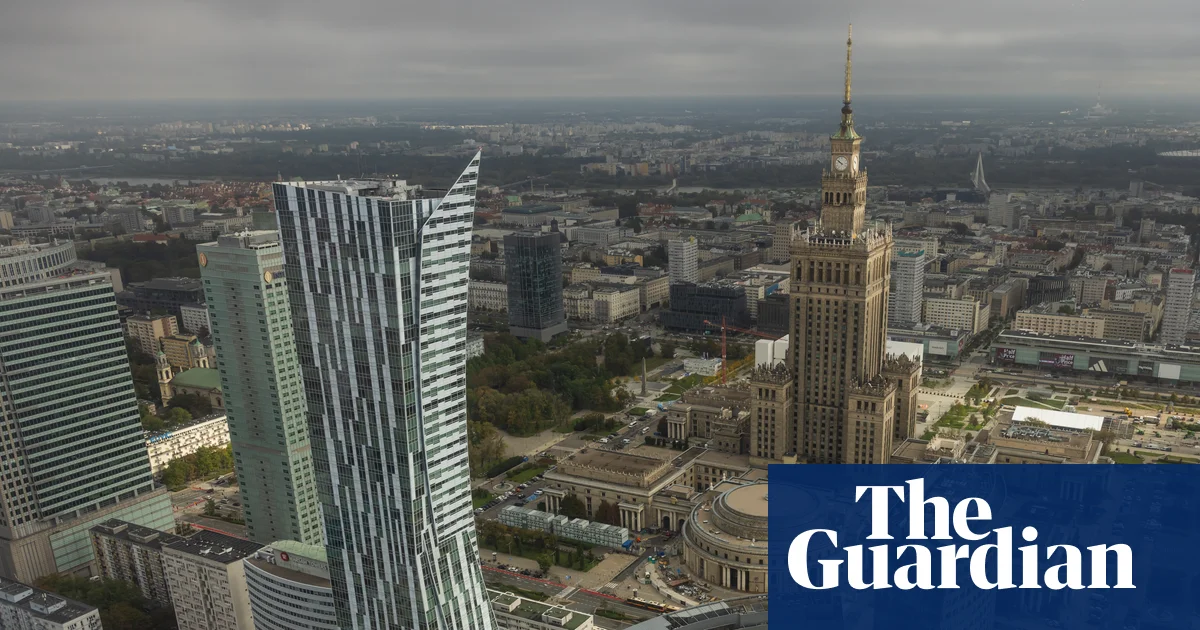
Above the rain-soaked streets of Warsaw, the observation deck of the Varso tower overlooks Joseph Stalin's gift to Poland that has divided opinion for decades. This was reported by Qazaqyia.kz citing The Guardian.
For some, the Soviet-era Palace of Culture and Science is a drunk confectioner's nightmare; standing as a relic of oppression that should have been demolished. For others, it is an icon on the skyline and a monumental warning from history.
For the managers of the Varso — completed four years ago, as the tallest building in the EU — with its 310m-high spire rising symbolically above its Stalinist neighbour, it is a waypoint on Poland's rapid path to economic prosperity.
"We look down on it," says Cezary Błaszczyk, the managing director of HB Reavis in Poland, which owns the tower, gesturing at the palace opposite. A few months ago a slackline walker traversed the 500m gap between the buildings. "It was a symbolic walk from the past to the future," says his colleague Natalia Kasperska.
"Since we are higher and taller than the Palace of Culture, we treat it as: 'We got over communism, and now we are a country with a strong economy,'" Błaszczyk says.
Over the four decades since regaining its independence from Soviet-dominated rule, Poland has been transformed. Excluding oil-exporting states and financial hubs, incomes have converged with western levels at the fastest rate in the world; from 40% of the EU average in the mid-1990s to 81% last year.
National income surpassed $1tn (£755bn) last year, ranking Poland among the world's 20 largest economies. International Monetary Fund projections show income per capita will soon overtake Japan and Spain.
"Four decades ago, we were in — excuse my English — deep, deep shit," says Marcin Bosacki, the Polish deputy foreign minister.
Stirring a cup of tea and lemon in his opulent Warsaw office, he recalls queueing after school in the 1980s for up to five hours to buy butter and meat as the communist government imposed martial law.
However, the Gdańsk shipworkers' Solidarność movement and Pope John Paul II's 1979 pilgrimage to his home country paved the way for Poland's transition to democracy in 1990 and an "economic miracle". Integration with western institutions, including Nato in 1999 and EU accession in 2004, also helped.
For years, many Poles chose to emigrate to earn more abroad, in a brain drain accelerated by EU membership. Polish plumbers became shorthand in Britain for foreign labour amid the political battles over EU freedom of movement before the Brexit vote.
Now Britons are increasingly likely to have their taps fixed by Romanians and Bulgarians, after a surge in the number of Polish nationals leaving. In each year since 2021, when Brexit was enacted after a year-long transition period, twice as many Poles left the UK than arrived.
Meanwhile, Germany recorded more non-Germans moving to Poland in 2024 than heading in the opposite direction for the first time on record.
On the Varso's 44th floor, in the Warsaw practice of Foster + Partners, Jedrzej Kolesinski and Krzysztof Gornicki are among those returnees. Both moved to London in their 20s to work in the British architecture firm's head office — where they led the design team behind the tower they now occupy.
Gornicki says Poland has changed dramatically in the years he was away. He always wanted to return to contribute to the country, and raising a family near his parents in a safe, green city that is more affordable than London also has its plus points. Now the pair are working to design Warsaw's new airport — the biggest greenfield infrastructure project in Europe.
"You can work globally from one location. In London we worked on projects from North America to Asia … right now, we're doing the same thing, just from Warsaw."
On the streets below the Varso, the sights and sounds of progress are unmistakable. Modern electric trams glide past skyscrapers, there are cranes and construction work, giant advertising boards, and dockless e-scooters.
The traditional working-class bar mleczny (milk bars) still do a roaring trade serving beetroot soup and Polish dumplings. But at the oldest, Prasowy, orders are taken on a digital touchscreen.
Once an asphalt desert designed for columns of Soviet tanks, the old Parade Square surrounding the palace has had a green makeover. Further development is planned to bolster Warsaw's bid for the 2040 summer Olympics.
There are also growing pains. Just as the facades of Warsaw's medieval old town — rebuilt from the rubble of the second world war — conceal 20th-century concrete, Poland's stellar growth obscures tensions. The influx of global capital has driven up living costs.