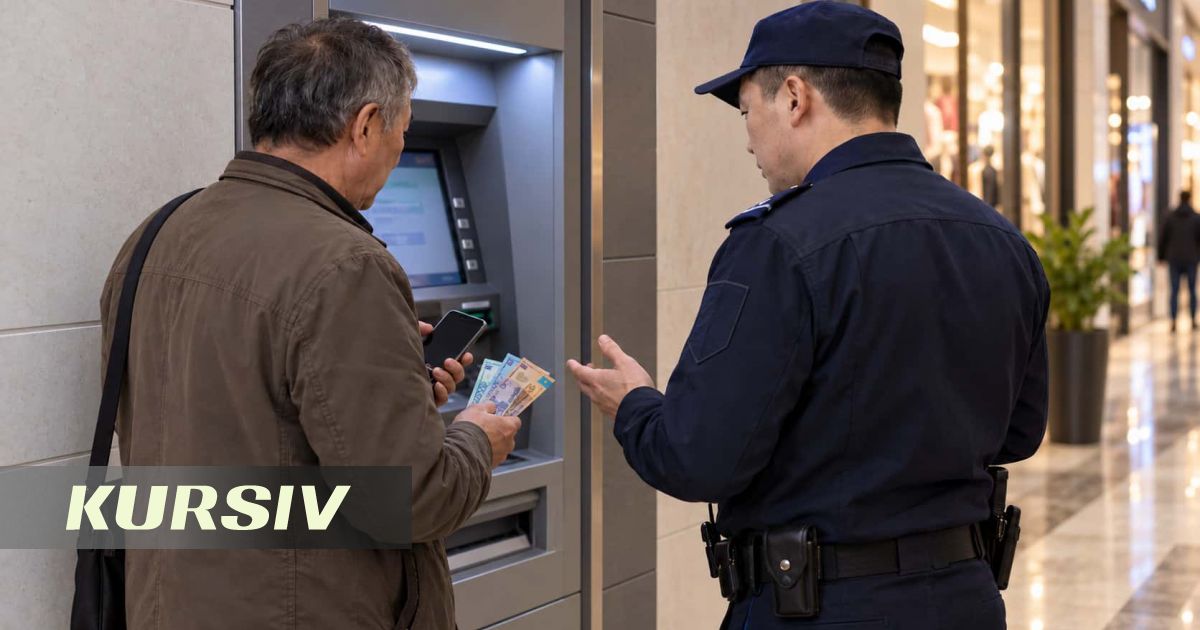
In Petropavl, SOBR officers prevented the transfer of at least 1.1 million tenge to fraudsters. A 57-year-old resident was about to send the money as an investment in cryptocurrency. This was reported by Qazaqyia.kz citing Kursiv Media.
Officers of the Special Rapid Response Unit of the Police Department of the North Kazakhstan Region, Karasay Botpayev and Baurzhan Akhmet, were on duty at the "Rakhmet" shopping center. Botpayev noticed a man near an ATM with a bundle of cash, talking nervously on the phone.
The officer introduced himself and showed his service ID, but the man did not believe him at first. Botpayev then called his partner in uniform. After that, the resident listened to the police officers.
The man said he traded cryptocurrency on Binance, but could not explain what kind of platform it was. It turned out that he had seen an advertisement about earning money on the internet and wrote to the contact specified in Telegram. The interlocutors offered him to earn on cryptocurrency and sent graphs of the supposed return on investment.
According to police, these people had no connection to a real cryptocurrency exchange. The man was ready to transfer money to them, but SOBR officers stopped him. No damage was caused.
Such duty shifts in shopping centers of the region are held regularly — from 9:00 until closing. One officer in uniform monitors public order, the second works in plain clothes and focuses on preventing internet fraud.
Police urged people not to trust promises of easy earnings and not to invest in instruments they do not understand, especially on the instructions of strangers.
The department also warned about video calls on behalf of relatives. In Botpayev's practice, there were cases when fraudsters changed their appearance using neural networks, using photos published by people on the internet.
If a close person asks to transfer money during a video call, police recommend verifying their identity: ask questions to which outsiders do not know the answers. Any information related to finances should be checked through official channels. If there are signs of fraud, immediately contact the police.
Earlier, "Kursiv" wrote that ahead of Teacher's Day, fraudsters are luring Kazakhstanis to phishing sites with offers of gift sets for educators. According to the Committee on Legal Statistics of the Prosecutor General's Office, they use AI-generated images of non-existent goods and chatbots imitating sellers to deceive.