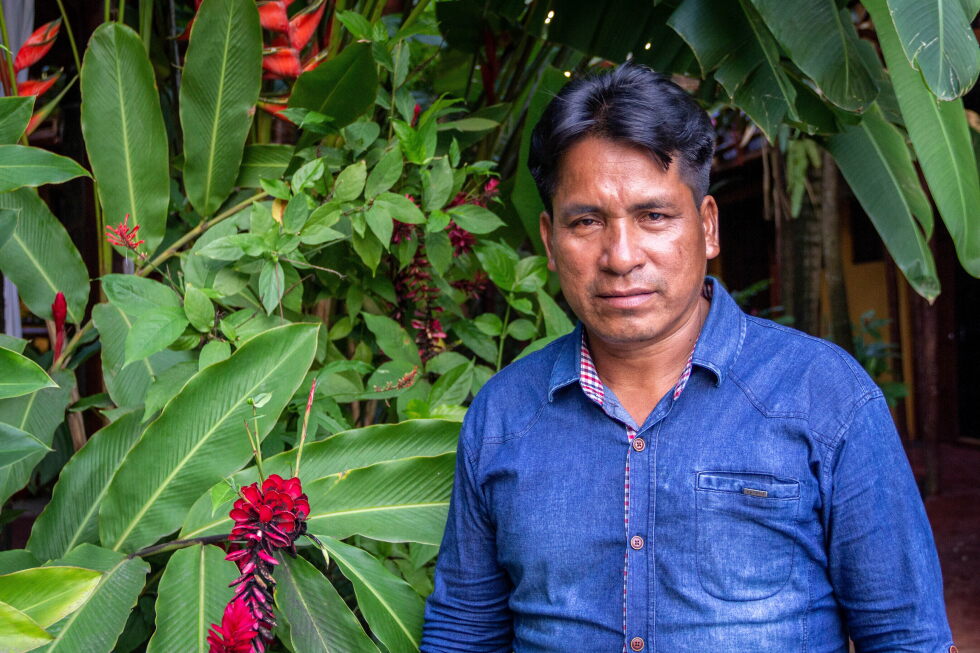
A Peruvian court on Monday evening convicted four men of murder-for-hire and sentenced them to between 15 and 35 years in prison for the 2023 killing of Indigenous rainforest defender Quinto Inuma Alvarado. This was reported by Qazaqyia.kz citing Associated Press.
Genix Saboya Saboya and Limber Ríos Ruiz were each sentenced to 35 years in prison. Segundo Juan Villalobos Guevara, a timber operator whom prosecutors accused of ordering Inuma's killing, was sentenced to 28 years and four months. Jerly Saboya Saboya, who was convicted as an accomplice, was sentenced to 15 years.
Inuma, a 50-year-old Kichwa leader, was shot and killed on Nov. 29, 2023, as he traveled by boat back to his community, Santa Rosillo de Yanayacu, in Peru's northern Amazonian region of San Martin. He was returning from a national meeting of environmental and land defenders. A woman traveling with him was also shot and wounded.
The ruling came nearly 1,000 days after Inuma's killing. Tom Younger, Peru program coordinator at the Forest Peoples Programme, called the sentences a "decisive step towards justice" and said they showed that impunity for killings of Indigenous defenders "is not inevitable."
Prosecutors said Inuma was targeted because of his efforts to stop illegal logging on his community's land. They accused Villalobos, whom Inuma had denounced over illegal logging, of ordering the killing and the other men of planning and carrying out the attack.
Cristina Gavancho, a lawyer with the Lima-based Legal Defense Institute who has accompanied Indigenous organizations and the victims' families since Inuma's killing, called the ruling an "exemplary sentence" and said the lengthy prison terms could set an important precedent for other cases involving environmental defenders in Peru. Gavancho said it was the first case in Peru involving the killing of an Indigenous defender to result in sentences this severe.
The trial began Jan. 20 and continued for nearly eight months. In March, judges traveled from Lima to the Amazonian city of Tarapoto for three days of hearings, where they heard testimony from Inuma's relatives, other witnesses and a survivor of the attack.
Inuma had spent years denouncing illegal logging, drug trafficking and encroachment on his community's territory. Between 2016 and 2023, members of Santa Rosillo de Yanayacu filed 13 complaints with prosecutors over environmental crimes and drug trafficking, according to the Legal Defense Institute.
Peru's Justice Ministry classified Inuma as being at high risk in 2021 and ordered police protection for him and his brother. Local authorities also granted him protection measures against illegal logging groups. But police later acknowledged they were unable to carry out preventive patrols in the remote territory because they lacked money for boats and faced difficult geography, according to documents cited by the Legal Defense Institute.
Kevin Arnol Inuma, the murdered leader's 30-year-old son, said his family received the verdict with a mixture of happiness and sadness after waiting nearly three years for justice. "Before, there was no response from the state, so they were not afraid to kill," he told The Associated Press on a phone call just after the verdict. "Now this sets a precedent for Indigenous peoples, a precedent for environmental defenders."
Inuma's death became emblematic of the dangers faced by Indigenous people protecting forests and ancestral lands in Peru's Amazon.