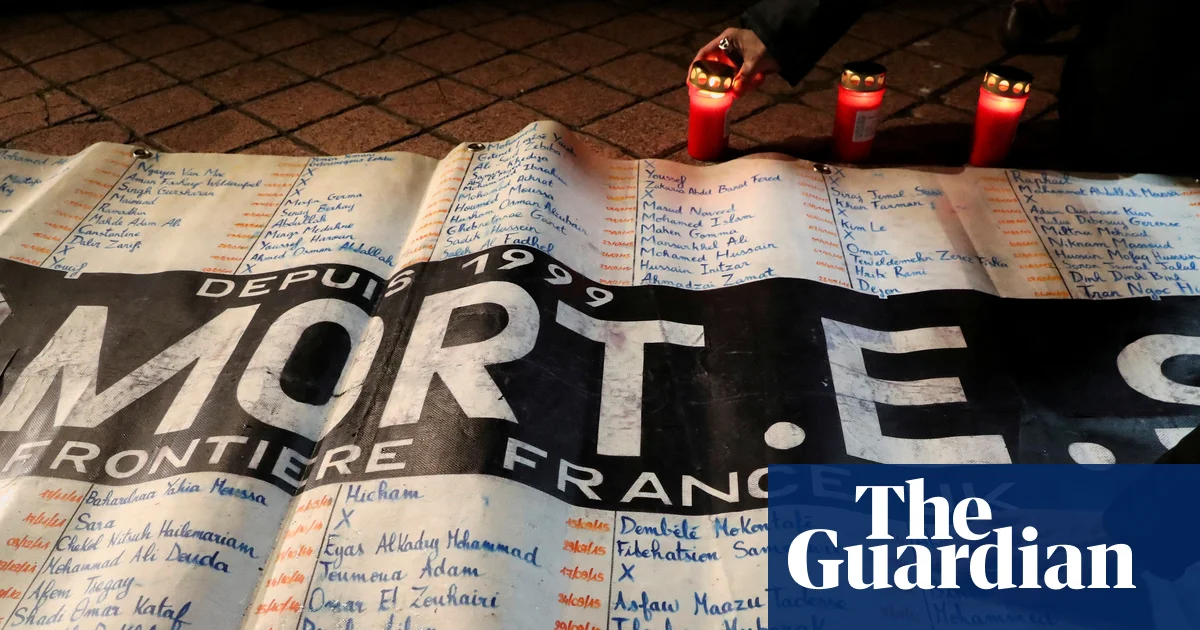
Fourteen men will go on trial in Paris on Tuesday over the deaths of at least 31 people in the worst mass drowning from a small-boat crossing in the Channel on record. This was reported by Qazaqyia.kz citing The Guardian.
The accused men, alleged to be linked to people-smuggling networks, face charges including manslaughter and facilitating illegal immigration as part of an organised criminal group.
Twenty-seven people were confirmed dead when their inflatable dinghy sank in the early hours of 24 November 2021. Four people remain unaccounted for.
The victims were mostly Iraqi Kurds, but also included people who were Afghan, Ethiopian, Iranian, Somali, Vietnamese and Egyptian. The youngest known victim was a seven-year-old girl. The confirmed dead also included 15 men, seven women and two teenagers.
A team on a French fishing boat near British waters off Calais had raised the alarm when they saw several lifeless bodies floating in the water.
According to testimony from the two survivors, the flimsy boat which had attempted to cross one of the world’s busiest shipping lanes – between the northern French coast and Kent in southern England – began to deflate and take on water after several hours at sea.
Passengers fell overboard and drowned one after another, despite making about a dozen desperate calls for help to French and British rescue services. Only two men survived the tragedy.
Investigators allege that Afghan and Iraqi-Kurdish smuggling networks organised the migrants’ passage to Britain from camps near Grande-Synthe and Calais in northern France. The defendants face charges including involuntary manslaughter, facilitating illegal immigration as part of an organised gang and criminal conspiracy.
Two of them, including an Afghan man, are the subject of arrest warrants and will be tried in absentia.
Among the defendants are alleged organisers, transporters and logistics coordinators connected to the smuggling groups. Prosecutors argue their actions helped create the conditions that led to the disaster, even if some were not physically present when the boat launched.
Prosecutors have accused the defendants of helping launch a “substandard small boat, uncertified, unfit for navigation on the open sea, overcrowded and lacking appropriate lifejackets”.
Liability has also been extended to those accused of transporting, housing or accompanying the victims, actions that formed part of a “chain of successive events” leading to the tragedy, according to investigators.
The defendants have denied being smugglers and disputed their responsibility, or have presented themselves as people who were seeking to make the journey themselves.
However, phone records and location tracking placed several of them near the departure site and linked them to organising crossings to Britain.
For the people onboard the sinking boat, despite several distress calls, it was nearly 12 hours after the first pleas for help before the dinghy was finally found by the French fishing vessel.
A separate investigation is ongoing in France into seven French military personnel – five members at a maritime rescue coordination centre, and two sailors onboard a patrol vessel – who have been under investigation since 2023 for failing to help a person in danger. They deny the allegations.
The UK’s Cranston inquiry, in its report released in February, found that systemic failings, missed opportunities and inadequate resourcing undermined the UK’s maritime search and rescue response on the night of the disaster. HM Coastguard was placed in an “intolerable position”, it said, with chronic staff shortages and limited operational capacity contributing directly to the failure to rescue people in the water.
It found the deaths would have been “avoidable” if British and French authorities had acted sooner to rescue those onboard.
Families of some of the victims will travel from Erbil in Iraqi Kurdistan to attend part of the trial, their lawyers said.
“Justice must hold accountable everyone who played a role in this tragedy,” the lawyers, Matthieu Chirez, Thomas Ricard and Camille Renouard, said in a statement.
Agence France-Presse and Reuters contributed to this report.