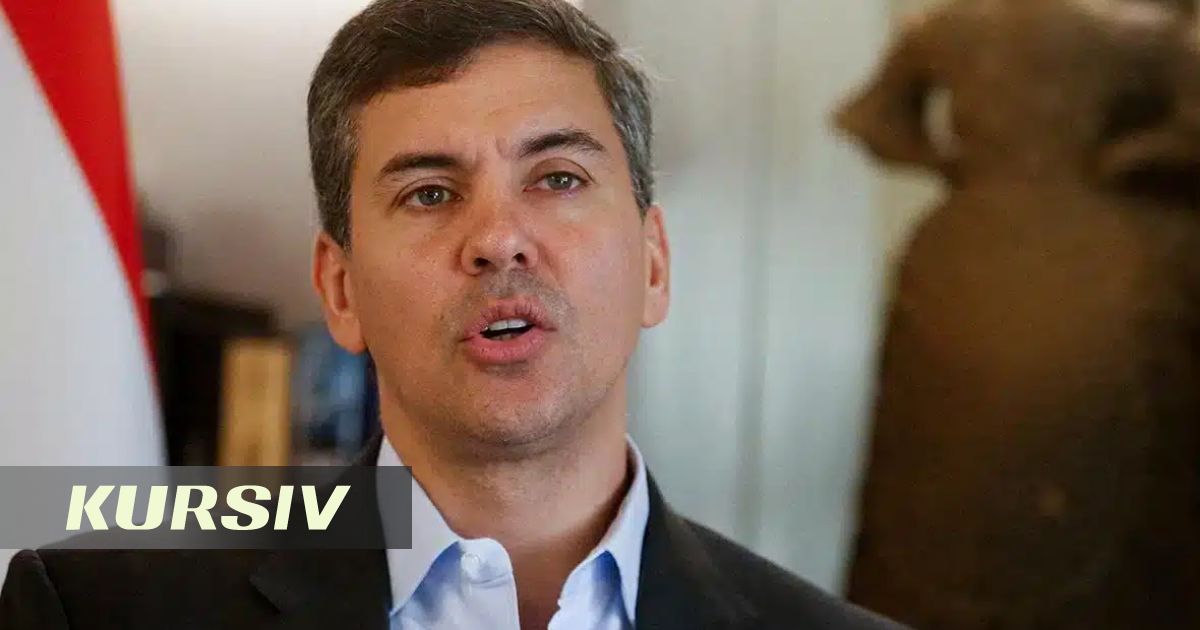
Paraguay's President Santiago Peña lost his position after impeachment amid the crisis surrounding the digital bank Ueno. This was reported by Qazaqyia.kz citing Kursiv Media.
Shortly after being removed from power, he was placed under house arrest, and on November 7 a court ordered the former head of state to be sent to pre-trial detention at a military facility. Peña is suspected of abuse of trust and using his official position for personal interests.
The political crisis erupted after Paraguay's Central Bank intervened in Ueno Bank's operations in early November. The regulator found that the bank's capital adequacy ratio had fallen below half the legal minimum and launched liquidation proceedings. Ueno served about 2.9 million clients – nearly half the country's population. After the regulator's intervention, millions of people lost access to their accounts.
The bank's collapse raised questions about its lending policy and ties to the country's political and financial elite. Until March 2025, Peña was a shareholder in the holding company that owned Ueno. In addition, before being appointed head of the Central Bank in 2023, Carlos Carvalho headed the financial company Ueno.
Amid the scandal, Carvalho resigned. The prosecutor's office also issued arrest warrants for the bank's executives. Later, the investigation extended to the former head of the regulator.
Peña had intended to resign voluntarily, explaining this by the need to preserve stability in the country.
"I have decided to resign from the post of president of the republic. I am doing this thinking about the stability of our country, social peace and the need to preserve state institutions," he said.
However, the Senate did not accept his statement and continued the impeachment procedure. On Friday, November 6, 44 of 45 senators voted to remove Peña, including representatives of his own party. Lawmakers accused the president of conflict of interest, interference in the work of regulators, misuse of pension funds and attempts to conceal violations.
After the vote, the Senate swore in Vice President Pedro Alliana. He took office as head of state and must complete Peña's presidential term, which expires in August 2028.
Peña himself rejects the accusations and insists that Ueno's problems belonged to the sphere of banking regulation. The Central Bank also denied a conflict of interest, stating that Carvalho did not make decisions related to the bank.
On November 7, the former president appeared at the prosecutor's office. The investigation charged him with abuse of trust and using his official position for personal interests. According to Reuters, each of these crimes carries a penalty of up to 10 years in prison. Peña did not plead guilty and stated his readiness to cooperate with the investigation.
The bank's collapse affected not only private depositors. Among Ueno's clients were pensioners who received state payments through it. In addition, the bank held significant funds from state organizations and pension funds.
Amid the freezing of accounts, protests took place in the capital, Asunción. People gathered at the Central Bank building and demanded their money back. Dozens of protesters also appeared near Peña's home, and police cordoned off the area.
The authorities had previously approved measures to speed up the return of funds to depositors. According to Associated Press, by November 7 about 1.2 million clients had already received full or partial compensation under the state deposit insurance system.
Peña took office as Paraguay's president in 2023 at the age of 44. Before that, in 2015–2017, he served as finance minister in the government of President Horacio Cartes. Peña is also considered an ally of US President Donald Trump. After his removal, the US State Department stated:
"We remain committed to the long-term ties between the American and Paraguayan peoples and look forward to continuing close cooperation on shared priorities."
Earlier, Kursiv wrote about how the former head of state was placed under house arrest.