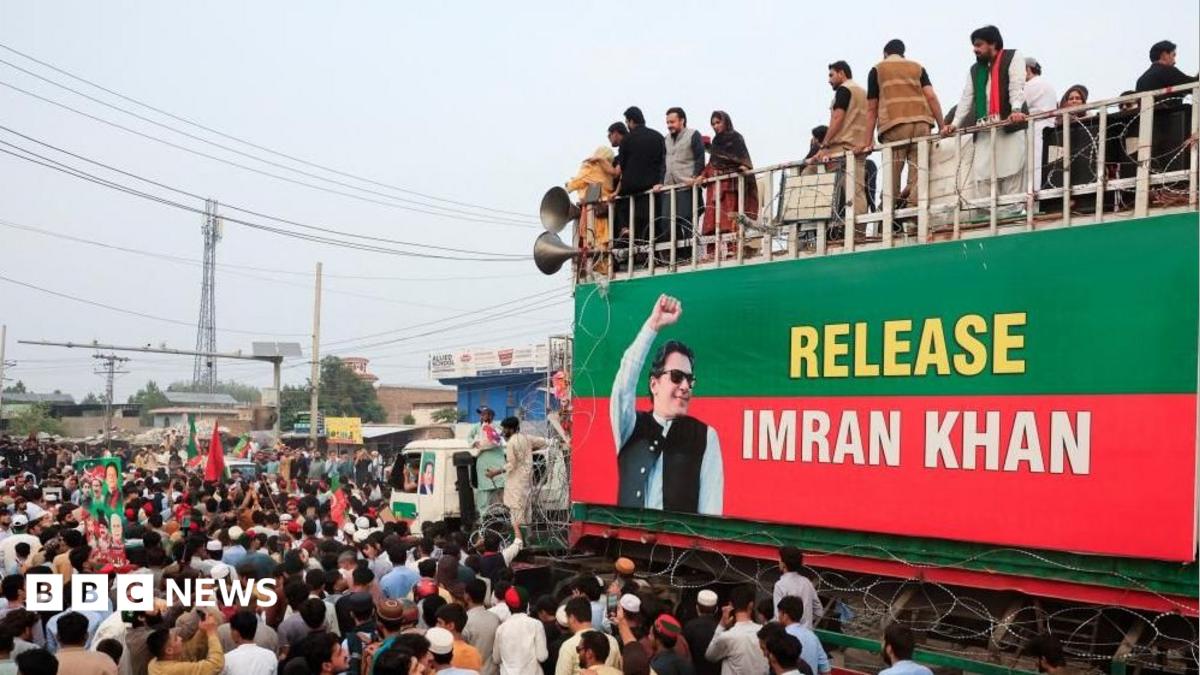
Pakistan has imposed a state of emergency in Khyber Pakhtunkhwa, the stronghold of Imran Khan's party, suspending the provincial government. Schools are closed, the internet is partially shut down, roads are blocked by shipping containers, and the army has arrived in town. This was reported by Qazaqyia.kz citing BBC News.
According to the federal government, the step, allowed by the constitution, was needed to provide protection for the province's population from the threat of terror. "The PTI KPK government was hand in glove with the terrorists," Attah Tarrar, federal information minister, told journalists on Sunday. He did not elaborate or provide evidence, but promised to do so soon.
Two days later there had still been no update from him, but schools had reopened in Peshawar and most parts of the province, and internet services had been restored.
While police would not confirm any detentions, there is clearly a crackdown under way to prevent protests. Most PTI leaders in the province have gone into hiding.
On Tuesday dozens of PTI supporters took to the streets in Bara, Khyber district, hometown of provincial Chief Minister Sohail Afridi. There were reports of tear gas shelling in the area.
To many observers, the timing of Sunday's announcement of emergency rule is not coincidental.
For the last week, thousands of Imran Khan's supporters have marched through Khyber Pakhtunkhwa, where the PTI have been in power for 13 years, demanding Khan's release.
"The charitable response would be to say that it sounded disingenuous," says Farzana Sheikh, associate fellow at Chatham House.
"I do not see the link with terrorism," says Arifa Noor, journalist and commentator. "I'm not even sure if it was the long march itself [that led to this]. Perhaps it was the last straw or perhaps it's just a case of saying, we don't want to deal with the government being in the hands of an opposition party."
The protests were led by Chief Minister Afridi, whose whereabouts are still a mystery. His party says he has been arrested; the government says that he is in protective custody.
Before the march had begun, there had been a crackdown. Three of Khan's sisters were arrested in September, accused among other things of mobilising supporters, and have been detained ever since.
Khan has barely been seen by his family or lawyers in the last year; two of his sisters saw him in August, one in prison, another as he was checked over at a hospital visit after concerns were raised by the Supreme Court about his health, before he was returned behind bars again where he has been held for more than three years.
The PTI leader, who is widely believed to have lost power because of a rift with Pakistan's powerful military, has been imprisoned since August 2023. He is convicted in several corruption cases which he says are politically motivated.
With the party already weakened, why this reaction from the authorities?
"The PTI rank and file has been becoming increasingly restless in recent months amid growing concerns about Imran Khan's health," says Michael Kugelman, senior South Asia fellow at the Atlantic Council.
"There is a sense that perhaps now is the time to send a very strong message to the party and make it more difficult for them to be able to put pressure on the government."
The government has previously argued that Khan was going against jail rules by using his meetings to discuss politics.
Tarar has said of the state of emergency: "There was no political agenda. They could have gone on with their march," and pointed to the talks the two sides had in the run-up to the decision as an indicator that they did try discussion.
But others see this as just another attempt to restrict Khan and his party.
"The government has less and less space for disagreements or dissent and they do not want to negotiate their way out of any kind of conflict," Noor says.
Zahid Hussain, Islamabad-based author and defence analyst, is clear about who is behind the decision.
"The balance of power is completely shifted to the military establishment," he says.
Sheikh thinks that Pakistan's military is feeling confident because it believes it has a good relationship with the White House, its international credentials burnished by their role in the US-Iran peace talks.
"The mode is very much, this is the moment, let's seize it," she says. "There is a sense that, we have all the cards in our hands. We can ride this out internationally."
Ex-cricket captains urge 'proper medical care' for Imran Khan.