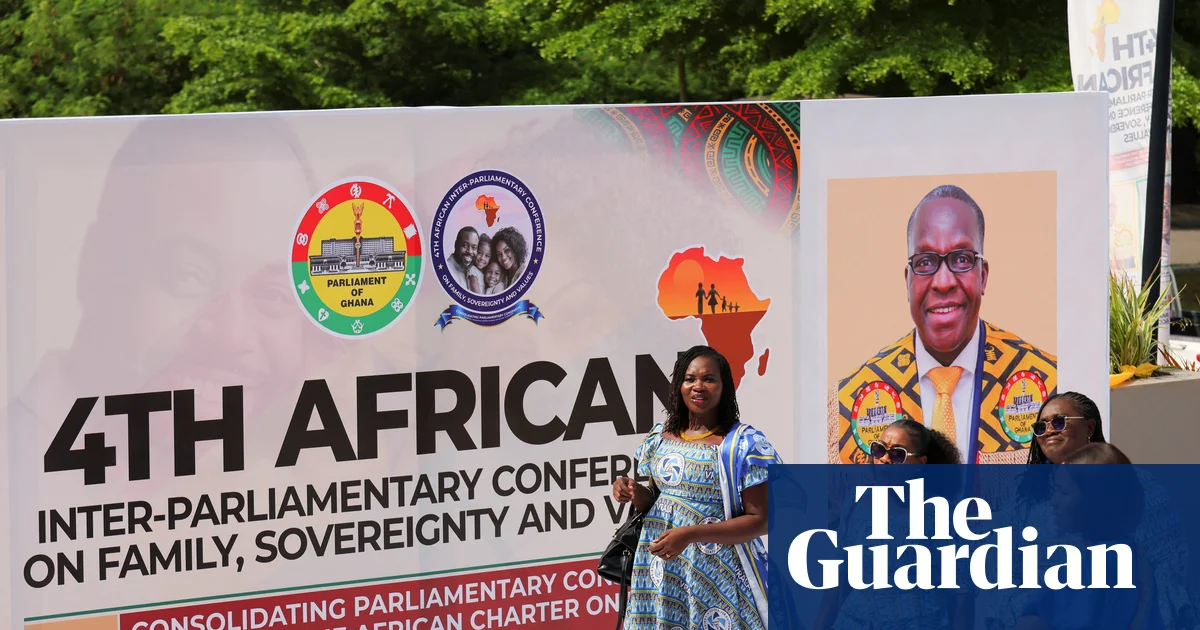
At a conference in Ghana, African governments discussed a draft African charter on family, sovereignty and values. The document proposes abandoning long-standing international human rights commitments. This was reported by Qazaqyia.kz citing The Guardian.
The draft charter claims that African values and culture are under attack from "foreign ideologies" and urges states to withdraw from any agreements inconsistent with the charter's principles, including the 2003 Maputo Protocol, which promotes gender equality and protects the reproductive rights of women and girls.
The charter is the first attempt to create a continental legal framework based on a moralistic rather than a human rights perspective. It asserts that sexual and reproductive health and rights pose an existential threat to the African family, and falsely claims that policies based on these rights promote abortion on demand.
The draft charter also rejects comprehensive sexuality education (CSE), claiming it sexualizes children; states that gender is only male or female; and proclaims that parental rights prevail over children's rights, including decisions about sexuality and discipline.
African lawyers, reproductive rights groups, and LGBTQ+ activists have condemned the charter as regressive and dangerous.
Gilbert Mitullah, a Kenyan lawyer and board member of the Queer African Network, said: "It is a license to oppose, refuse, or fail to implement existing obligations on sexual and reproductive health and LGBTQ rights, and to undermine the Maputo Protocol from within. That is its operational function, even before it is signed."
The charter was developed by a core group of African lawmakers, led by Ugandan government ministers, at the annual Inter-Parliamentary Conference on Family Values and Sovereignty, which is known for shaping anti-homosexuality legislation.
The goal of the 2026 conference was to promote the charter and gather enough support to bring it to a vote at the African Union General Assembly next year. Representatives from 20 countries attended the conference.
Critics say the charter's definition of family, based solely on heterosexual marriage, ignores the vast diversity of families across the continent's 54 countries.
The Initiative for Strategic Litigation in Africa (ISLA) warns that prioritizing family over the individual "risks legitimizing the subordination of women, children, and adolescents to collective family interests and isolating private family relationships from state responsibility, especially in situations of violence, coercion, or discrimination."
ISLA lawyer Lakshita Kanhiya said: "Women will no longer be safe; children will not be safe."
Mitullah added: "The rhetoric of family values does two things at once. It legitimizes expanded state intervention in private life and provides a vocabulary that allows for gaining votes without delivering material change."
The ISLA report also criticizes the distortion of legitimate concerns about sovereignty and colonialism. The charter's terminology reflects the strong influence of conservative Christian organizations from the US and Europe that oppose abortion and LGBTQ+ rights. Progressive policies are dismissed as neocolonialism or cultural imperialism.
Famia Nkansa, communications lead at Purposeful, a Sierra Leone-based organization focused on girl-led activism, said: "Actions against rights on the continent are simply an extension of the same colonial game: Africa serves as a battlefield where the West fights its ideological and economic wars."
According to the international reproductive rights organization Ipas, the annual conferences are supported by Family Watch International, a Christian lobbying group from Arizona that opposes abortion and campaigns against CSE. FWI co-founder Sharon Slater has repeatedly stated that the UN and Western donor countries are imposing a "radical sexual rights agenda."
Mitullah said: "The charter is not a continental instrument that happens to share vocabulary with Western anti-rights groups. It is a transplant."
He also noted that the text cites the Geneva Consensus Declaration, an anti-abortion manifesto drafted by former Trump advisor Valerie Huber. FWI stated that it is not involved in or sponsoring the conference in Ghana.