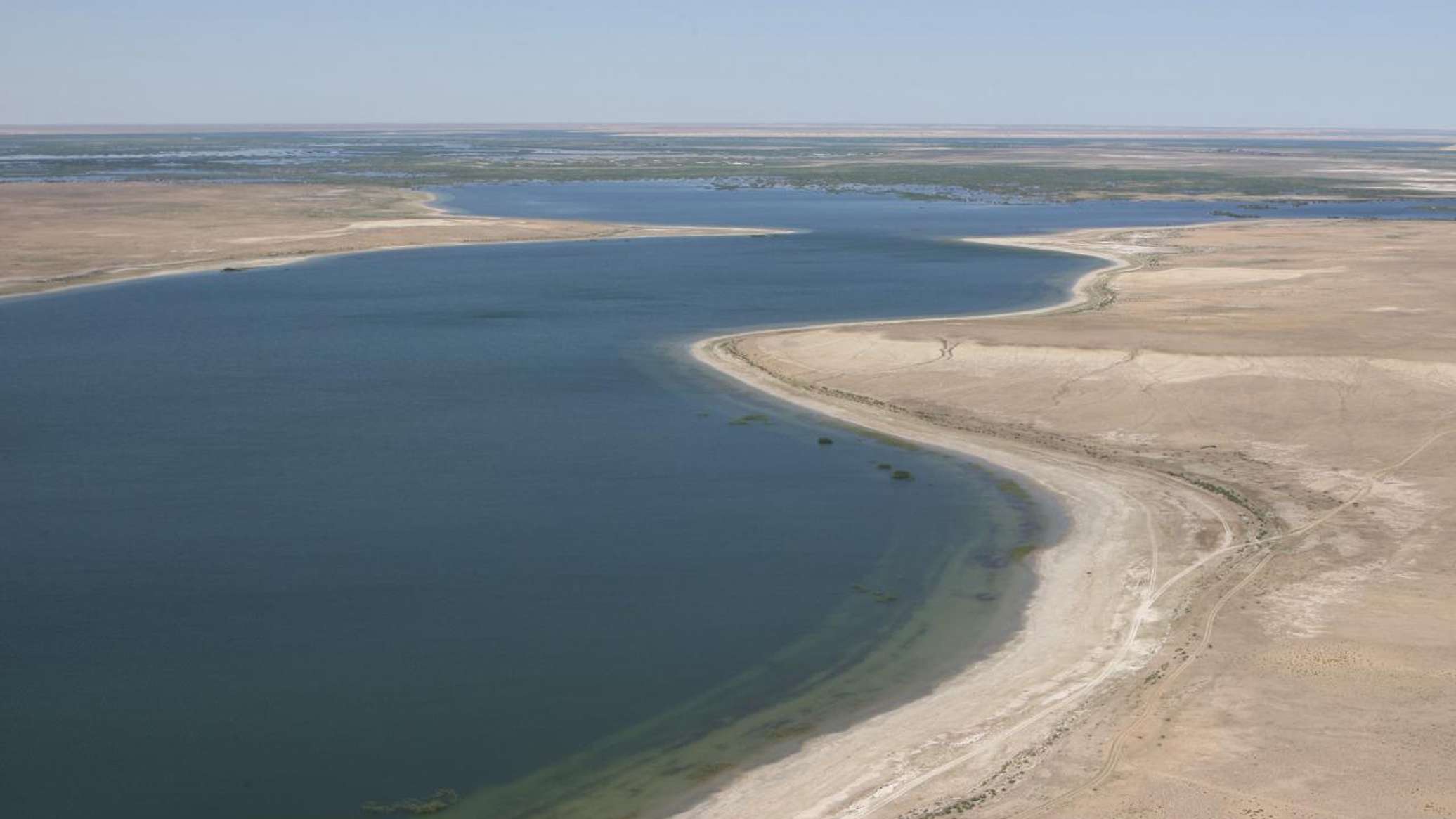
A worsening water shortage in Central Asia could lead to higher food prices and force millions of people to relocate. According to experts, countries in the region must jointly manage water resources to solve the problem. This was reported by Qazaqyia.kz citing Sputnik Kazakhstan.
Water reserves are shrinking
Water scarcity in Central Asia is driven by population growth, climate change and melting glaciers. The region's main water sources – the Amu Darya and Syr Darya rivers – may also see reduced flows. According to a UN forecast, water flow in the basins of these two rivers could decrease by 15% by 2050.
In early 2026, due to a low-water winter-spring period, the volume of water entering the Amu Darya basin dropped to 66.8% of the normal level. According to 2024 data from the Eurasian Development Bank, nearly 10 million people in Central Asia lack access to safe drinking water sources. In addition, the wear of water supply networks and drainage systems reaches 80%, while losses during water distribution are estimated at up to 55%.
What could water shortage lead to?
According to experts, water scarcity directly affects agriculture, energy and people's daily lives. In the region, 80-90% of water resources are used for agriculture. If water decreases, crop yields may fall and food prices may rise. In addition, in some settlements drinking water is supplied on an hourly schedule, and water shortage could exacerbate unemployment and social tension.
According to Mikhail Bolgov, a hydrologist at the Water Problems Institute of the Russian Academy of Sciences, water shortage could lead to territorial conflicts and increased illegal migration.
What measures are countries taking?
Regional states are modernizing irrigation systems and introducing digital monitoring of water resources and water-saving technologies. Experts say that widespread use of drip irrigation could reduce water consumption by 30-40% compared to traditional methods.
Kazakhstan's President Kassym-Jomart Tokayev has previously proposed creating an International Water Organization within the UN structure. Such an organization could strengthen cooperation between states and enable effective water management and exchange of experience.
A practice of mutually beneficial exchange of water and energy is also used in the region. For example, Kazakhstan and Uzbekistan help Kyrgyzstan preserve reserves in its reservoirs until summer by supplying electricity and coal during winter.
According to experts, to curb water shortage, Central Asian countries must act jointly on fair distribution of water resources, infrastructure renewal and negotiations with all interested states, including Afghanistan.