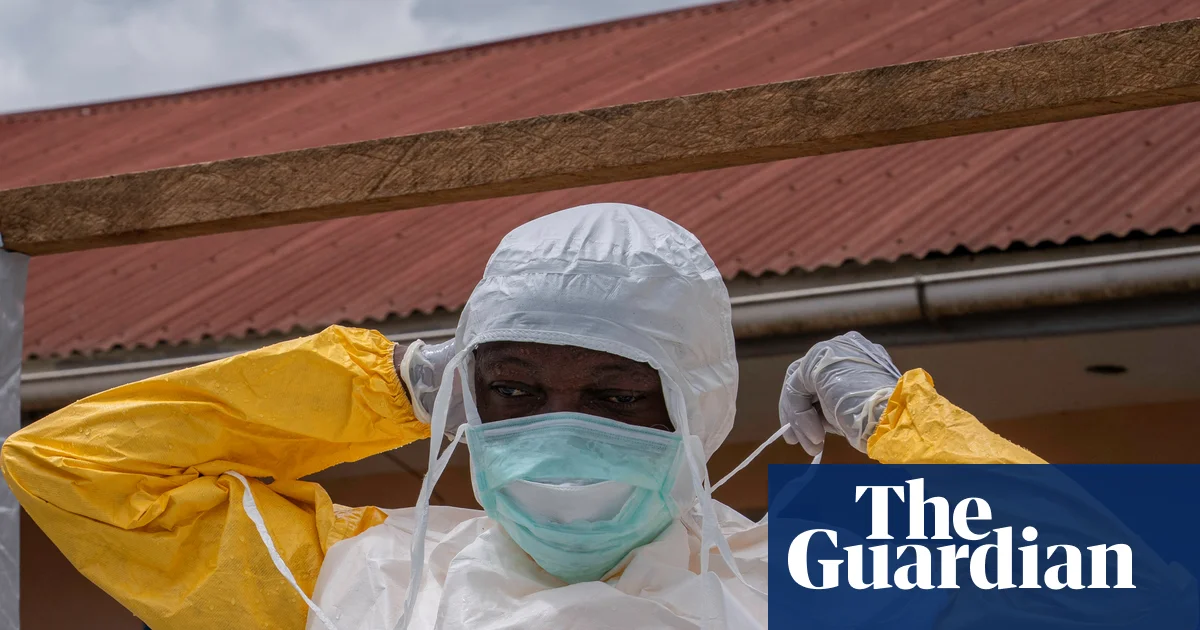
Ebola outbreak in Central Africa could match 2014 record levels
According to a new analysis by US health authorities, the Ebola outbreak in Central Africa could reach levels comparable to the largest outbreak in history – the 2014-2016 outbreak in West Africa, which killed more than 11,000 people. This was reported by Qazaqyia.kz citing The Guardian.
The US Centers for Disease Control and Prevention (CDC) on Friday published a range of scenarios created by computer models: from 10,000 cases to more than 20,000. During the West African outbreak, more than 28,000 cases were recorded.
The CDC analysis showed that the number of cases could rise to 20,000 or more, depending on how quickly infected people are isolated to slow the spread.
Dr. Satish Pillai, the CDC's Ebola response lead, said that without strong public health measures, "the modeling shows that an outbreak of this magnitude is possible."
Jennifer Nuzzo, director of the Pandemic Center at Brown University in the US, said the modeling "confirms what we have been worried about from the start: this outbreak is on a dangerous trajectory" if more is not done to stop its spread.
However, she warned that predicting the outbreak's development is extremely difficult. "I wouldn't put too much stock in the specific numbers. It's very hard to make an accurate forecast when you have limited data," she said.
The Africa Centers for Disease Control and Prevention on Friday reported about 400 confirmed cases, including 63 deaths. Experts say there are likely other cases that have not been diagnosed or reported.
Viruses that cause Ebola are transmitted through contact with body fluids such as vomit, blood, and semen. There is no specific treatment or vaccine for the Bundibugyo virus, which is behind the current outbreak. The disease is often fatal.
The World Health Organization declared the outbreak a global health emergency in May. Some experts believe infections may have started as early as February, but health authorities initially tested for a different type of Ebola virus.
The response to the outbreak is complicated by the armed conflict between the Congolese government and the Rwanda-backed M23 rebel group, as well as attacks by the Islamic State-linked Allied Democratic Forces group. The violence has caused mass displacement of people living in conflict zones, officials report.
The CDC modeling report attempts to project how the situation might develop based on various factors – including how many infections and deaths have already occurred, and how quickly responders can identify and isolate the infected before they can transmit the infection to others.
Pillai said the actual isolation rate is unknown but is believed to be "on the lower end of the scenarios" that the CDC modeled.
Higher isolation rates, 50% or 70%, could result in case numbers closer to 10,000, CDC officials said. But if the actual number of deaths in late May was greater than currently recognized, that could worsen the outcomes, CDC officials said.
Some CDC modeling during the major Ebola outbreak in West Africa turned out to be far from reality. The CDC published simulated numbers in 2014, when the epidemic was spiraling out of control and international health officials were scrambling to organize a response.
It estimated that in a worst-case scenario, if nothing was done, up to 1.4 million people could be infected. That turned out to be more than 50 times higher than what actually happened.
*As reported by The Guardian*