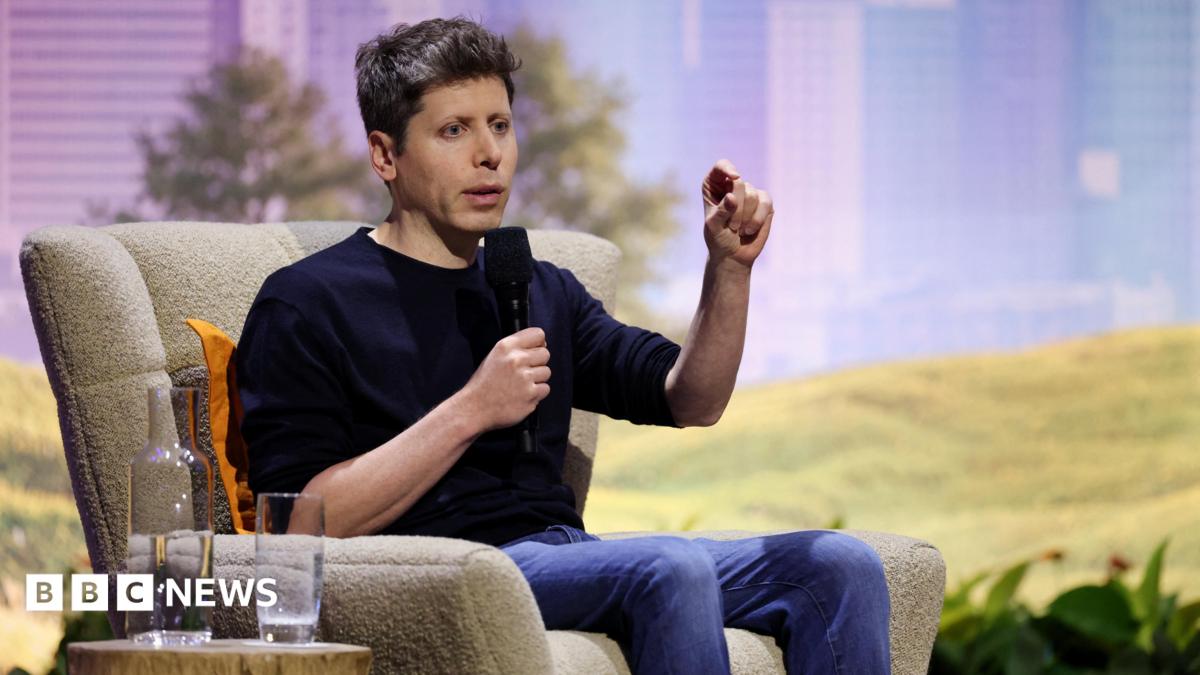
The boss of ChatGPT maker OpenAI says people should have more faith in his firm and others like it to do the right thing when it comes to artificial intelligence (AI) development amid rising public concerns about the risks. This was reported by Qazaqyia.kz citing BBC News.
"The world should trust that we are going to do the right thing because it's the right thing and we feel the magnitude of this," Sam Altman said on Tuesday during a conference in San Francisco.
However, Altman noted that people were justified in their fears around AI, as the capability of the tools has progressed rapidly.
Speaking in Washington meanwhile, left-wing Senator Bernie Sanders and former Trump adviser Steve Bannon have both called for greater governance of AI.
Altman's comments came during an appearance at an annual conference hosted by software firm Salesforce.
"It doesn't take as much imagination as it used to for [us] to imagine how this could go wrong," he said. "I think the world is right to be afraid of this."
It was the first time he had spoken publicly since a post went viral last week by a researcher who quit the AI firm Anthropic. The researcher claimed AI could kill all humans by the end of the decade if left unchecked.
A handful of other AI executives and experts responded by saying they agreed with the assessment, though they didn't explain how they came to their conclusions or how exactly AI could accomplish such a thing.
The fervour over the claims has led to more scrutiny of AI development in recent days, and in response, Anthropic chief executive Dario Amodei called for the pace of all AI development to slow, external and urged governments to regulate the industry.
The post was applauded by Altman, as well as co-founder of Google's DeepMind Demis Hassabis, and Elon Musk, owner of social media site X and AI assistant Grok.
By Tuesday, more AI leaders were voicing support for self-regulation rather than government involvement.
Altman said that he felt AI companies like his own were capable of essentially regulating themselves.
"We will get it right, I'm very confident in our company's and industry's ability to do this safely," Altman said, adding that he was sure that they would "keep alignment and safety way ahead of capabilities" and if they couldn't, they would "slow down or stop".
Despite the assurances, political figures have cautioned against self-regulation.
Bernie Sanders, an independent senator from Vermont who votes with the Democrats, said decisions over AI's development have been made by "a handful of the richest people in the world", naming Elon Musk, Meta boss Mark Zuckerberg and Amazon founder Jeff Bezos, among others.
Speaking at a conference hosted in Washington, he said: "The people of this country must make the decisions about AI, and not just a handful of oligarchs."
Bannon, who served as a White House strategist during Trump's first term, also cast doubt on the tech industry's ability to self regulate.
"We can never trust what an oligarch says because... they're disingenuous and they lie," Bannon said at the same conference.
After Altman's comments, Mark Zuckerberg wrote on X that every AI lab has the ability and the incentive "to take its own actions" towards making AI tools and models that are designed for safety.
"Any lab that doesn't focus on alignment will fall behind," Zuckerberg wrote. "Labs face significant liability if their models cause harm, so they have a strong incentive to prevent this as well."
Jensen Huang, head of Nvidia, also said at the same Tuesday conference that the AI firms should decide if new versions of the technology should be released and not be managed by outside forces.
"We don't need new laws or regulations," Huang said, adding that there should not be a "false choice" between the speed of innovation and the safety of AI products.
Nvidia is the biggest company in the world by valuation, with its profits having boomed as a result of rampant demand for the AI computing chips it makes.
"Safety is paramount. However, safety is an engineering problem," Huang said.
He added that if at any time a leader of an AI company lacks confidence in their product they should choose to not release it.
"That's a very obvious thing to do," Huang said. "Run as fast as you can, but if at any time you feel the institution is not in control, take a pause."