Men in South Africa are holding meetings aimed at reducing the high levels of violence against women. This was reported by Qazaqyia.kz citing BBC News.
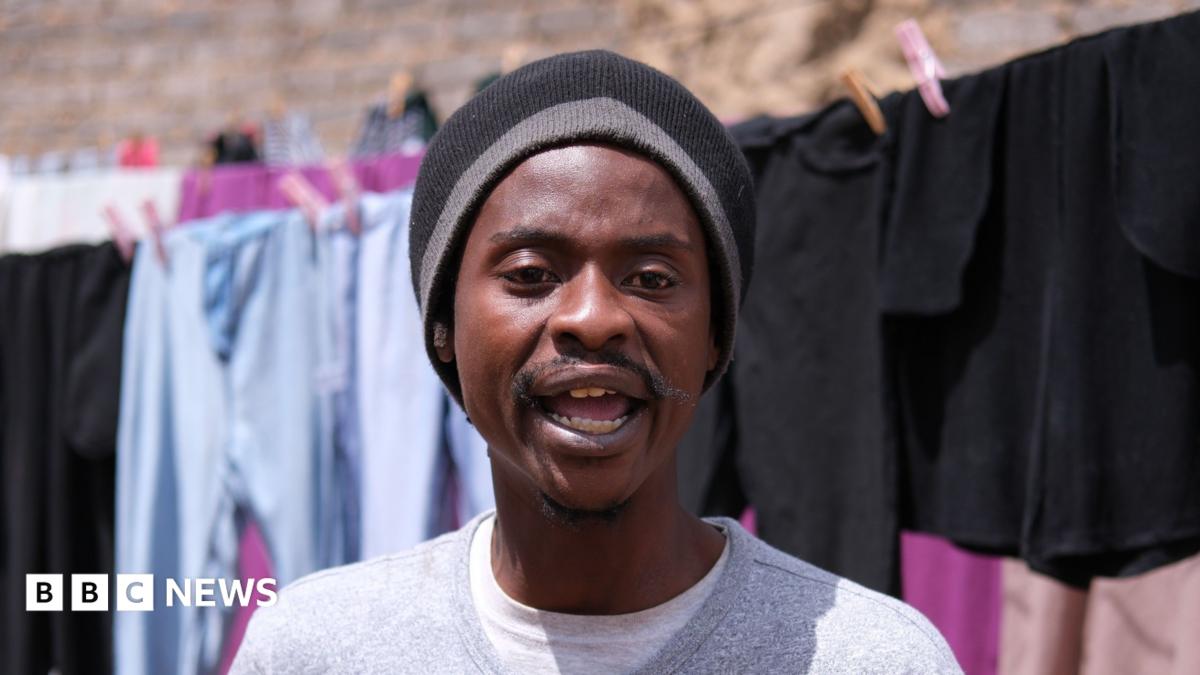
"I witness men hitting women all the time," says Kgomotso Mathekga, 30. "Especially when they are both drunk." "I once had an argument with my girlfriend," he admits, "and I grabbed and slapped her."
Mathekga is speaking frankly during a gathering of men aimed at helping reduce the high levels of violence against women in South Africa. The meeting is held in a narrow street in a Johannesburg informal settlement known as Organic Market. It is a maze of corrugated metal shacks and unpaved roads, close to Alexandra township.
"Now I feel pain," Mathekga continues. "We broke up and I no longer see my child. I feel like I've contributed to the problems in South Africa, instead of being the gentleman that I know I am."
At a nearby tavern, a group of men have pulled their chairs into a circle in the dust. At the centre stands Itumeleng Stephen Tamaga, known locally as Bra Steve. The group clap and cheers. Some sip bottled beer.
"Listen guys," Bra Steve says. "We must stand together to fight against gender-based violence and femicide."
Bra Steve is the local organiser of Father A Nation, a non-profit that works with men and boys to promote positive masculinity and help end violence against women.
The group's meeting comes as South Africa grapples with renewed anger over renewed cases of femicide and violence against women. The discovery of the bodies of 12 women over three months, in the city of Ekurhuleni, near Johannesburg has reignited questions about the scale of what many people see as being a crisis of violence against women.
South Africa's President Cyril Ramaphosa has acknowledged that his government has not done enough and announced measures he hopes can make women feel safer. The country has one of the highest murder rates in the world, with 5,427 people murdered between April and June this year alone. In that period, according to the South African Human Rights Commission, 569 women were killed, an average of six a day, and 1,052 others survived attempted murder.
A report in 2022 by the Human Sciences Research Council found that more than 35% of South African women experienced physical or sexual violence, many from their own intimate partners.
For Bra Steve, part of the solution to the crisis is helping men to understand the issue and take responsibility for their actions. "We are a lost generation," he says. "We must restore dignity to the men around here."
Amongst the group of men outside the tavern is Zizipho Mtwesi, the project co-ordinator of Father A Nation. Reflecting on recent weeks, he says more should be done. The latest measures announced by Ramaphosa, including better street lighting and a review of unsolved cases, are too little, he says, and too late.
"When I think about all of these recent murders in Johannesburg, I get angry. Why do we have to wait for this to happen for us to act?" He looks around and gestures at the meeting. "We are trying to reach men before things like these murders happen again."
Craig Wilkinson is the founder of the group. "We get men to talk, to process their feelings," he explains. "And as they do, this healing takes place. And the second phase is teaching and training positive masculinity. We ultimately hope that this will eliminate the scourge of gender-based violence." He stands up, moving into the centre of the group, calling out to the men.