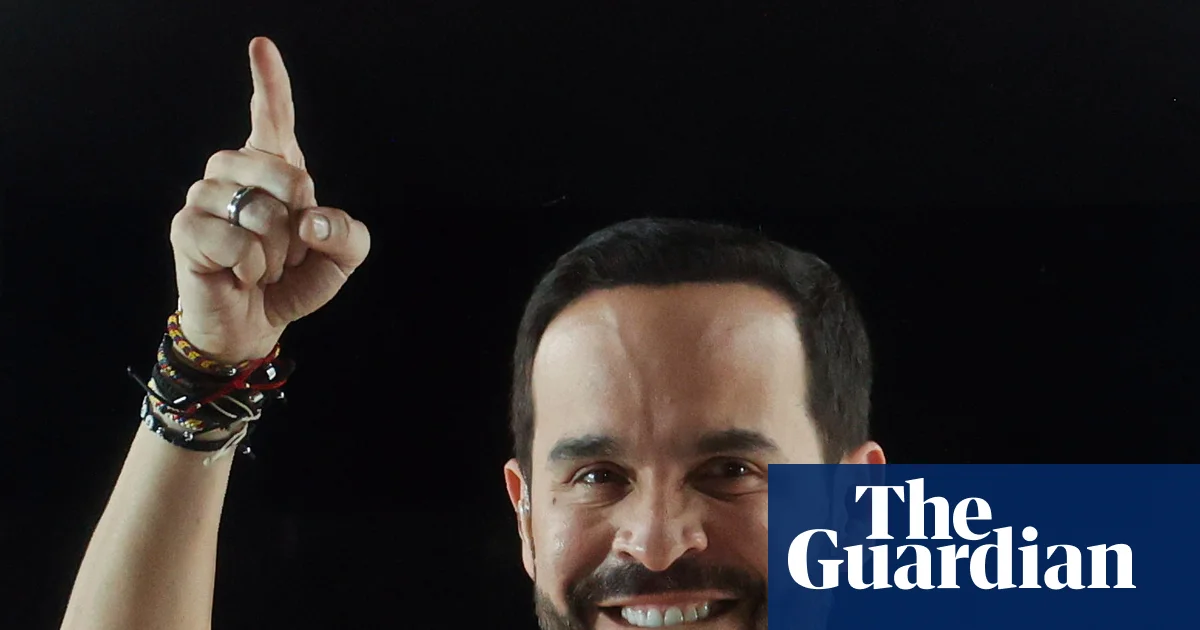
When more than 20 women accused a Colombian evangelical pastor in 2012 of sexually abusing them, the defendant's lawyer sought to discredit the allegations by telling the court that they were "trepadoras" – a pejorative term meaning social climbers. He ultimately secured his client's acquittal – although the case remains under review by the supreme court – but footage of the remark resurfaced during Colombia's presidential campaign, sparking outrage among many progressive voters. On Sunday, that lawyer was elected Colombia's next president. This was reported by Qazaqyia.kz citing The Guardian.
Abelardo de la Espriella, who calls himself "El Tigre" (The Tiger), a millionaire who launched his legal career defending paramilitary leaders and has never held public office, defeated the leftwing senator Iván Cepeda by a razor-thin margin of just 250,000 votes out of an electorate of 41 million. On 7 August, he will replace Gustavo Petro, the country's first and only leftist president, marking a sharp swing back to the right for the country – and De la Espriella is seen as considerably further to the right than Colombia's long line of conservative presidents.
Although De la Espriella said in his victory speech that he would respect the constitution and the rights of "all Colombians", the election of a 47-year-old self-styled "outsider" who promised to "disembowel" the left, use lethal force against protesters and kill criminals like "rats and cockroaches", has left many analysts and activists concerned about the risks he could pose to Colombian democracy.
"It frightens me," said Catalina Ruiz-Navarro, a co-founder and editor of the feminist magazine Volcánicas. "Despite Colombia's strong institutions, we're facing an institutional threat unlike anything we've experienced before."
His election is also the latest confirmation of a far-right wave sweeping presidential elections across Latin America. An outspoken admirer of the US president, Donald Trump, who endorsed his campaign, De la Espriella has drawn inspiration from him and other conservative leaders in the region, particularly El Salvador's populist autocrat, Nayib Bukele.
Colombia's next president has vowed to emulate Bukele's controversial crackdown on gangs in an effort to confront the decades-long armed conflict. Inspired by Brazil's Bolsonaro family, he has turned Colombia's national football shirt into a symbol of the far right. From Argentina's Javier Milei, De la Espriella borrowed the feline mascot and the promise to take a "chainsaw" to the state, shrinking it by 40%.
Some analysts see cuts on that scale as particularly concerning, arguing that they could trigger an economic crisis and – given that the state already struggles to maintain a presence across large parts of the country – inadvertently strengthen criminal groups by creating a vacuum for them to fill.
"We've never confronted a threat of this magnitude," said Ana Bejarano Ricaurte, a lawyer and co-director of El Veinte, a legal advocacy organisation that defends freedom of expression. "He has promised a regressive agenda in terms of civil rights and fundamental rights: an anti-abortion agenda, an anti-LGBTQ+ agenda … He has vowed to withdraw Colombia from the inter-American human rights system, which has been the guiding light for the protection of human rights here."
De la Espriella was born in the capital, Bogotá, but grew up in the department of Córdoba, in Colombia's Caribbean. The son of a former Liberal state congressman and lawyer, De la Espriella followed in his father's legal footsteps, initially taking on small civil and labour cases. The turning point came in the early 2000s, when paramilitaries began negotiating their demobilisation with the government. De la Espriella entered the talks as a "member of civil society", but soon became the lawyer for some of the militia's leaders.
As his profile grew, he took on other high-profile clients, including the pastor Álvaro Gámez, who was accused of abusing female followers; the head of a financial pyramid scheme allegedly used to launder drug-trafficking money; and Alex Saab, accused by US authorities of being the main financial frontman for Nicolás Maduro's regime in Venezuela. His campaign said it was "his success in the courts … that laid the foundations of his fortune" and allowed him to expand into other ventures, including rum, wine, menswear, construction and agribusiness. He has also published five books and recorded two albums. An investigation by the Colombian news outlet La Silla Vacía reported that, apart from his law firm, most of his other businesses were operating at a loss. He spent years in Miami and obtained US citizenship in 2023.