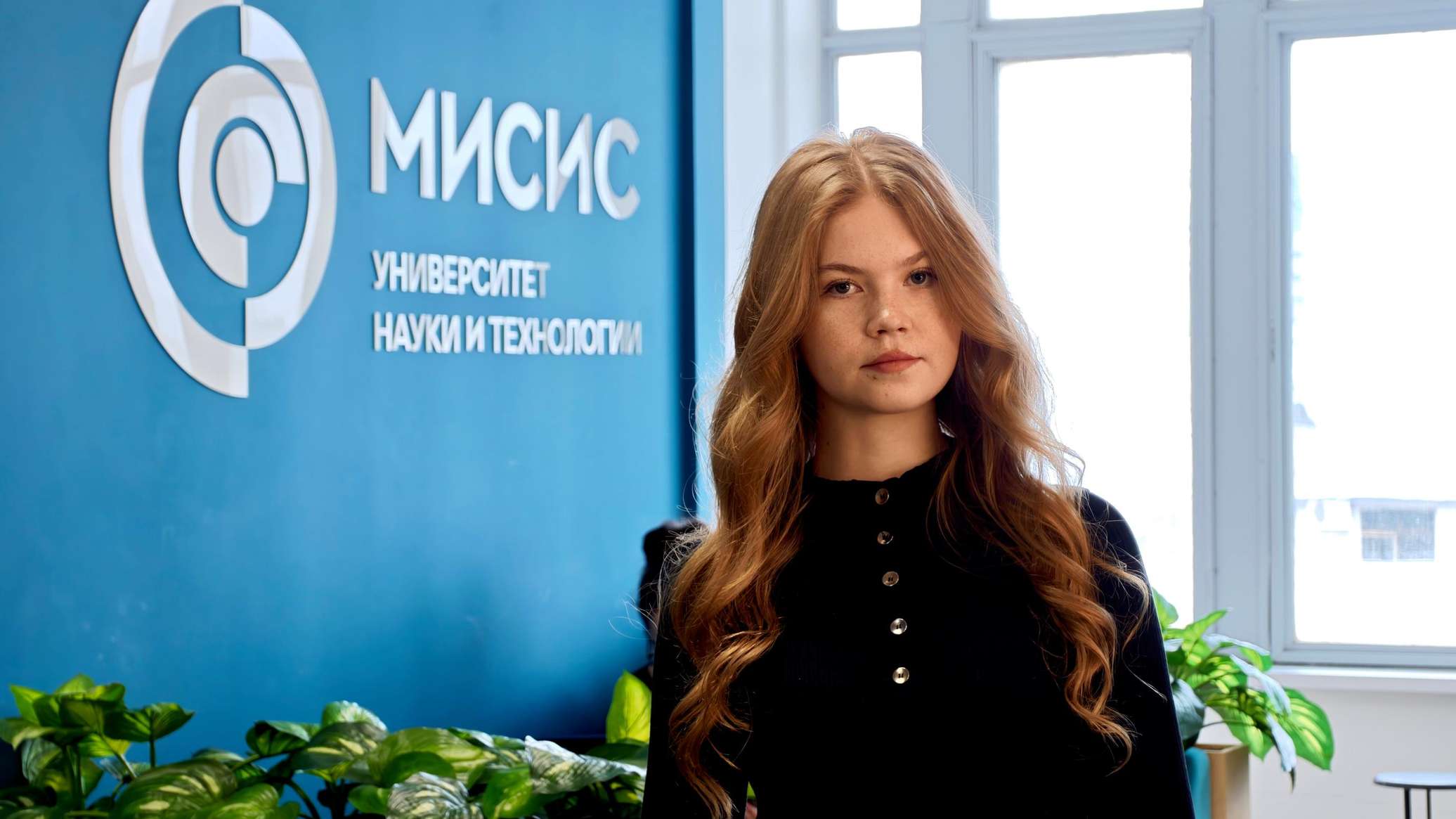
Sofia Zhuravleva from Temirtau had planned to become a teacher or psychologist. However, she ultimately chose mining engineering. This was reported by Qazaqyia.kz citing Sputnik Kazakhstan.
Her decision was influenced by additional physics classes in the 11th grade and participation in the international "I Want to Join MISIS!" olympiad. Acquaintances who were already studying at the university advised her to take part in the olympiad. The student told a Sputnik Kazakhstan correspondent how she prepared for the olympiad and what advantages it gave her.
How did you decide to apply to university?
– After finishing school, I wanted to enroll in one of the universities in Russia. Initially, I considered pedagogy and psychology. Besides, I always liked biology. However, everything changed when in the 11th grade I started attending additional physics classes at a specialized center. Firstly, it was there that I realized physics was a subject close to me. Secondly, the level of students studying at the center was very high. Many of them later entered MISIS University. They were the ones who told me about the olympiad and advised me to participate.
Pedagogy and mining are two different fields. Why did you change your direction and decide to participate in the olympiad?
– I realized that technical specialties have great prospects and provide more opportunities for professional self-fulfillment. I also like to test myself. The olympiad became exactly such a test for me. In addition, participation in it allows you to get extra points for admission. And the distance format and free participation removed unnecessary barriers.
The olympiad covers three areas: mathematics, physics and Russian language. Have you participated in olympiads before? How did you prepare?
– Previously, I had only participated in school olympiads at the Kazakhstan level. And I participated in olympiads organized by higher education institutions for the first time. Therefore, I prepared for a new format for myself: I completed tasks from previous years and trial versions on the website. If I couldn't complete a task, I didn't postpone it, but analyzed it together with the teacher. Tasks that covered several topics and were solved in several stages helped especially. Through them, I understood the format of the olympiad better. In general, the most effective was combining independent preparation with analyzing complex tasks together with the teacher.
The olympiad is held remotely, with proctoring, that is, video surveillance. Did this cause you anxiety or, on the contrary, was it convenient?
– At first I was a little nervous, sitting in front of the camera is not easy. There is no need to go anywhere, everything takes place at home, in a familiar environment. The main thing is to check the equipment in advance and remove unnecessary items from the table. Actually, what worried me more was that I encountered such a format for the first time and didn't know how it would go. I would compare proctoring to a game: when you understand the rules, you feel much freer.
How did the olympiad itself go? What benefits did it bring you during admission and in your studies at the university?
– After each subject I was very nervous. I thought I hadn't completed all the tasks perfectly, recalculated the problems and checked where I made mistakes. In most cases, it turned out that I had completed the tasks correctly.