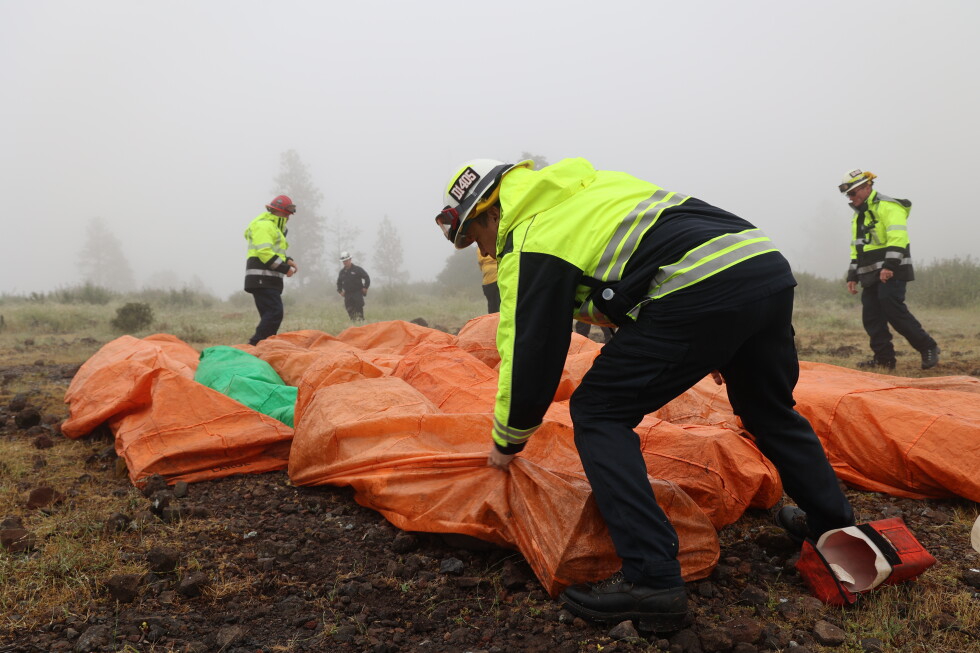
Five firefighters battling a fast-moving wildfire in Colorado were forced to deploy their fire shelters when they couldn't escape the flames. Three of them were overcome and died, while two were injured and hospitalized. This was reported by Qazaqyia.kz citing Associated Press.
Fire shelters are mandatory equipment for crews who work across rugged terrain where things can change at a moment's notice, especially when extremely dry and windy weather drives the flames, as happened last Saturday. Fire shelters have saved hundreds of lives over the years, but officials caution that the equipment doesn't guarantee protection in every scenario. Instead, the focus is on having well-defined escape and safety zones.
"Ideally they're trying to escape and avoid that entrapment," said Shawn Steber with the U.S. Forest Service's National Technology and Development Program in Montana. "But if it comes down to it and it's their last kind of thing they can bring out for their protection, then yes, in that sense it is kind of that last line of defense."
Crafted from aluminum foil, silica fabric and fiberglass, fire shelters are designed to protect users from the intense heat of flames and to trap breathable air inside as a fire passes. Inhaling hot gases from a fire can damage the airway and lungs. The ability of a fire shelter to withstand heat depends on how long its materials are exposed to heat and other factors, Steber said.
The one-time-use shelters have been improved occasionally. A recent change made the shelters stand up better when deployed, said John Montrastelle, a sales manager with Anchor Industries, a maker of fire shelters. "Whenever there's an incident, a loss of life, there's more discussion and more talk about a better shelter, a better fire shelter, something that will protect the firefighter in higher temperatures," he said.
Other modifications include a one-piece floor, improved hold-down handles and reduced bulk. Fire shelters weigh around 6 pounds and are folded up inside several protective layers in a firefighter's pack. Moisture, sand, debris and rough use can damage them.
Wildland firefighters have been required to carry fire shelters for decades. Training typically occurs once a year, often during a hike or while practicing digging a fire line. It's also part of training for cadets hired by local firefighting agencies.