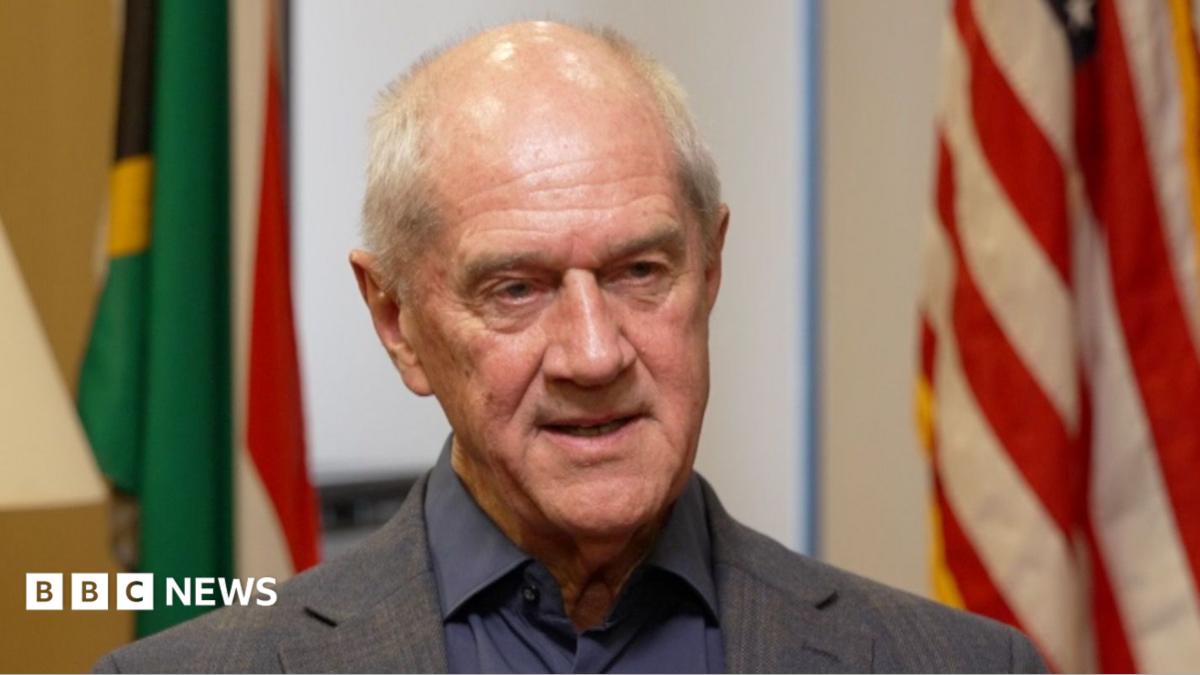
South Africa's new ambassador to Washington, Roelf Meyer, has rejected Donald Trump's assertion that there is a genocide against white Afrikaners. This was reported by Qazaqyia.kz citing BBC News.
Meyer said his identity as a "born Afrikaner" gave him the legitimacy to speak on the issue. He recalled thinking "Is he talking about us?" when he first heard Trump say it.
Meyer was one of the chief mediators to end white-minority rule known as apartheid in South Africa in the 1990s. He was appointed ambassador to the US in April, after diplomatic relations between the US and South Africa plummeted.
In an interview with the BBC, Meyer said the facts about violence in South Africa had been misrepresented and he never got a clear answer about where this "misdirection of information" was coming from.
Last year, Trump accused South Africa of white genocide in a meeting with President Cyril Ramaphosa at the White House and launched a US refugee pathway for Afrikaners.
Since last year, nearly 13,000 refugees were admitted to the United States and all but three were South African. Among them was Lielie, the name she uses publicly, who moved with her family to Texas from South Africa, where they had lived on her stepfather's farm, growing macadamia nuts and bananas.
Despite walls around the house, an electric fence, and eight bull terriers, she said she felt "fear the whole time" and that on three occasions she saw people entering her property.
"Nothing was stolen, we weren't harmed, but there are friends of my husband, people that lived around us, they were brutally attacked," she said.
She said since moving to the US under the Trump administration's refugee pathway her life had changed, she felt safer walking around, and "my kids can actually play outside".
The Trump administration is planning to admit up to 17,500 additional white Afrikaners as refugees over the next 12 months, according to a notice sent to Congress on Tuesday.
In a statement to the BBC, a White House spokeswoman said: "President Trump has provided a lifeline for Afrikaners, who are being raped, maimed, killed and driven off their property across South Africa."
"While the South African government and many in the media have brushed off the horrific lived experiences of this community, the Trump administration continues to process applications for refugee status because the president has a humanitarian heart."
SJ Du Venage, who lives on South Africa's west coast, has been trying to move to the US under the new scheme. Du Venage is a council member of the Freedom Front Plus, a right-wing Afrikaner party, and argues that there is a "political drive towards killing white people, and killing the farmers on the farms".
"There's absolutely an agenda to wipe us out here," he says.
An Afrikaner lobby group is holding a vigil on Saturday with thousands of white crosses on Washington's National Mall to commemorate what it says are victims of "farm attacks".
Claims of genocide against white South Africans have been discredited by every political party in the country, including by those representing Afrikaners.
"I'm an Afrikaner from South Africa myself," Ambassador Meyer said, "and I can say that I've never experienced something of that kind."
Meyer said he would like to have a conversation with Trump about the reality of the situation, saying that as a "born Afrikaner", he has the "legitimacy" to speak about the subject. The ambassador helped negotiate an end to apartheid on behalf of the National Party, which was responsible for it, with now-president Cyril Ramaphosa also a key negotiator for the African National Congress party.