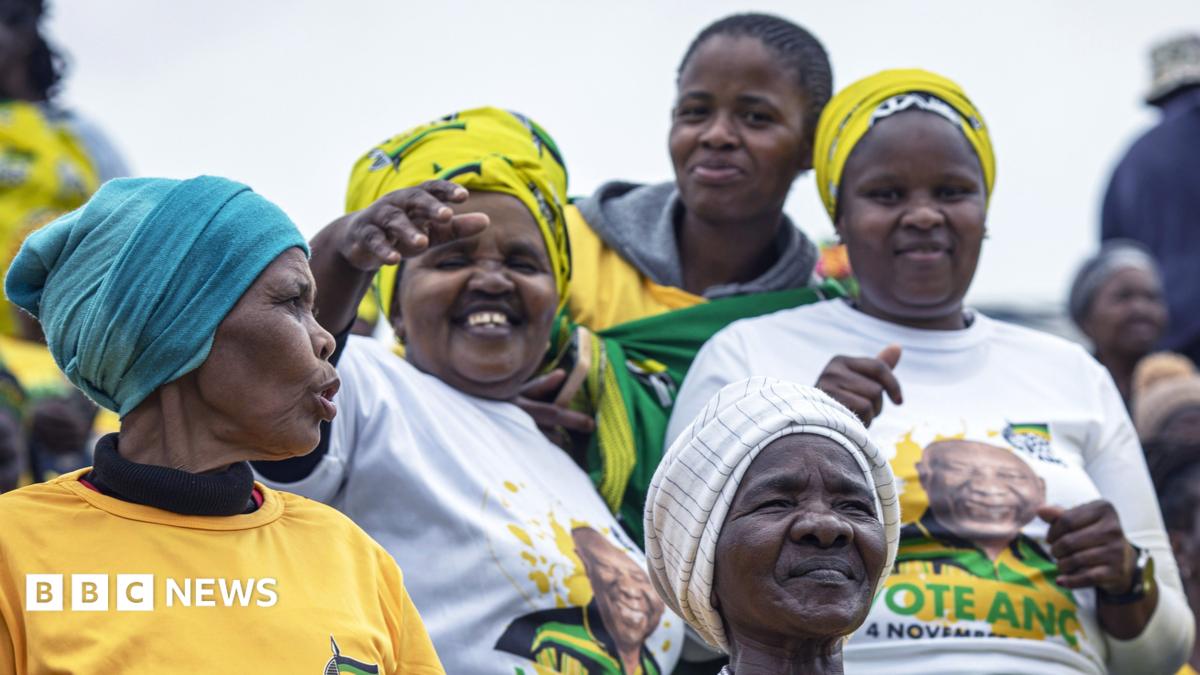
South Africans are voting in highly contested local elections likely to see a haemorrhaging of votes for the country's former ruling party, the African National Congress (ANC). This was reported by Qazaqyia.kz citing BBC News.
This year's voting season has been marked by intense campaigns that have included politicians spinning cars, watching grannies knit and even wading through giant-sized potholes. More than 500 parties are contesting the elections.
Leaders are campaigning to head South Africa's nearly 300 municipalities, responsible for basic service provision such as water, electricity and refuse collection.
For the ANC, the elections are a chance to prove it still has what it takes to govern. The party had a disastrous showing in the last national election, when it lost its parliamentary majority for the first time since 1994 when the racist apartheid system ended.
Support for the party has been dropping significantly over the years because of anger over high levels of corruption, unemployment and crime. At its peak, in 2004, the ANC got 70% of the vote in the general election. Two decades later its share dropped to 40%.
Polls and pundits have predicted a further loss in these elections but President Cyril Ramaphosa has denied that his party was in a downward spiral. "What I'm seeing here is that the ANC is going higher and higher and on the 4th [of November] we will show those naysayers," he told supporters at the party's final election rally on Sunday.
In townships like Alexandra, north-east of Johannesburg, the ANC has traditionally had a strong supporter base but poor governance and voter apathy are unravelling this support. The BBC visited the sprawling township a week before the elections and spoke to residents to get their views. One of them was Sanele Ntombela, who is a first-time voter excited to make his voice heard.
We found the 18-year-old hanging out with his friends on a street corner. Most of his friends said they had no intention of voting and had not registered to do so. They cited a lack of change and deteriorating delivery of basic services. But Ntombela was looking forward to voting for the first time and thought it might lead to change. "We face many challenges in Alexandra. There's rubbish everywhere and we struggle with electricity and water and many other issues," he said.
Just metres away, heaps of rubbish lay gathered beneath a streetlight pole covered in election posters from the different political parties. On the other side of the street, drain water trickles through the many potholes that have gutted that part of the road.
The BBC also spoke to Zandile Mncube, who said she wouldn't vote, even though she is registered to do so. The 33-year-old woman also cited poor service delivery and performance by local leaders for her decision. "It makes no difference [whether I vote or not]. Things have gotten worse over the years," she said.
Alex, as the township is known, is a stone's throw away from Sandton, Africa's richest square mile, but the differences could not be starker. Sandton is known for its skyscrapers, designer shops and well-maintained roads but in Alex, houses are sandwiched together and rubbish, either piled together or left strewn across the pavement, is everywhere. The stench of raw sewage and uncollected rubbish is heavy in the air, but residents appear used to it.
The issues plaguing Alexandra are not unique. A drive around Gauteng province reveals similar patterns of neglect and disrepair, especially in the townships. South of Johannesburg, Soweto looks marginally cleaner than Alexandra, but residents also complain about service delivery.
Mduduzi Makhubo, 45, has lived in Soweto his entire life and he told the BBC of the community's daily struggles with accessing water and electricity. "Every Monday we know we won't have water after 2pm," he said. Makhubo is registered to vote and intends to use his vote to deal with the "arrogance" he says local leaders have towards residents and "change the status quo".