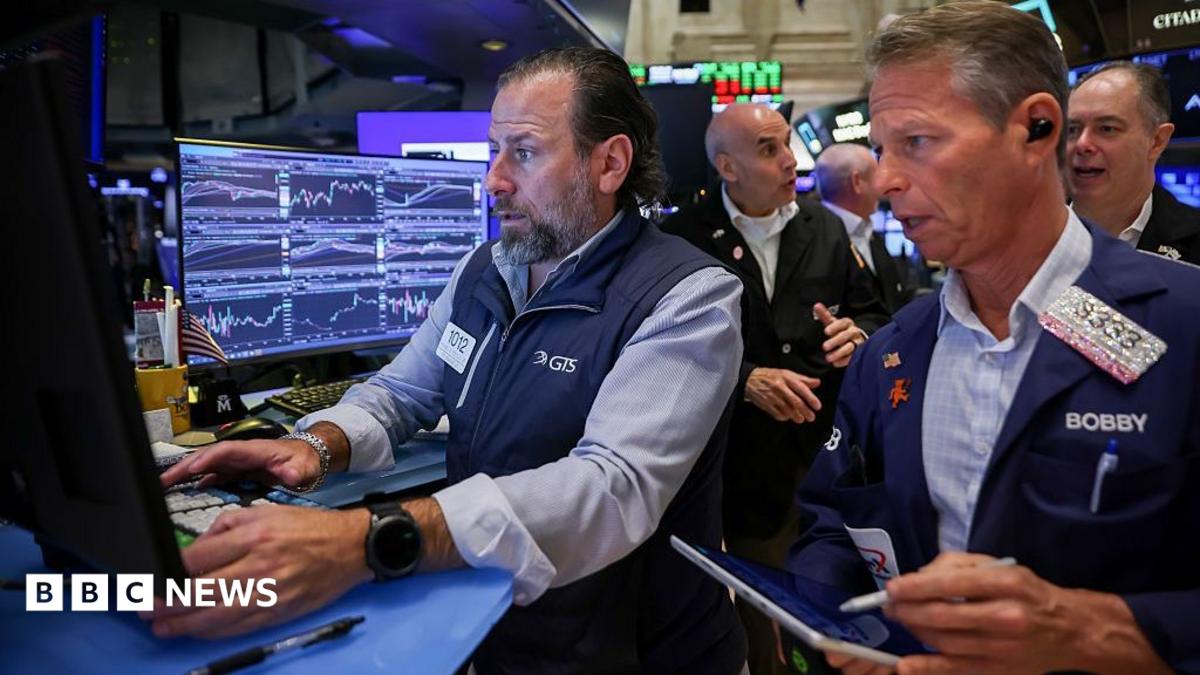
Major tech firms including Nvidia, SpaceX and Tesla have lost hundreds of billions of dollars in market value. This was reported by Qazaqyia.kz citing BBC News.
The losses came a day after the Democrats swept to victory in the midterms. Shares in firms across the tech and artificial intelligence sectors plummeted, partly driven by concerns of tougher regulation following Democrat wins in key data centre states including Texas, Ohio and Georgia.
Those losses dragged the tech-heavy Nasdaq Composite stock index down by more than 5.5%, its deepest one-day drop in 19 months, while other key US stock indexes also fell.
Following the election, some tech leaders said they needed to put more effort into marketing data centres and AI.
Democrats in races across the US campaigned against data centres and AI, and there were dozens of measures on ballots around the country aimed at restricting the development of the hubs crucial for powering the technology.
Texas governor-elect Gina Hinojosa campaigned heavily against data centres, pledging a moratorium on new construction in the sector.
Shares in companies heavily exposed to AI data centres, including crucial chipmakers and semiconductor manufacturers, fell sharply on Thursday, highlighting investor concerns that had already been growing.
Nvidia shares slid more than 9%, knocking more than $400m off the firm's market value.
Other chipmakers also suffered, with AMD and Micron both dropping by more than 17%. Intel shares also dropped, down 10.3%, while memory card maker SanDisk plunged more than 22%.
The Philadelphia Semiconductor Index, which tracks the performance of 30 of the largest companies involved in semiconductor production, fell by more than 12%.
Shares in Elon Musk's companies SpaceX and Tesla also plunged, falling 8% and nearly 11% respectively and shaving more than $300m off the firms' market value on Thursday.
Musk had spent nearly $450m backing Republican campaigns, including at least $45m in support of Ken Paxton for the Texas senate seat, but Texas was turned blue in the Democratic tsunami on Tuesday night.
The stock falls also hit other major US stock indexes. The S&P 500 index fell by 4.4% by the end of trading, while the Dow Jones Industrial Average erased gains made on Wednesday to close down more than 3.4%.
The Nasdaq Composite fall was so large it is now in what market watchers call correction territory, which is where an index or company value falls at least 10% below its recent high.
Susannah Streeter, chief investment strategist at Wealth Club, said the steep sell-off on the Nasdaq and the S&P 500 was sending shockwaves into other markets.
"Fresh panic over the AI trade has hit Wall Street hard," she said.
"Fears that the vast sums poured into AI infrastructure may not deliver the returns investors have been banking on are now colliding with the prospect of a sharp slowdown in data centre construction."
Some tech leaders have said they were caught off guard by the backlash against data centres in the midterms.
OpenAI president and co-founder Greg Brockman said he believed everyone had been surprised by the reaction to data centres, and more work needed to be done to ensure communities were on board.
"A lot of our shift over the course of this year has really been to realise that from San Francisco trying to build infrastructure in Texas, Georgia, and other places, you can't just tweet and say: 'This is going to be good.' You need to be in those communities," Brockman said at the WSJ Tech conference in Napa, California on Wednesday evening.
Meta's president Dina Powell McCormick said that the industry needed to put more effort into selling AI as a good idea.
"I think we need to double and triple down on telling the story," she told the WSJ conference.
Alongside the immediate impacts of the US mid-term elections, some investors have become concerned that AI shares could be in a bubble that is due a correction.
These firms you've never heard of are feeding fears the AI bubble could burst
Food, fuel and taxes – can the Democrats actually make life cheaper?