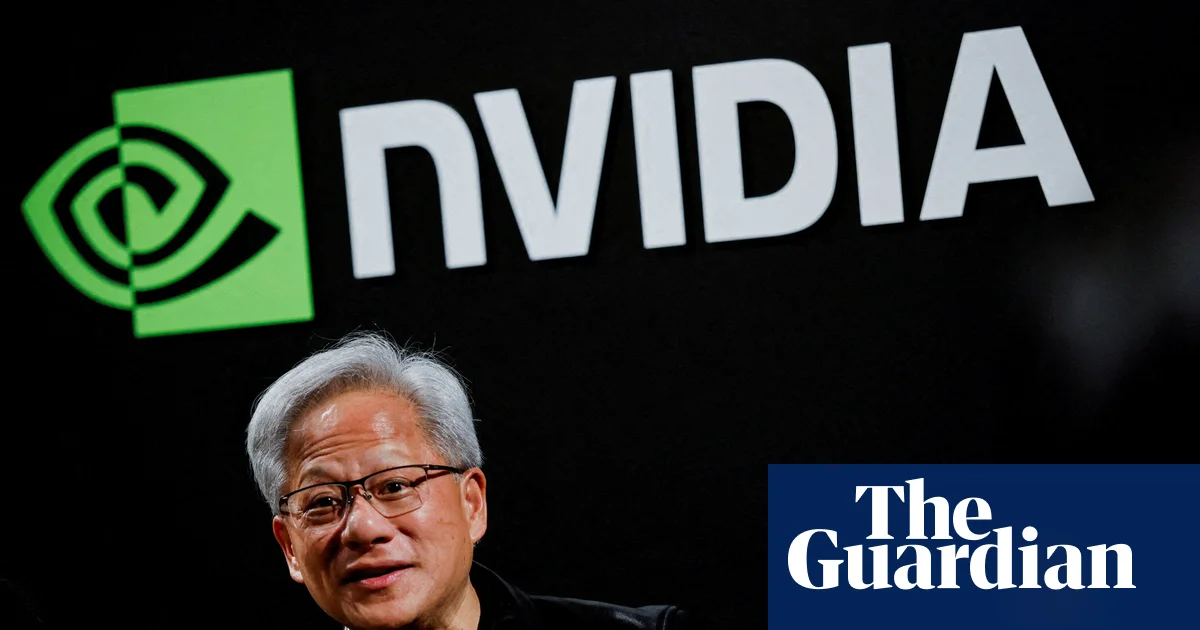
The boss of chipmaker Nvidia has said AI will not develop to a point that will lead to the extinction of the human race within a few years, rejecting such assertions as overblown 'doomsday narratives'. This was reported by Qazaqyia.kz citing The Guardian.
Jensen Huang, the co-founder and chief executive of the $5tn AI chipmaker, said the claims made on social media by the former Anthropic researcher Jacob Coxon that AI could become 'superhuman' and kill off humanity within the decade was 'irresponsible'.
'2030 is not going to be the end of the world. There is 0% chance that's going to be the end of the world,' Huang said in an interview with CBS News. 'Scaring people is unnecessary. It is irresponsible.'
Coxon's remarks, which were backed by two other researchers at the maker of the AI Claude, prompted an international debate about the dangers and lack of oversight of AI as companies race to develop ever more powerful models.
US lawmakers have criticised AI companies over the risks and Anthropic published a threat intelligence report detailing how criminals, state-sponsored groups, spyware vendors, scientists and propagandists have tried to use its powerful AI models to design missiles and bombs, create deadly pathogens and spy on dissidents.
Dario Amodie, the chief executive of Anthropic, Sam Altman, the boss of the ChatGPT maker OpenAI, and Elon Musk have called for development of the technology to be slowed down.
However, Donald Trump has dismissed anxiety over the AI development as a 'hoax' and a 'conspiracy', adding that a slowdown could give China the edge.
On Sunday, Scott Bessent, the US Treasury secretary, said the US and China had agreed to set up an AI dialogue mechanism to alert each other to help contain the technology's potential dangers.
Huang insisted that predictions of an extinction-level event caused by AI were 'not grounded in science'.
'Our company's success is directly connected to the safe deployment of products and services,' he said. 'If we don't continue to do that, our value would be diminished. You have all kinds of liabilities associated with cybersecurity [and damage liability laws]. Apply that first. Don't let this doomsday narrative allow someone to relieve them of the laws that currently exist.'
Huang's comments came at a new stage of the global debate over AI safety. As the head of a chipmaker, he is considered one of the most influential figures in the AI industry, so his opinion carries significant weight in the sector's discussion.
Coxon's statement was widely discussed among AI researchers and policymakers alike. Anthropic's threat intelligence report showed that AI models could be used for dangerous purposes, raising the question of the need for stronger regulatory oversight.
The agreement on an AI dialogue mechanism between the US and China reflects the two major powers' desire to jointly manage technological risks. According to Scott Bessent, this mechanism will allow the parties to alert each other about potential dangers.
In his interview, Huang noted that the company's success is tied to safe deployment and stressed the importance of complying with existing laws. He warned that doomsday narratives should not become a tool for escaping legal liability.