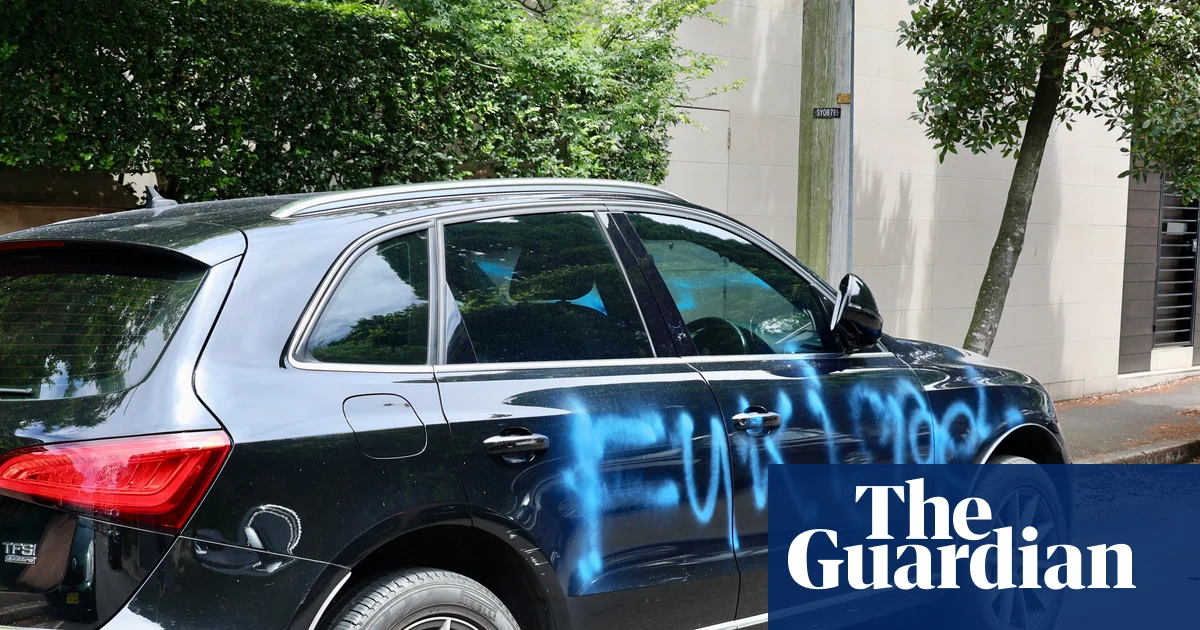
Mohommed Farhat has spent nearly two years in prison after pleading guilty to 15 offences related to property damage, including spray-painting "Fuk Israel" on cars in Sydney's east and setting another vehicle alight in late 2024. This was reported by Qazaqyia.kz citing The Guardian.
This week, New South Wales supreme court justice Desmond Fagan ruled that police, lower courts, and various state agencies all incorrectly labelled Farhat's actions antisemitic, meaning he was treated more harshly.
Fagan wrote in his judgment, released on Tuesday, that "Fuk Israel" was "a curse against a foreign state". He also criticised the controversial IHRA definition of antisemitism as "detached from reality" and "inept".
Farhat's case came before Fagan this year when the state tried and failed to cast him as a future terror threat based on what Fagan called the same "misconception" about his motivation.
During a July hearing, Fagan told the parties: "This proceeding against this man seems to me to have been derailed and gone completely haywire right from the beginning by the police representation to the magistrate and submissions to the magistrate and again to the district court judge that this content was antisemitic. And it's erroneous."
On Wednesday, Fagan said that the case appeared to be a "serious miscarriage of justice".
Farhat, then 20, was remanded in custody in November 2024. He and a co-offender had spray-painted slogans on cars, defaced buildings, and set alight a vehicle that was destroyed in Woollahra. The graffiti included "Fuk Israel" and "PKK coming" – a reference to the Kurdistan Workers Party.
Farhat pleaded guilty to the property damage offences but insisted he was recruited to do the graffiti by an unknown person. He said he was told what to write and was paid money and promised drugs.
The incident was the first of a spate of graffiti and arson attacks in Sydney's eastern suburbs that summer which the Australian federal police later determined were carried out by paid criminals and orchestrated by organised crime figures.
The magistrate determined the property offences were antisemitic and handed Farhat an aggravated sentence – 20 months in jail with a non-parole period of 10 months.
He was due to be released on parole from early December 2025. The magistrate set the non-parole period with a note that Farhat would be "better served with an extended period of supervision on parole, particularly around drug and alcohol and mental health interventions".
But the parole order was later revoked after a successful application by the commissioner of corrective services and the crown.
The state then applied for a one-year extended supervision order (ESO) under the Terrorism Act, which would have subjected Farhat to 55 conditions on his release from jail.
In the hearing regarding that application in July, the supreme court was provided intelligence which showed counterterrorism police had accepted, three weeks after Farhat's arrest, that he had been recruited and was not ideologically motivated.
But police had not shared that information with the prosecution or the magistrate who sentenced Farhat.
Fagan this week found that key evidence was also not tendered to the magistrate, including a page of Farhat's bank statements which showed money had been transferred to his account, which Fagan accepted was proof of his recruitment.
Fagan ruled the magistrate had erred in deeming the offences antisemitic.
Fagan found the crown solicitor, in their submissions to revoke the parole order, continued to wrongly conflate "political comment" with antisemitism. He found the intervention by the commissioner of corrective services was "most unusual" – he was not aware of any other such interventions.
Farhat unsuccessfully appealed the severity of his sentence in the district court in January 2026.
Fagan found that during the appeal, a representative from the director of public prosecution had continued "merging" political speech with antisemitism "to the extreme" and had made "extravagant and untenable" submissions.
That same month, the state lodged its application for a terrorism protection order, again arguing that "Fuk Israel" conveyed an antisemitic message.
Fagan dedicated a significant portion of this week's written judgment to distinguishing anti-Israel speech from antisemitic speech.
"For decades Jewish people have been amongst the most forceful critics of Israel's conduct towards the Palestinians and have been the source of insistent pleas for the rights of the Palestinians," he said.
"How can it be antisemitic – in the established sense of the word – to disparage Israel when doing so accords with the words and beliefs of many Jews?" he asked.
He rejected the argument that it was antisemitic. Fagan noted the state also claimed that because the slogans were spray-painted in an area with a concentration of Jewish residents and there was criminal damage the words "Fuk Israel" took on an antisemitic meaning "in context".
"I do not accept that," he said.