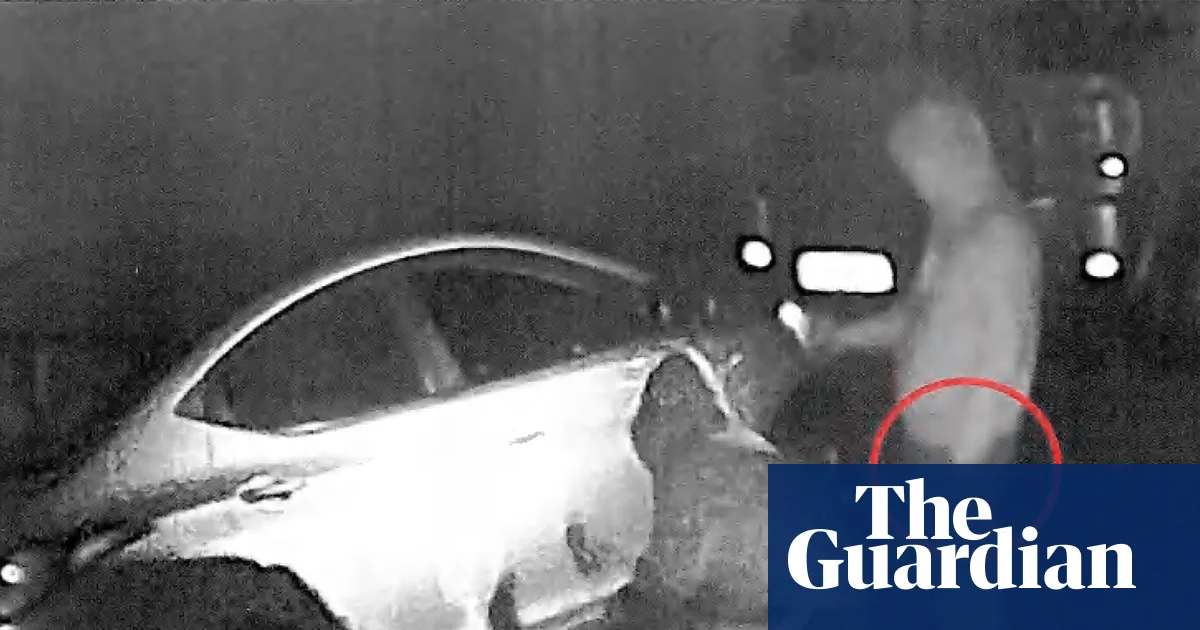
The New South Wales government could appeal a supreme court judge's controversial decision to refuse its request for a terror order over a Sydney man convicted of writing 'Fuk Israel' on cars and setting another vehicle alight in late 2024. This was reported by Qazaqyia.kz citing The Guardian.
Justice Desmond Fagan this week found disparaging Israel was 'political comment' not antisemitism. He rejected the state's application that Mohommed Farhat be subjected to a one-year extended supervision order under the Terrorism Act when released from prison.
Australia's peak Jewish group has labelled Fagan's ruling dangerous judicial 'activism' that should be reviewed. The Executive Council of Australian Jewry argued the ruling avoided 'the community impact'.
Fagan's damning finding in relation to the handling of Farhat's case was published on Tuesday. The judge said on Wednesday it appeared to be 'a serious miscarriage of justice'.
Farhat remains behind bars despite initially being due to be released on parole from early December 2025.
Fagan found lower courts and various state agencies had incorrectly labelled Farhat's actions antisemitic – meaning he was treated more harshly after he pleaded guilty to 15 offences in connection with property damage in Woollahra.
The supreme court was provided with intelligence which showed counter-terrorism police had accepted, three weeks after Farhat's arrest in November 2024, that he was not ideologically motivated but rather had been recruited and paid to write the slogans.
Police had not shared that information with the prosecution or the magistrate who sentenced Farhat, Fagan found this week. It also wasn't shared before the state sought to cast Farhat, who has a Hezbollah tattoo on his neck, as a terror threat.
Fagan found there was an 'insignificant' risk the now 22-year-old, who was of 'limited intellect', would commit a serious terrorism offence.
A government spokesperson said on Thursday the attorney general, Michael Daley, was 'seeking urgent advice about the prospects of an appeal' over Fagan's decision to knock back the state's request for an extended supervision order.
Guardian Australia asked Daley, the police minister, Yasmin Catley, and the corrections minister, Anoulack Chanthivong, about Fagan's findings in relation to how the police and other agencies handled the case.
A government spokesperson said that the 'judiciary operates independently of government and this independence is crucial to protect the administration of justice in NSW'.
'Our government has taken strong action against antisemitism and hatred,' the spokesperson said.
Given the matter remained before the courts and the attorney general was seeking advice regarding an appeal, they declined to comment further.
The Greens MP Sue Higginson on Thursday wrote to the NSW police watchdog, the Law Enforcement Conduct Commission (Lecc), requesting an urgent investigation into the police's handling of the case.
She said she was 'gravely concerned systemic or deliberate maladministration has resulted in a severe miscarriage of justice'.
'The material failure of police to provide critical evidence to the court has resulted in Mr Farhat's prolonged and quite possibly wrongful incarceration, as well as serious errors of fact and law,' Higginson wrote in her letter.
The watchdog's chief executive, Peter Johnson SC, said in budget estimates on Thursday the Lecc was considering the request.
NSW police said in a statement on Friday: 'This matter is currently under internal police investigation and as such no further information can be released to the media at this time to protect the integrity of the investigation.'
Fagan dedicated a significant portion of his written judgment to distinguishing anti-Israel speech from antisemitic speech.
He was highly critical of the controversial International Holocaust Remembrance Alliance (IHRA) definition of antisemitism referred to in the crown's evidence, and which is being adopted by Australian institutions after a push by the special envoy to combat antisemitism, Jillian Segal.
Her plan to combat antisemitism states: 'The envoy will work with state and federal governments to require the IHRA working definition of antisemitism to be used across all levels of government and public institutions to inform their practical understanding of antisemitism.'
In his ruling, Fagan said 'the IHRA proposal is detached from the reality of the common usage and understanding of antisemitism in this country'. He said he was 'not the first to have criticised the inept drafting of the IHRA formulation'.
The judge ruled that disparaging Israel was not antisemitic and stated that 'for decades Jewish people have been amongst the most forceful critics of Israel's conduct towards the Palestinians'.
The definition has been formally endorsed by the Australian government and is the accepted definition of the royal commission into antisemitism established after December's Bondi beach terror attack.