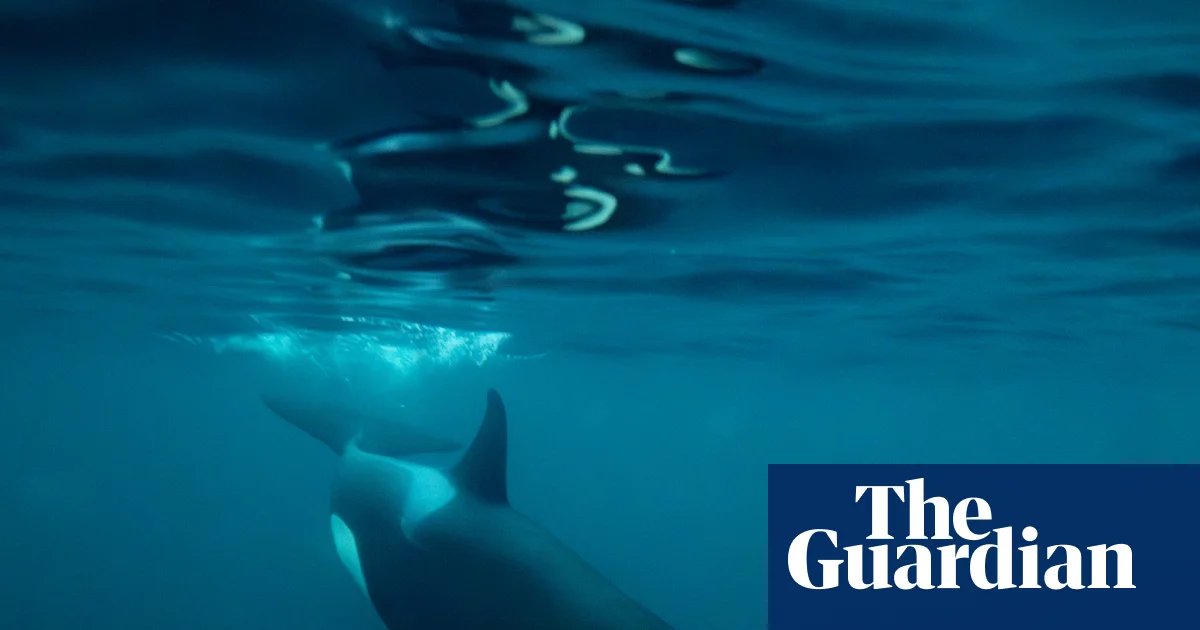
The Farne Islands off the Northumberland coast have long drawn nature enthusiasts eager to see resident guillemots and puffins. But recently, another much larger black-and-white animal has been delighting wildlife spotters: orcas have been appearing more regularly than ever before. This was reported by Qazaqyia.kz citing The Guardian.
This was reported by Qazaqyia.kz citing The Guardian.
In the past, fishermen might have glimpsed orcas far out at sea, but this year and last, sightings have been more frequent and much closer to shore, with dolphins also becoming more common. Cetacean experts say it is difficult to pinpoint the exact reason for the increase, but it could be a welcome sign that the marine ecosystem is becoming healthier.
Local Tour Operator's Account
Andrew Douglas, owner of Serenity Boat Tours, said he "was like a little child... excited as hell" when he first saw orcas last year. "I looked around at everybody else, and the smiles are just beaming, and you just think to yourself, that's what it's all about," he said. "The big dorsal fins on the males are just absolutely huge, it just makes you smile, it's really cool."
Since then, he and his crew have spotted pods of orcas several times—previously, he had only seen orcas once, when he was 20. Now participants on his tours often ask, "When will we see the orcas?" But, he said, "they're just unpredictable, so you never know."
While the Farne Islands are an attraction in themselves, he has seen "spurts of it getting a lot busier" since the orca sightings. "Having the orca, it doesn't half boost things," he said.
Impact of Sandeel Fishing Ban
Douglas believes a government ban on sandeel fishing may have contributed to the increase. "That's the best thing the government's done so far," he said. "They banned it about two years ago, and that's made a massive difference straight away. Not just from the orcas, but from dolphins and other things, you don't pinch from the bottom of the food chain, you need that bottom of the food chain to get the rest of the stuff working, and it's made a massive difference for the birds as well, so I think that's one of the big things."
Sandeel are tiny fish that feed those at the bottom of the food chain, and removing them harms higher-level animals. "Things have just started to come back," he said. "So you're starting to see a lot more mackerel now, a lot of herring now, so I think these orcas are attracted to all that food."
Crew Member's Experience
Crewman Aaron Fordy, born and raised in Seahouses, has seen orcas four times and can list the specific dates from memory. "You're used to dolphins and porpoises and things which are a lot smaller," he said, "and then you get an orca which is massive, big dorsal fins, they stick out like a sore thumb as well, just black and white in a blue sea, it's really cool."
The first time, he and his crewmate "were both ecstatic, jumping about, really excited." They sent videos to researchers in the Shetlands, who identified several different pods rather than the same one returning.
Scientists' Views
Dr. Conor Ryan, an honorary research fellow at the Scottish Association for Marine Science, said there is "not really a clear picture" to explain the increase, citing factors like better publicized sightings, orcas moving inshore, or growing populations. However, he cautioned that orcas struggle to breed in polluted British waters, and the Shetland population is on the verge of extinction.
He called the sandeel fishing ban "a very logical place to look for an explanation." "By removing the bottom of the food chain, we decrease the biomass of the whole system, so there's less energy, fewer calories available for everyone, and top predators usually suffer the most," he said.
He added that studying whales is a good "litmus test for how the ecosystem is doing." "In general, if you're getting big predators returning to an area, that's a good sign of a healthy ecosystem," he said.
Julia Sutherland, a researcher at the University of St Andrews, said orcas are "highly mobile animals" and "it could be a combination of increase in presence and a slight increase in reporting thanks to social media." However, she added: "What we know about killer whales in the UK is we're lacking so much knowledge in comparison to elsewhere in the world, so it's quite hard to draw really concrete conclusions at this stage."
Dr. Luke Rendell, also from the University of St Andrews, said the population may be increasing, but data is insufficient.