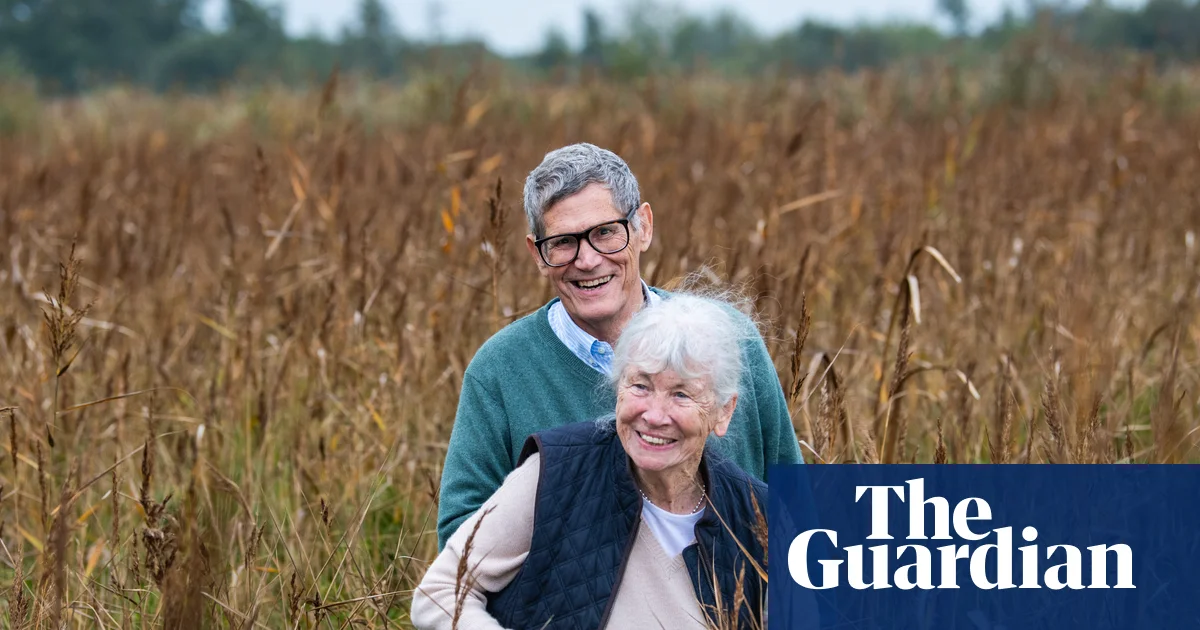
Tim and Geli Harris, who farm 460 acres in the Norfolk Broads, have scored a hat-trick of landmark legal victories to save an internationally important wetland after they won again in the high court this month. This was reported by Qazaqyia.kz citing The Guardian.
Lady Justice Lieven found that Natural England failed in its statutory duty to protect Catfield Fen from pollution after nitrates and phosphates washed from arable fields into one of the finest examples of calcareous fen in western Europe, home to 2,500 species including rarities such as the fen orchid, crested buckler fern, breeding bittern and swallowtail butterflies.
In a scathing assessment of Natural England’s inaction since the Harrises first reported the pollution to it in 2021, the judge said the cause of the pollution was “the most basic level of common sense” and required action by the government’s conservation watchdog.
The Harrises have spent 15 years and £1.5m of their own money taking action to hold to account government agencies for failing to protect the fen, which is part of a special area of conservation (SAC), an internationally important wetland protected by law. The marshes lie within the Broads national park.
“This is bigger than a little ditch in Norfolk,” says Tim. He fears that “regulatory inertia” is preventing pollution from being halted on waterways across the country. “Inertia is prevalent throughout all the regulatory bodies. It’s a landmark judgment because it says they can’t just do nothing.”
The couple are big fans of Dirty Business, the recent Channel 4 dramatisation of a maths professor and a retired detective’s battle against sewage pollution, the water companies and the Environment Agency.
“It’s just like that film when you go to a meeting,” Tim says. “The language is from [George Orwell’s] 1984. What we call the light side doesn’t have the money. The dark side does. That’s where the money is. Of course it is.”
Tim held senior roles in the shipping industry, collecting “the wages of sin”, before turning to environmental campaigning in retirement. “She’s the greenie,” he says of Geli, who grew up near the forests around Heidelberg, Germany, and has always loved the natural world.
They bought their farm, which came with a large chunk of Catfield Fen, in 1994, wanting to live closer to nature. They turned their arable fields into pasture to prevent soils and pollution from washing into the fen, and continue to tend English white park cattle, sheep and rare-breed Eriskay ponies.
“It is beautiful,” Geli says of the fen, which requires a careful rotational cut to preserve its rare plants, invertebrates and birdlife. “It’s a little bit of wildness. It’s mysterious. There are places here where we’ve never been – they are pure nature.”
Tim says: “It’s taken 1,000 years to create this and people could destroy it very quickly.” Geli adds: “If you water your plants with the wrong water, they die quite quickly.”
The Harrises take conservation advice from the experts at Natural England. “We get on well with Natural England, apart from suing them,” Tim says. “They all came to tea and we talked about everything but the thing [the legal case]. It was a very British occasion. They have some very good people. The trouble is too many no longer have fire in their bellies. They are apparatchiks. We respect them but we wish they had more ‘go’.”
Natural England said it accepted the court’s verdict that it had not done enough to protect Catfield Fen but it would not comment on ongoing legal proceedings.
In 2016, the couple won a public inquiry that demonstrated that too much groundwater was being taken from the valley by water companies and local farmers, causing Catfield Fen to dry out. They won a second battle in 2022, forcing the Environment Agency to limit the abstraction of water close to other nature-rich sites on the Norfolk Broads.
Their principles have cost them local friendships. They say National Farmers’ Union reps rejected their application for membership of the local branch, saying half their members would resign, with farmers upset at restrictions on their abstraction of water to boost lucrative crops such as potatoes. “We’re farmers, we’re not anti-farmer,” Tim says.
Since their 2022 legal victory, the Harrises have noticed an improvement in the water levels and biodiversity of Catfield Fen’s dykes. Geli says: “We are a Noah’s ark until things get better and nature can spread outwards from here again.”
The fen and its wildlife may be in a better condition under their stewardship, but they are not confident that nature is winning. “The evidence this summer was that the insect numbers are going south...”