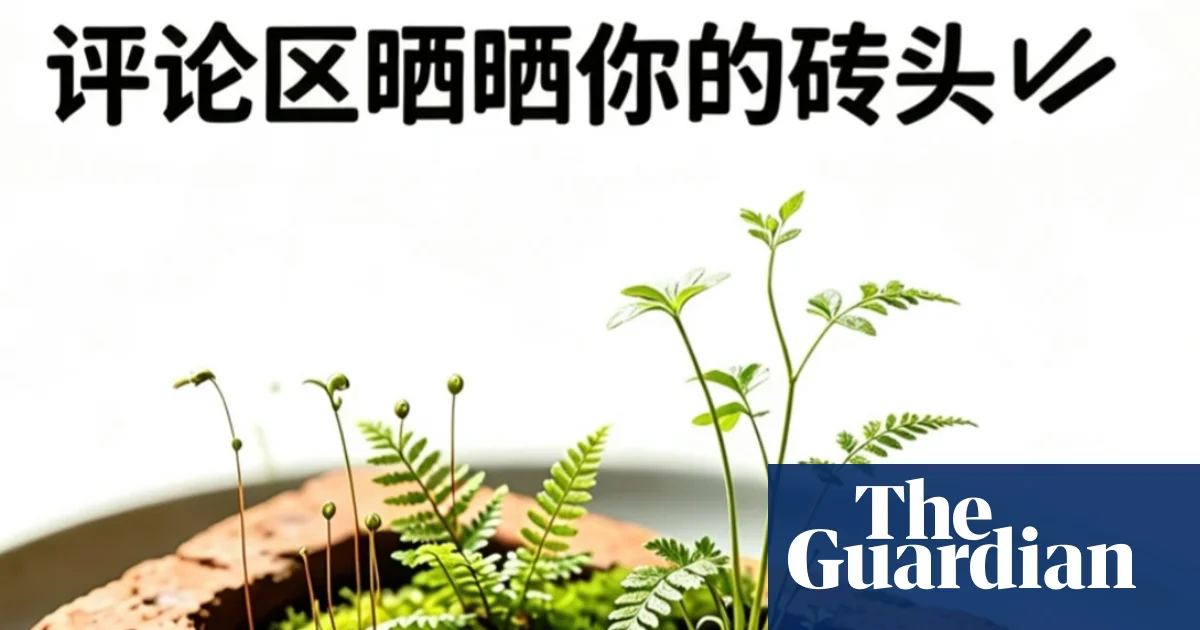
Chinese young adults looking for a cheaper, low-maintenance alternative to having pets or children have found an answer: raising bricks. This was reported by Qazaqyia.kz citing The Guardian.
Bricks may not be as cuddly as cats or as life-affirming as human offspring, but they also cost next to nothing. “No cats, no dating, I started raising a brick,” wrote one brick parent on social media.
Raising “brick babies” is easier than house plants, involving spraying them with water a few times a day and waiting for moss spores already present in the atmosphere to attach themselves and grow. One Chinese media article praised the bricks as being “practically immortal”: “If you forget to water them, the moss goes dormant. If you remember to water them again, the greenery returns.”
A hashtag related to the trend has attracted more than 5m views on Weibo, a Chinese social media platform.
Chinese commentators have linked the trend to young people looking for low-effort routes to finding meaning in life. One brick parent told Chinese media that the hobby created “a sense of accomplishment no less than completing a long-term project”.
One user on Xiaohongshu, an Instagram-like platform, also known as Rednote, posted a picture of their rusty-coloured brick baby, saying “no output required, no KPIs to hit, no need to beg it to bloom [and] no comparing its growth with others”.
Another user wrote: “My friends asked if I’d lost my mind. I said no, I’m just starting to raise a brick.”
“A brick gives me a sense of certainty that feels way more grounded than a lot of relationships. Psychologists call this ‘zero-energy emotional companionship.’ It fulfils your need for company without demanding any obligation to give love in return.”
Chinese young people are increasingly shunning the traditional expectations of society such as having children and grinding out long hours in strenuous jobs, assuming they can find one in the first place. Nearly one in five 16-24-year-olds, excluding students, are unemployed, according to official statistics. Some estimates put the employment rate much higher.
China’s birthrate is in stubborn decline and fell to a record low last year. Faced with a sluggish job market after years of studying in an intensely competitive educational environment, many young people are choosing to drop out of the rat race, and opting instead for “lying flat” – pursuing a low effort, low stress lifestyle, well-suited to raising bricks.
The trend of raising bricks has become so popular that Chinese media has started to warn about the health risks.
Cultivating moss could lead to the spread of mould, with some “brick parents” reportedly complaining of suffering from itchy eyes and a runny nose. Xuedong Li, a retired moss professor from Beijing’s Capital Normal University, urged brick parents to raise their mossy babies in an enclosed environment. “It is best to wear disposable gloves and a mask during handling to reduce spore inhalation and skin contact,” Li told Chinese media.