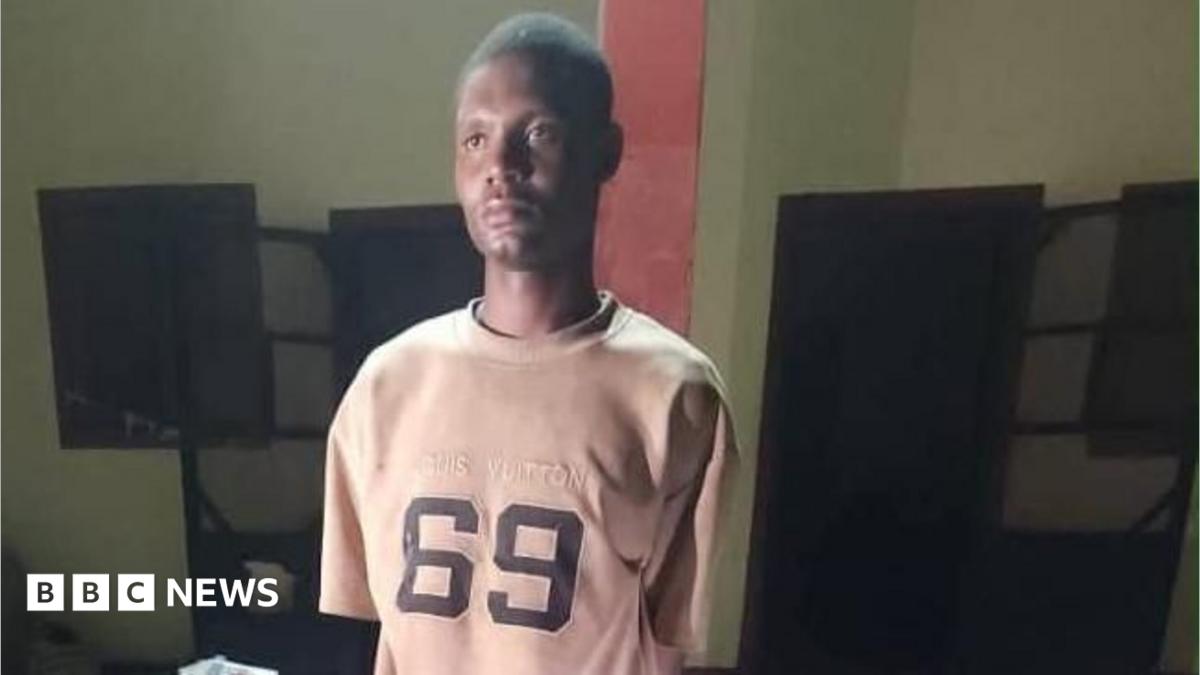
A Nigerian soldier has been arrested over allegations he supplied military uniforms to "terrorist" and "criminal" groups, the army says. This was reported by Qazaqyia.kz citing BBC News.
Private Mohammed Yusuf was caught on Saturday evening at a bus stop in the north-eastern city of Maiduguri, military spokesperson Mohammed Goni said the following day. The soldier, who was previously stationed at a factory for army equipment, was allegedly attempting to flee across the border into neighbouring Cameroon. He deserted his unit earlier this month, Goni said, before relocating to Maiduguri, where he went into hiding with the help of an "associate".
Yusuf has not publicly commented on the case against him, but the arrest has reignited speculation that collusion could be the reason behind rampant insecurity in the country. A variety of armed groups - including militant Islamists, separatists and gangs who kidnap civilians for ransom - have been causing problems for the authorities, and some of them deceptively wear military uniforms.
Security analyst and retired army major Bashir Galma told the BBC it is not unreasonable to believe some of these groups are being assisted by military personnel. "I know there have been instances where plans are made for an attack on a location and the information finds its way to either [militant Islamist group] Boko Haram or another criminal gang," he said, suggesting an insider tip-off.
At least 3,000 kidnappings and 3,580 killings by armed groups took place between January 2024 and April 2025 alone, data from Nigeria's National Human Rights Commission records. The alarming surge in mass abductions has been attributed to gunmen known locally as bandits, as well as insurgent attacks from Boko Haram and its offshoot, Iswap.
In April 2025, the governor of Nigeria's embattled Borno state, Babagana Zulum, alleged that informants and collaborators for Boko Haram insurgents were operating within the country's armed forces, political class and local communities. "What we need to do is to strengthen our intelligence and to deal with them ruthlessly," he said during a security meeting.
Months later, a special court-martial sentenced three Nigerian soldiers to life imprisonment for their involvement in a major arms and ammunition racketeering scheme. The army said they were guilty of theft, unlawful dealing in ammunition, and "aiding the enemy".
Security analyst Galma told the BBC he believes poor pay breeds such corruption within soldiers. There is also the "issue of ideology" - some personnel might hold a secret allegiance to other groups, he said.
A current serving soldier, who spoke to the BBC on the condition of anonymity, admitted that there have been instances of soldiers "caught dealing with the other side" but said such matters are often "hushed and dealt with internally".
One man, freed after his family paid a 57m naira ($42,000; £31,000) ransom, described a disturbing scene upon his release. "They dropped us off in one location and there were security personnel who they shook hands and laughed with," he told the BBC, asking not to be named. He believes the security forces he saw may have received a portion of the ransom, though he has no proof that this was the case.
Farmer Yahuza Isa, who was kidnapped in Zamfara state, expressed the frustration shared by many victims. "I myself know where these criminals are," he said. "So why not deal with them completely?"
Another survivor, who endured a 30-day ordeal in late 2024, said he suspected collusion "at a much higher level". He described hearing a helicopter landing very close to the hidden camp where he was held blindfolded. "The first time I heard it I was expecting that the Nigerian Air Force... had come to rescue us," he said. "But we could hear the helicopter leaving afterwards." He heard it several more times, leading him to believe the gangs had some form of high-level logistical cooperation.