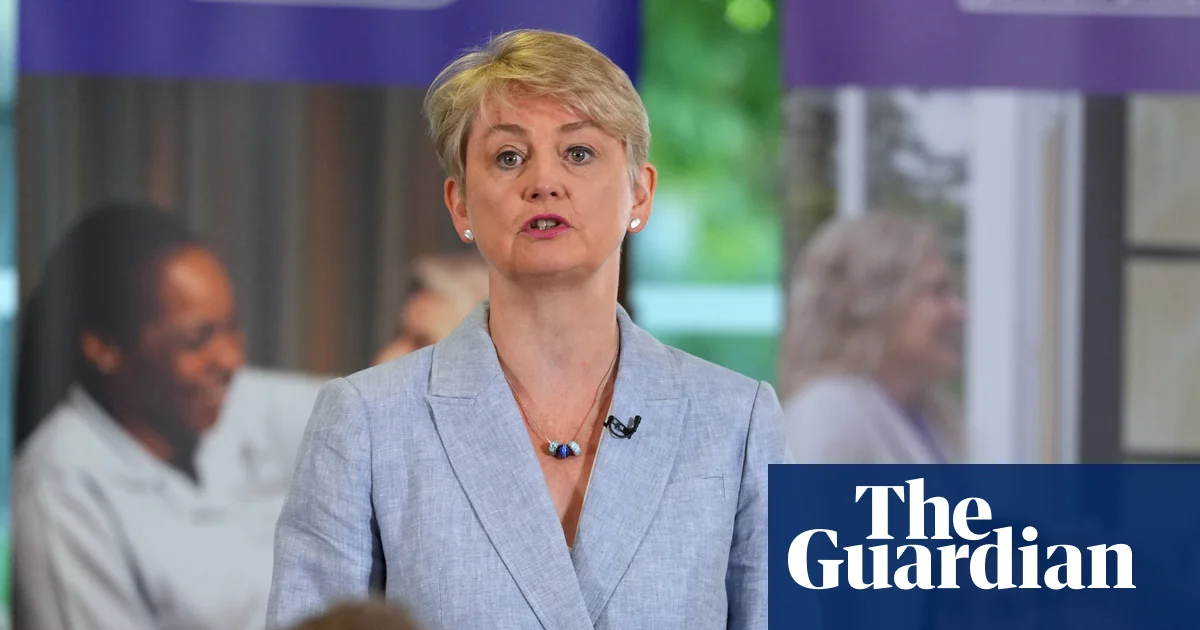
The UK's health secretary, Yvette Cooper, has warned that the NHS must prepare for potential annual summer crises caused by extreme heat, with the same pressures as winter, as heatwaves caused by the climate crisis become routine. This was reported by Qazaqyia.kz citing The Guardian.
Cooper said NHS staff were feeling A&E pressures that would normally be expected only during flu season, and said the government would use major investment in NHS infrastructure to tackle the health service's resilience to high summer temperatures.
Doctors and other medical professionals have warned of the impact that repeated heatwaves are having on the NHS in England, including advice from the Royal College of GPs to cancel surgeries in extreme weather. Radiotherapy machines and MRI scanners have failed in hot weather, wards have overheated, and cooling units serving hospitals have broken down.
England is on track to record its highest number of heat-related deaths this summer, with an estimated 2,877 people dying in the May and June heatwaves.
Summers are likely to become increasingly hot in the future, with temperatures topping 40C likely to become more frequent instead of being outliers as the climate crisis takes further hold.
Cooper told The Guardian that rising global temperatures were causing challenges for the NHS that it had not encountered before. "This is a new thing for the NHS to have to deal with. There is a remarkable determination of the NHS to respond, but we need much greater resilience."
She said that in her new role as health secretary she had visited her local A&E in Yorkshire where staff described the overcrowding caused by heatwaves. "It would be normal during the winter weeks and months, but not in the summer, to have the very high attendances that they have had," she said.
She said she had discussed a public health awareness campaign with the chief medical officer, Sir Chris Whitty, warning people to look out for elderly relatives and those with young babies to ensure they were coping in the heat.
Climate change meant "some immediate acute responses", Cooper said, adding: "I've been clear we now need to prepare for summer pressures in the way that the NHS for a long time has prepared for winter pressures."
"We need a much clearer assessment now of what that means, what the pressures are going to be, what management needs to be in place to cope."
The Climate Change Committee, the government's statutory advisers on net zero, published a landmark report in May warning that the UK's infrastructure was not built for such a climate, and calling for all hospitals and care homes to have air conditioning within the next decade, with all schools to follow by 2050. The CCC advised the government to plan for at least 2C of global heating by 2050, and potentially further rises.
Farmers this summer have also warned about how the extreme temperatures caused by the climate crisis were affecting the UK's food security and ability to cope with drought.
No 10 said that improving the UK's resilience to extreme heat was high on the agenda of the government – including building more reservoirs – saying the focus on tackling climate change must be on "practical resilience alongside cutting emissions".
Cooper said that she and Whitty agreed there needed to be more public information about who was most at risk from extreme heat, because of the "distressing" number of heat deaths.
"There is a need for all of us to look out for our elderly neighbours and family members in the heat of summer, exactly as you would if it was freezing cold weather and you would be checking on elderly family members or relatives. We need to do the same thing now, in the summer, in the heatwaves and also for the very young."
She said that cooling hospitals and other facilities would be a key part of the major investment in NHS infrastructure. "That is a new thing we are now having to address and to plan for. That obviously takes time as well to address that. But it is one of the things that's being looked at now as part of the capital programme," she said.
The Green party leader, Zack Polanski, told a press conference in London on Wednesday that tackling the climate crisis should be higher on the agenda. "I think we need to sit with that reality: 3,000 people have died because of extreme heat," he said.
"The scenes we have seen play out on our television screens are frankly apocalyptic. And yet the response from our government is to pretend none of this is happening. It's an astonishing dereliction of duty from those whose first responsibility is to keep us safe."
The Royal College of Physicians' clinical vice-president, Dr Hilary Williams, has said the NHS currently had very little built-in resilience to cope with extreme heat. "The impact of heatwaves on staff cannot be overstated," she said. "There is a sense of foreboding when we see the weather forecast, because we know what is to come, and there is very little staff can do."
The government has also been urged by MPs to do more to allow people to cool their own homes. More than 50 MPs have written to the UK's certification agencies to urge them to speed up a process to get air conditioning on to the boiler upgrade scheme, which offers grants for replacing gas boilers with greener alternatives like heat pumps.
Despite the government expanding the scheme to air-coolers last year, accreditation agencies have not yet given approval.