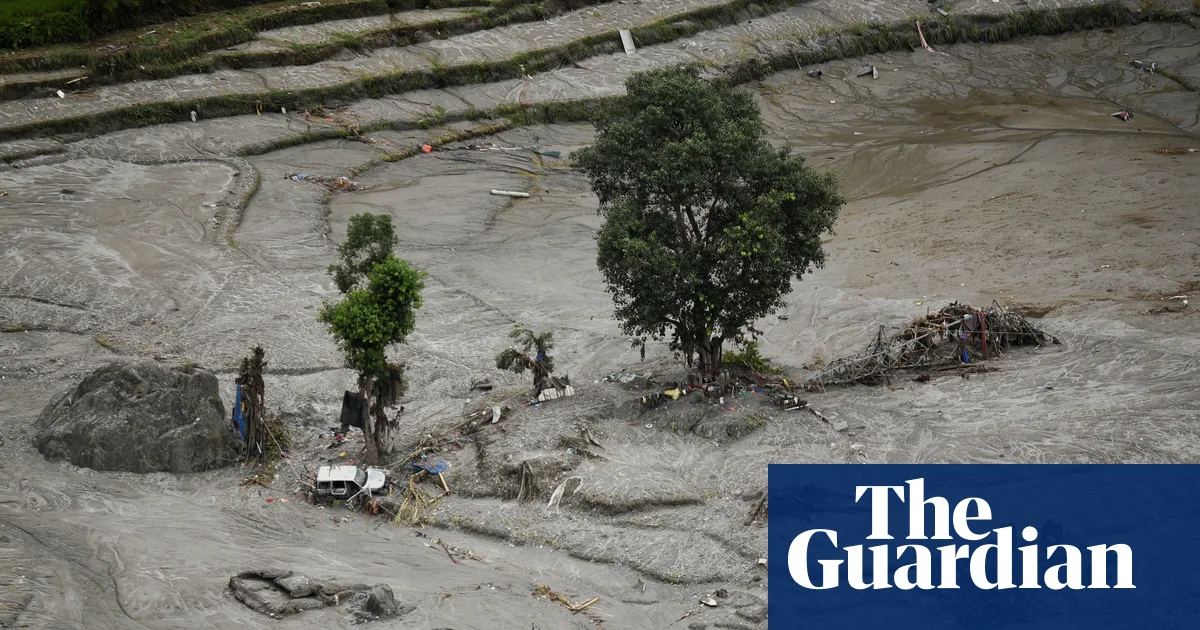
Nepali rescuers have built temporary bridges to reach remote areas and dug through the ruins of hydropower projects in the Himalayas to rescue hundreds of trapped workers, as the death toll passed 1,000 nearly a week after devastating floods left a trail of destruction across the country's towns and valleys. This was reported by Qazaqyia.kz citing The Guardian.
About 600 people remain stuck in several devastated hydropower stations that have become the focus of rescue efforts. The prime minister, Balendra Shah, said more than 11,000 people had been rescued across the affected region, and power and communication lines had been restored in some areas.
"Thousands of citizens have lost their homes, families, loved ones and property," Shah said.
Six days after the catastrophe struck the Himalayan border region, 4,400 people were still missing in Nepal and Tibet. Police in Kathmandu have urged relatives of missing tourists to provide DNA samples to assist identification efforts.
In a statement posted to social media, Nepal police on Monday asked relatives of those missing to "provide a fresh blood sample for DNA profiling and two passport-sized photographs" to the pathology laboratory at the Nepal police hospital in Kathmandu, or the nearest district police office.
Among Nepal's list of the missing are 592 foreigners, including tourists who had come for mountain trekking and Hindu pilgrims seeking spiritual peace at Tibet's sacred Mount Kailash, from countries such as India, the US, UK, Australia and Canada.
Relatives abroad have been requested to undergo DNA profiling at an authorised laboratory and to "send a soft copy of the DNA profile to Nepal police's official email address".
In some of Nepal's flood-affected areas, hundreds of unidentified bodies have already been buried because they are decomposing and there is no room left in hospitals or morgues.
At the police hospital in Kathmandu on Tuesday, more than 100 people were waiting to have their blood sampled. Among them was Prakaiti Jurnj. Her mother was still missing, but the family had been able to identify her father's body from a photograph on the wall outside the teaching hospital, where images of the deceased have been posted in an effort to identify the victims.
"Both my father and mother, they were in the village in Nukawot. They were both swept away by the flood," she said. "We haven't heard from them since Wednesday. We found my father's body; my brother saw the photo on the wall."
She was waiting for her two other siblings, who live in the UK, to arrive on Tuesday so they could all try to get up to the village. She said she wanted to contact her grandmother or sister-in-law, who she thinks both survived the flood because their house is further up the mountain. Their village was still in a blackout, and making contact was impossible.
"I can't go there; the situation is very bad," she said. "I can't go up there alone. I am not sure if we'll be able to get them."
The disaster was triggered by a glacier collapse that sent a deluge of ice, rock and mud through Nepal's border region with China, posing a massive challenge for the country's six-month-old government.
The region is vulnerable to flooding and landslides, and extreme weather events such as intense monsoons and melting glaciers have become more common because of warming due to human-caused climate change.
In a late-night social media post, Shah said aid worth more than $42m had poured into the country, but that Nepalis were reeling. "The government understands the immense pain they are enduring. The path ahead is to support them through this suffering and help them return to normal life through rehabilitation," the prime minister said.
Shah also said that 279 workers had so far been rescued from hydropower projects, where authorities estimated close to 1,000 people had been trapped. Days after the disaster, hope was rapidly diminishing that any of those trapped in a series of tunnels could be alive.
Pictures and videos shared by rescue teams showed earth-moving equipment digging and shovelling mud and rocks under lights in the dark of the night. Soldiers used torchlight in a big pit they had created to look for space to get into one tunnel.
Chinese state media coverage has focused largely on the official response, highlighting the deployment of firefighters, the People's Liberation Army and instructions from top leaders. Little is known about victims on the Chinese side.
The flood was "caused by glacier instability under the long-term effects of global warming", China's state broadcaster said on Monday.
Shah said the catastrophic event signalled the growing risks that the Himalayan region faces. "The region must therefore remain vigilant. The time has come for us to strongly raise before the international community the disasters we are experiencing as a consequence of climate change," he wrote in his post.