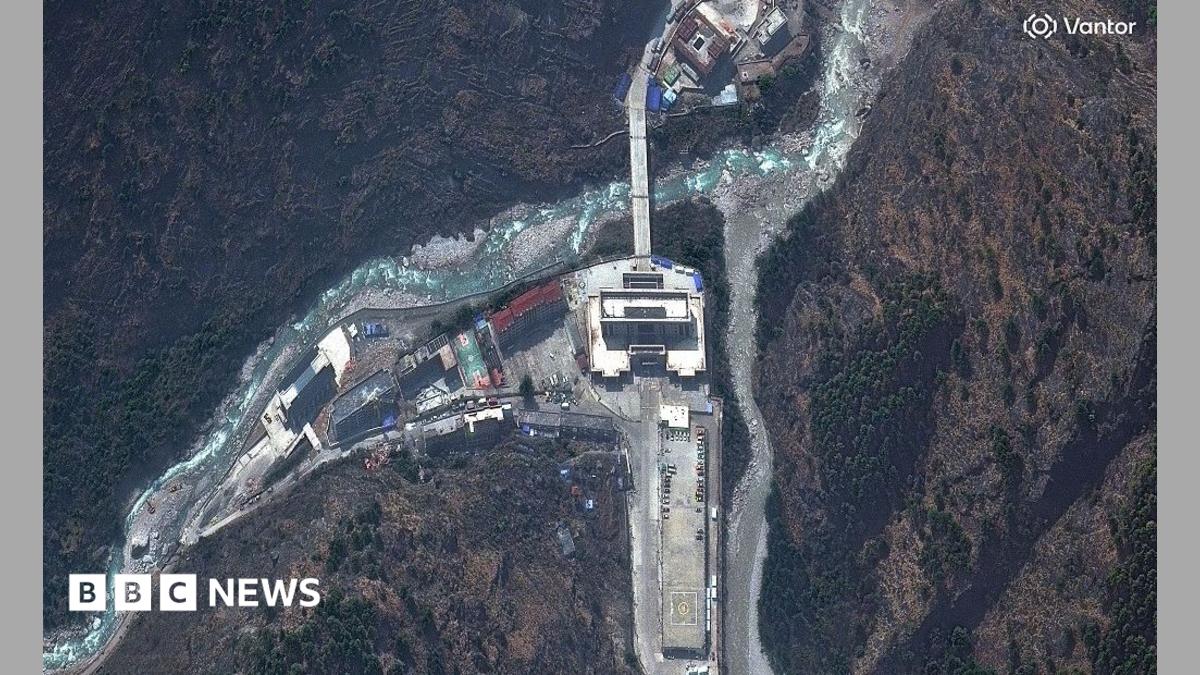
On 26 August, flash floods devastated Gyirong and Rasuwagadhi at the Nepal-China border. This was reported by Qazaqyia.kz citing BBC News.
CCTV footage shows a dark wall emerging from behind buildings: water, mud, boulders, ice, and rock surging down the valley. The timestamp reads 10:59:53 local time. Reconstructing the following minutes is difficult, but video and satellite imagery reveal the scale: much of the border complex was swept away.
Gyirong was one of the areas hit by floods on 26 August. Across the frontier, in Rasuwagadhi in Nepal's Rasuwa district, destruction was extensive. The Friendship Bridge linking Nepal and China was swept away, along with Nepal's immigration and customs facilities. The settlement of Timure was devastated.
According to hydrologist Ajay Dixit from Kathmandu, this is a historic travel route between Kathmandu and Tibet. The area is geologically vulnerable, with deep gorges and steep rivers carrying heavy sediment and huge boulders.
The route remains an important gateway between Nepal and China. Pilgrims heading to Mount Kailash cross paths with traders, truck drivers, customs officials, tourists, and border residents.
On the morning of the flood, more than 100 Indians may have been in or around the crossing. At least 275 Indians remain missing in Nepal, according to India's foreign ministry.
Nepal's Department of Immigration is trying to reconstruct who passed through Rasuwagadhi in the final hours. Electronic records show 89 Nepali and foreign nationals cleared immigration to leave for Tibet, while four registered entry into Nepal.
The immigration system recorded its final transaction at 8:35:03 am local time (10:52 am Tibet time), less than 10 minutes before the torrent appeared on CCTV at Gyirong. Four immigration employees, including the head of the Rasuwagadhi office, went missing. His body was later recovered downstream. The female official who recorded the final transactions is still missing.
Among foreign nationals leaving Nepal that morning were 32 Indians, 12 Chinese nationals, nine Americans, as well as citizens of Britain, Canada, Australia, and Italy.
Tika Ram Pokharel, senior immigration assistant at Rasuwagadhi, was the only staff member known to have survived. He had gone to Kathmandu for an exam that day. He says electronic records capture only part of what was happening.
The immigration office stood at Ghatte Khola Bazar, about 1.5 km north of Timure. From there, it was another 2 km to the Friendship Bridge. Along that stretch were shops, hotels, and parking areas.
The office opened at 08:00, Pokharel says. When he called a colleague at 08:20, he was told the crossing was unusually busy. Around 300–400 people were waiting to leave for Tibet, while others arriving from the Chinese side were also present.
"Those who completed the immigration formalities that morning, I don't think were able to complete their immigration process on the Chinese side," Pokharel told the BBC.
It took 15–20 minutes to walk from the office to the bridge. Late arrivals sometimes waited until the border reopened the next morning, while groups or buses waited for everyone to clear immigration. So it is unclear where the 89 people were when the flood struck.
At 8:37 am — less than two minutes after the final transaction — seismic instruments detected movement in the mountains above the border. Researchers attribute the signal to the collapse of part of a glacier that triggered the flood. China said the mudslide reached the crossing in about seven minutes.
Exactly where each person was remains unclear.