It has been almost a week since the catastrophic floods in Nepal and not even a vehicle can get into the area where the majority of missing Australians were last heard from. This was reported by Qazaqyia.kz citing The Guardian.
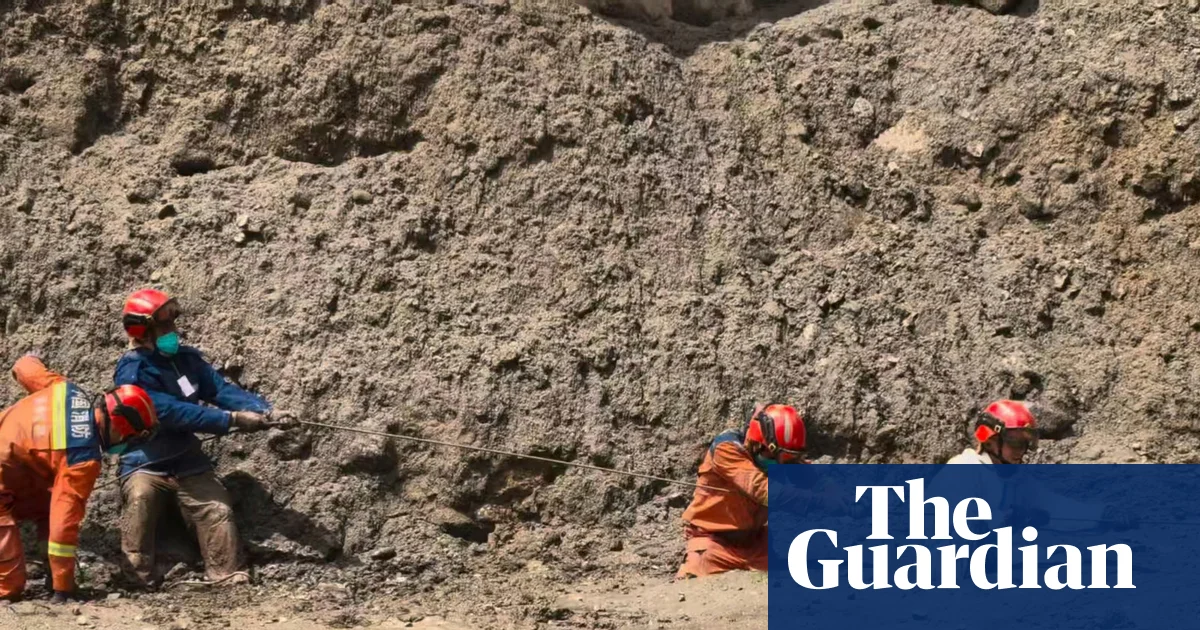
Gyirong Port, the border area between Nepal and China, was the first to be hit. Images from Chinese rescue teams who have managed to get in by helicopter or hiking show the area has been completely flattened. The immigration building, the power lines, everything, just wiped away.
News that phone connectivity to the area was back on spread quickly on Monday around the families of lost Australians who have come to Kathmandu to wait. In WhatsApp groups and over Facebook, they shared any updates they got.
One family member, who did not want to be named, told the Guardian she had been trying to ring her husband all morning after she heard the phone line was back up. He did not answer.
“The embassies aren’t helping,” she said.
The total number of Australians missing in the disaster rose to 43 on Monday, and at least 33 of them were understood to be near Gyirong Port just before the impact.
The 15 Australians with the Himalaya Glacier Company, 11 travelling with the Isha Foundation, six from Kailash Journeys and one from Kathmandu Holiday Tours and Travel were all near the border – many of them arrived at the immigration building just 10 minutes before the flood hit.
Sujan Wasti, the head of Kailash Journeys’ Nepal operations, said the last he heard from the group was at 7.30 am, when the guide touched base to say they were coming back. They were scheduled to land in Kathmandu on Thursday, with many of them flying home from the capital.
“In the area, the rescue has been done,” he said. “Now, it will just be about collecting the bodies and bringing them [home].”
Since last Wednesday, Wasti has sent teams up the Trishuli River to look for any signs of the missing trekkers. They have twice flown over the border by helicopter, and have visited local hospitals to see if anyone has shown up.
“We are searching every place we can, but still we have not found anyone,” he said. “There is still no sign of them.
“Along the border, it was only dead bodies. If they are alive, it will be a miracle.”
China is coordinating the search and rescue effort in the area. As of Monday morning, crews reopening the highway towards the port on the Tibet side had 1.15km left of road to clear and reconstruct.
Since Friday, no one except rescue crews has been able to access the area – some have hiked for 10 hours to get in, before rappelling down into the valley. Others, when the weather allowed, were helicoptered in.
Akhilesh Surjan, a humanitarian, emergency and disaster management expert at Charles Darwin University, said one of “the sensitive questions” has become how far everyone keeps the hope alive.
“The rescue experts consider the first 72 hours to be very critical,” he says. “Because after the first 72 hours, that is three days, the chance of finding survivors drops sharply.”
Despite this, he said surviving after three days “is not uncommon”. In Japan after the 2011 earthquake, two people were found alive after nine days.
“Survival usually depends on whether the person has access to the trapped air pockets, protection from extreme weather, no severe internal bleeding or pressure injuries,” he said.
He said there were possibilities for survival – that people had been swept downstream and were stranded, or had been lucky enough to shelter in a place that wasn’t completely destroyed.
Getting into Gyirong Port is not the only challenge. The thick layer of mud and pools of water have made it difficult to use life-detection devices accurately, teams have reported. Instead, rescuers are calling out as they look for survivors.
Rain is forecast for the next two days, which will further complicate and slow efforts. There is also the threat of another flood or landslide. A team analysing hazards around the area on Monday found “high-risk geological disaster points”.
Surjan said rescue teams would be analysing the landscape to determine where people may have moved to, but it was a dangerous job. In Nepal, at least 85 rescuers, including police and army officers, are now missing.
“Continuing rainfall and river flow and the poor visibility for choppers or helicopters, communication failure of the first few days, and the limited ability to get heavy rescue equipment into the area will make it harder,” Surjan said.
Three days after the disaster, the first team of Chinese rescue workers were able to reach the border crossing complex. They were the first on the ground and said everything had been destroyed.