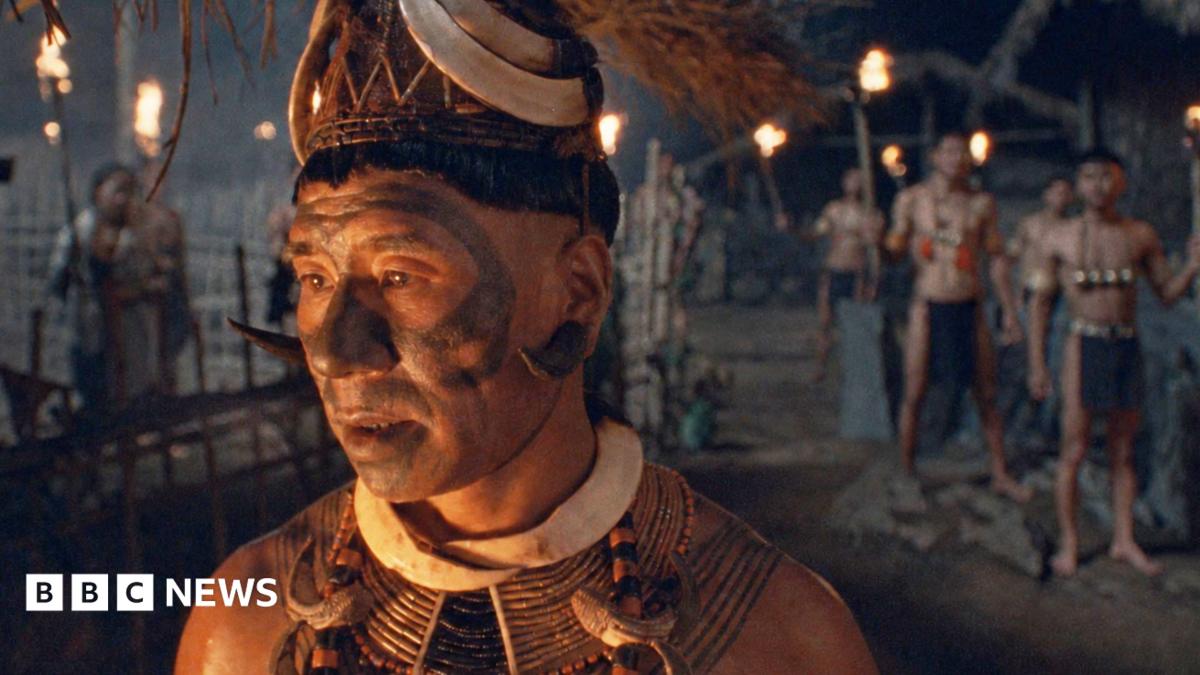
Angh, a film from Nagaland — a mountainous state of fewer than two million people on India's northeastern frontier — has won the Platform Prize at the Toronto International Film Festival. This was reported by Qazaqyia.kz citing BBC News.
The film is in Konyak, a tribal language unfamiliar to most Indians, never mind audiences abroad. It was director Theja Rio's first feature, and most of its cast faced a camera for the first time.
The jury praised Rio's "refreshing perspective" and the film's portrait of a world rarely encountered on the international screen. The win gives Angh an unusual route towards the 2027 Academy Awards: under new rules, winners of designated prizes at six international festivals can qualify for consideration in the International Feature Film category without relying solely on their country's official submission.
This does not make Angh an Oscar nominee, but it does place a Konyak-language film from one of India's smallest states inside a global conversation from which such stories have been almost entirely absent.
Rio still sounds slightly startled by it. When we speak in Delhi, roughly 72 hours after the win, he has barely had a moment to breathe — Toronto, flights, interviews, more interviews.
"There were a lot of good films in the competition," he says, including films by far more seasoned directors. His producers were confident. "They thought we were going to win. I wasn't."
He is also less solemn than Angh might suggest. Before cinema, he wanted to be a rapper — "a kid from Compton instead of a kid from Nagaland," as he puts it. His tastes still range happily from Black Thought, the lead rapper of American hip-hop group The Roots, to his favourite filmmaker, the Iranian director Abbas Kiarostami.
But for his first feature, he turned close to home. Set in the early 1960s, Angh follows Anghba, the ageing hereditary chief of a Konyak village, and his young son, as the world around them changes. The Konyaks are one of Nagaland's 17 major tribes, concentrated in the eastern district of Mon, where such chiefs are known as Anghs. Even today, some older men bear facial tattoos associated with the Konyaks' historical practice of headhunting.
Anghba and his son are among the last in their region to hold to an ancestral faith as Christianity spreads. Then an American missionary, played by Scottish actor Douglas Henshall, arrives. The father resists but the son is now curious.
Rio says the idea for the film came a few years ago, when he was visiting Mon for another project. What struck him was how closely different generations seemed to live alongside one another there. Within a single family, he says, a grandfather might be a former headhunter, his face still tattooed; two generations later, his grandson might play guitar in a rock band. "It feels like you've jumped on a time machine," Rio says. "The past and the present sort of coexist together."
The year also matters. Nagaland, which was earlier part of Assam state, formally became an Indian state in December 1963, during a period of profound political and social change. By then, Christianity had been spreading among Naga communities for decades, bringing changes extending beyond religious belief into customs, rituals and everyday life.
Dr B Amo Konyak, a scholar of Konyak society, says the changes during this period were almost like a disappearance. Some practices were lost; others "survived in fragments" — in the memories of elders, in family heirlooms. What had once been part of everyday life became heritage. But Dr Konyak says culture did not simply stop. People carried parts of it into new religious and social worlds. Traditions survived, but changed meaning as they changed form.
It's this moment of transition that Rio wanted to capture. "The past 50 or 60 years have brought extraordinary churn," he says, widening the distance between generations. In Angh, he explores this through the relationship between the father and son who "intimately love and care about each other very deeply," even as their worlds begin to pull apart.
Critic Siddhant Adlakha was struck by the ambiguity the film captures. "Progress and tradition can be nonlinear, even entwined," he says, "rather than strictly opposing forces."