Egyptian authorities announced the discovery of a well-preserved residential city from the Byzantine era in the Dakhla Oasis in the western desert. This was reported by Qazaqyia.kz citing Associated Press.
According to the Ministry of Tourism and Antiquities, the first discovery reveals details of daily life, urban development and economic activities in the Dakhla Oasis in the fourth century, when Egypt was part of the Byzantine empire.
The unearthed quarters included north-south thoroughfares intersected by east-west streets, forming open squares and public spaces, said Hisham el-Leithy, secretary general of the supreme council of antiquities.
A basilica church, dating back to the mid-fourth century, stands at the settlement's head, overlooking its main streets, along with remains of two watchtowers to safeguard the outskirts, said Mahmoud Massoud, who chairs the archaeological mission.
The oasis, located in Egypt's western province of New Valley in the western desert, is on UNESCO's Tentative List, a step away from being added to the agency's World Heritage List.
A heavily fortified structure with thick defensive walls, and many houses consisting of reception halls and vaulted roofs were found in the area. Among them was the house of Tisous, identified as a church deacon and dating to the second half of the fourth century.
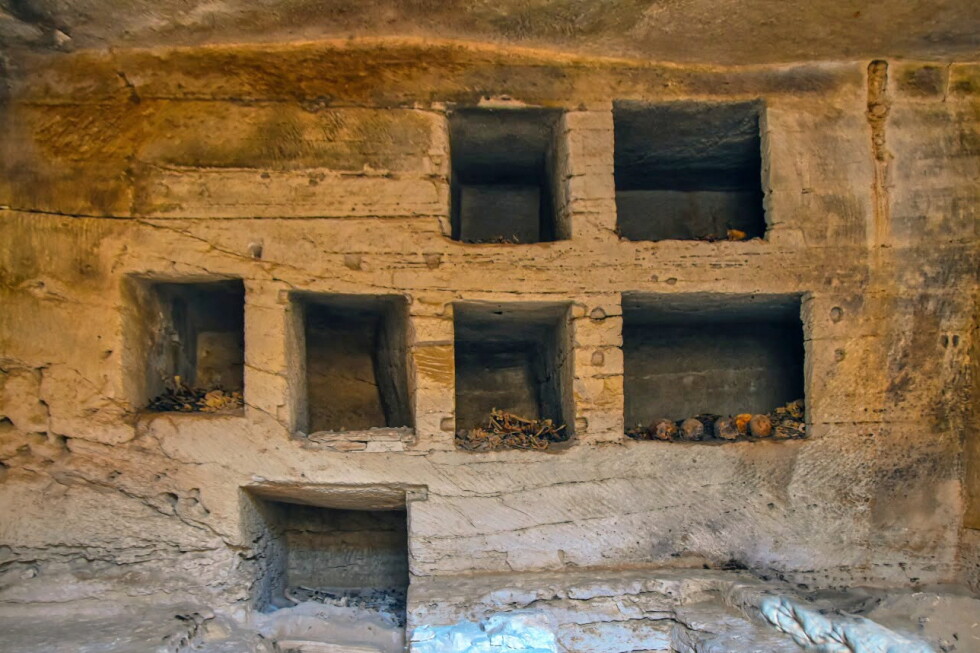
The second discovery was made at the Marina el-Alamein archaeological site, west of Alexandria, where seven limestone tombs were found, some well-preserved and decorated.
The Egyptian government hopes these finds will help boost the country's vital tourism sector. Tourism, along with the strategic Suez Canal, is a major source of foreign currency in the cash-strapped country.