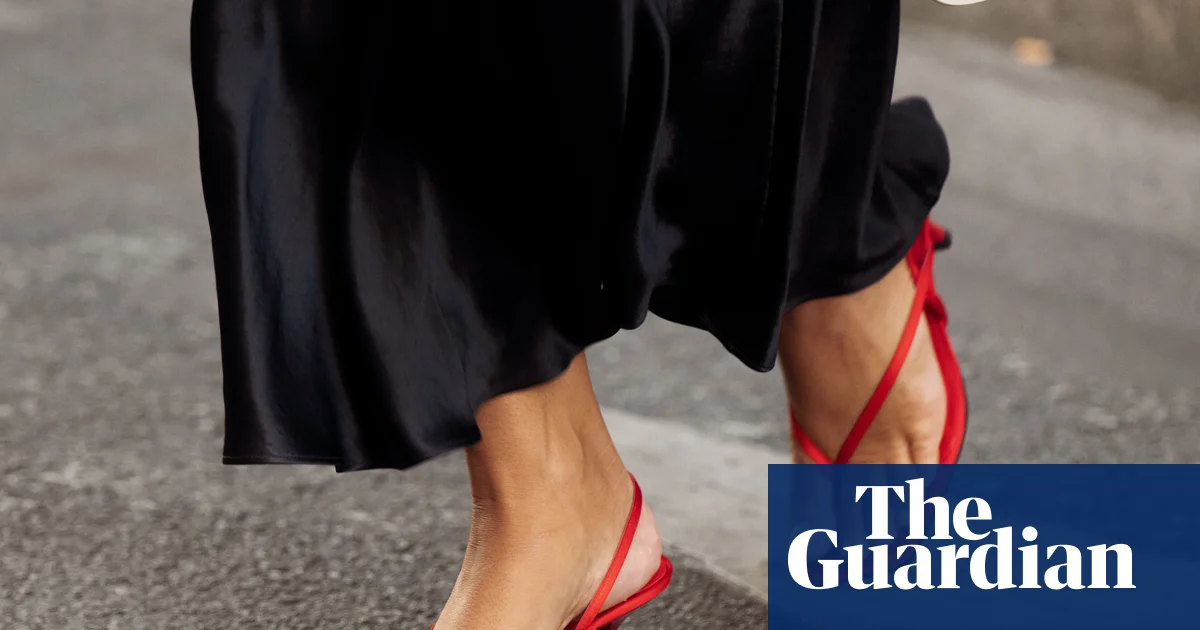
Kitten heel flip-flops are gaining popularity among Gen Z, a generation that previously rejected heels in favor of flats. This was reported by Qazaqyia.kz citing The Guardian.
Gen Z, born between 1997 and 2012, has long been anti-heel, shunning millennials' obsession with Jimmy Choos in favor of flat shoes like Adidas Sambas, Margiela Tabis, and ballet flats. But they are now embracing a gateway heel, typically around 1.5 inches (3.8 cm) high.
Kitten heel flip-flops have been spotted on trendsetters like Hailey Bieber and model Kaia Gerber, and feature in countless TikTok "fit-checks." They've become a way to channel 90s style this summer. Wimbledon spectators and Love Island contestants have also worn them. For instance, Emily in Paris star Lily Collins paired her black Manolo Blahnik pair with a white bandeau and capris at the men's final.
John Lewis reports a 300% sales increase compared to last year, with its £109 Rejina Pyo collection selling out quickly. Luxury brands like Chloé, Bottega Veneta, and Max Mara have featured them on runways. Searches on Depop have jumped 260% since April, on Vinted 209% year-on-year, and Lyst reports a 202% surge in demand quarter-on-quarter.
Why is this revamped flip-flop persuading Gen Z to finally wear heels? Natalie Munro of Who What Wear says the appeal is that it's a heel that doesn't feel like one: "It's still got that casual energy... it's not a very intimidating heel to wear." Versions from Toteme, Miu Miu, Zara, and Vivaia, measuring 1.5-2.1 inches, are perfect starter heels.
Kitten heel flip-flops can endure a morning commute and suit nights out. "In a lot of instances, it's an appropriate shoe to wear to work and then into the evening as well. It's obviously very heatwave appropriate," says Munro. In the 2000s, high heels were commonplace. "Millennials were always out in heels. For the office, for the club," she says. For Gen Z, whose coming of age coincided with the pandemic's comfort-first dressing, flats have been the starting base.
Caroline Young, author of fashion books, thinks young people have a different understanding of heel height and femininity. "Kitten heels sit comfortably between heels and flats. While once dismissed as dated, the focus now is on being able to 'move easily.' For Gen Z, comfort has always been more important," she says.
Rebecca Shawcross, senior shoe curator, says: "Stilettos have been worn as a power shoe, but power now rests with women who choose comfort over discomfort and activity over inability to run."
It's also a reaction to an era of shoes for scaling mountains. Joy Montgomery of British Vogue says: "Orthopedic, gorpcore-coded shoes have dominated since the pandemic. There's a renewed craving for glamour in our wardrobes."
Munro links the trend to a general flip-flop revival, credited to The Row's $750 (£560) rubber sandal.
Could kitten heel flip-flops become a gateway to higher heels? Shawcross notes they were popular in the 1780-90s as a transitional heel. "They were known as Italian heels and marked the transition from high heels to flat soles in the early 1800s." Munro thinks a shift is now possible.