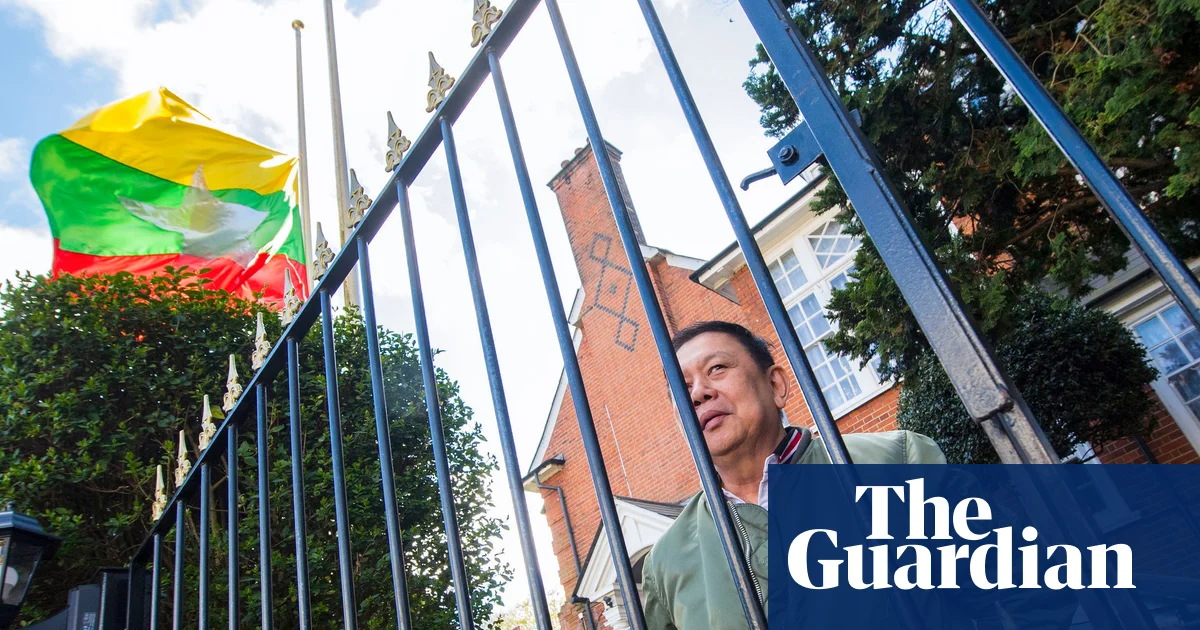
Myanmar's ousted ambassador to the UK has gone on trial on trespassing charges for refusing to leave a diplomatic residence after being unceremoniously locked out of the embassy in 2021. This was reported by Qazaqyia.kz citing The Guardian.
Shortly after Myanmar's military seized power in 2021, triggering mass protests that spiralled into a civil war, Kyaw Zwar Minn was locked out of the embassy for declaring his loyalty to the deposed civilian leader Aung San Suu Kyi.
On Wednesday he appeared in a London court charged with trespassing at a diplomatic residence between May 2021 and November 2024. Kyaw Zwar Minn, who still lives at the ambassador's residence in north-west London, has pleaded not guilty.
The former ambassador argues that the current president, Min Aung Hlaing, the general who plunged Myanmar into conflict and economic chaos, is illegitimate and had no power to ask him to leave the property.
Min Aung Hlaing's pro-military party won a landslide victory in elections earlier this year that have been widely condemned as a sham. Min Aung Hlaing is wanted by the international criminal court for crimes against humanity against the Muslim Rohingya minority.
Kyaw Zwar Minn's lawyer, David Perry, told the court: "The military authorities could not lawfully terminate his licence at the address. Nor could they legitimately use the property."
Prosecutors said Myanmar's authorities instructed the former ambassador to "hand over state-owned properties" in April 2021, and that the Foreign Office also told him to leave the residence, but he did not comply.
They argue that his view of the Myanmar government – which is not formally recognised by most democratic countries, including Britain – does not provide a defence.
"Having been granted permission to reside at Myanmar House as the ambassador, his refusal to vacate the diplomatic premises after he was removed from that position means that he is guilty of the offence of diplomatic trespass," the prosecutor Louise Oakley told the court.
Kyaw Zwar Minn previously told the Guardian he spent a night in his car outside the embassy in April 2021 after his then deputy, Chit Win, and a military attache, Soe Aung, locked him out of the building on the regime's orders.
He said at the time that he no longer felt safe at the north London residence and had contacted the police after former staff delivered a letter ordering him to move. Friends and relatives in Myanmar had been forced into hiding fearing reprisals as a result of his stance, he said.
The 68-year-old became a diplomat under Aung San Suu Kyi after a long career in the army and has called the "Rohingya issue" very important. Before his removal as ambassador, he had been told by a source in Myanmar's foreign ministry that his staff were spying on him.
He anticipated in 2021 that the crisis would lead to civil war. "You can see the military government is not going to step back," he said. "More people will die and the economy is going to collapse. Then anything can happen in our country."
The court case comes as the war enters its sixth year. More than 100,000 people have been killed and more than 5 million displaced, according to the Council on Foreign Relations.
Aung San Suu Kyi, now 81, has been detained on a range charges since the military took power. She was previously held under house arrest for 15 years under a past junta, and was awarded the Nobel peace prize in 1991. After her election as state counsellor in 2015, she became a pariah for leading a regime that excused a genocide, jailed journalists and locked up critics.