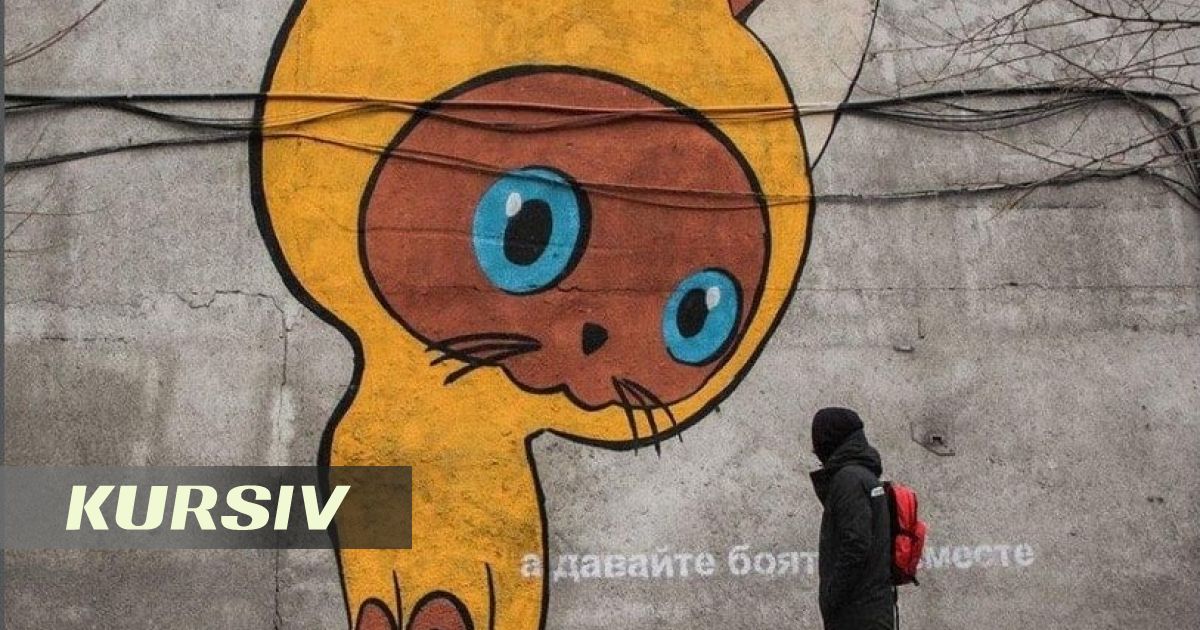
When in January 2025 the famous work 'Let's Be Afraid Together!' by Kazakh artist Pasha Kas disappeared from the wall of a house in central Almaty, residents unexpectedly perceived it as a personal loss. Outraged comments appeared on social media: 'Who was bothered by the kitten named Gav?', 'Gray city – gray walls', 'Make Almaty Grey Again'. Some told how they specially brought city guests here. This was reported by Qazaqyia.kz citing Kursiv Media.
This was reported by Qazaqyia.kz citing Kursiv Media.
Twenty years ago, such a reaction would have been hard to imagine – back then, drawings on walls were often considered vandalism. Today, tourists travel to other countries to see famous murals and graffiti, they arrange meetings near them, and when they are in danger, they defend them almost as passionately as architectural monuments.
On the last Saturday of June, the world celebrates National Mural Day. We tell about the most famous murals in the world – and Kazakhstan.
Banksy: 'The Flower Thrower' ('Love Is in the Air')
No contemporary artist has done as much for the popularity of street art as the mysterious Briton Banksy. His works appear unexpectedly and become world news; they are removed from walls along with plaster and then sold at auctions for millions; even destroyed, they remain iconic.
But among dozens of famous works by Banksy, 'The Flower Thrower', or 'Love Is in the Air', holds a special place. The plot, familiar to everyone from photos and videos of street protests: a man with a covered face swings to throw – what? A stone? A Molotov cocktail? No. In the protester's hand is a bouquet of flowers.
'The Flower Thrower' has become one of the most recognizable symbols of contemporary art. It has been reproduced many times, appeared at exhibitions, on book covers and posters, T-shirts and phone cases, and also reminded that this had already happened in human history 40 years ago. Flower Power, Make love, not war – these words were spoken by participants of the hippie movement, placing flowers into the barrels of police weapons.
Dmitri Vrubel: 'My God, Help Me to Survive This Deadly Love' ('The Kiss')
'It was a disgusting, vile thing,' said artist Dmitri Vrubel about the photograph taken in October 1979 at the celebration of the 30th anniversary of the GDR. The photograph where General Secretary of the CPSU Central Committee Leonid Brezhnev and GDR leader Erich Honecker were kissing.
'...I almost vomited at first,' continues this now-famous quote from Vrubel, 'but still, as usually happens, I wanted to capture in art what cannot be captured there, and this work somehow began to live in my head on its own.'
Thus appeared the sketches of the future most famous mural on the Berlin Wall – over time, this work became one of the main symbols of the East Side Gallery, an open-air art gallery in the German capital, located on one of the largest remaining sections of the famous wall.
Art historians call this work 'a vivid image of the fallen Berlin Wall,' political scientists – 'a symbol of a new era of liberation from communism,' and tour operators invariably include it in the list of reasons 'why it's worth going to Berlin.'
Diego Rivera: 'Dream of a Sunday Afternoon in the Alameda Park'
If the Berlin Wall became a symbol of political changes of the 20th century, then in Mexico City there is a mural that tells about four centuries of the country's history at once. The monumental work 'Dream of a Sunday Afternoon in the Alameda Park' originally adorned the restaurant of the Hotel del Prado, located next to the oldest public park in Mexico City – Alameda Central. After the devastating earthquake of 1985, the hotel could not be restored, but the section of the wall with the painting was saved. It was carefully dismantled, restored, and moved to the specially created Museo Mural Diego Rivera, where it remains today.
The plot of the work? At first glance, it seems that the artist simply depicted an ordinary weekend in a city park. But in fact, 'Dream of a Sunday Afternoon in the Alameda Park' is a real encyclopedia of Mexican history. On one canvas, Diego Rivera gathered more than 150 characters from different eras, from the time of the Spanish conquest to the revolutionary events of the 20th century. Conquistador Hernán Cortés, President Benito Juárez, revolutionary Francisco Madero, of course, artist Frida Kahlo, Rivera himself as a boy, and in the center of the composition stands the famous La Catrina – a skeleton lady created by engraver José Guadalupe Posada and became one of the main symbols of Mexican culture. It is La Catrina who holds little Diego's hand.
Pasha Kas: 'We Dance'
One of the most poignant works of Kazakh street art is the mural 'We Dance', created on the facade of a five-story building in Temirtau by artist Pasha Kas. It is based on one of the most famous paintings of the 20th century, 'Dance' by Henri Matisse, but, as always happens with 'thoughts on walls,' the classical plot here turns into a harsh statement about modern society.
If in Matisse five naked figures holding hands symbolize the unity of man, nature, and primordial life energy, then in Pasha Kas this harmonious circle becomes almost grotesque. Dancers in white shirts and black ties, these symbols of the corporate world, circle around a smoking industrial chimney. The artist changes the meaning of the famous canvas: the new idol becomes not a mythical deity, but an industrial civilization built on endless resource extraction and the power of large corporations. And people continue their round dance…
'Monster corporations, ready to suck out and sell oil – paint new interiors. Desperately dancing around the pipe!' – said on Pasha Kas's Instagram page.
The choice of location was no less important than the composition itself: Temirtau, one of the most environmentally disadvantaged cities in Kazakhstan, where residents have complained for many years about air and soil pollution. Publishing the work, Pasha Kas reminded of the results of environmental studies:
'Metallurgical plants destroy all living things at the root: not long ago, ecologists took soil samples at five children's playgrounds and found an excess of lead by 5 times above the norm! Everyone is silent!'
The authorities' reaction followed almost immediately, although the reason…