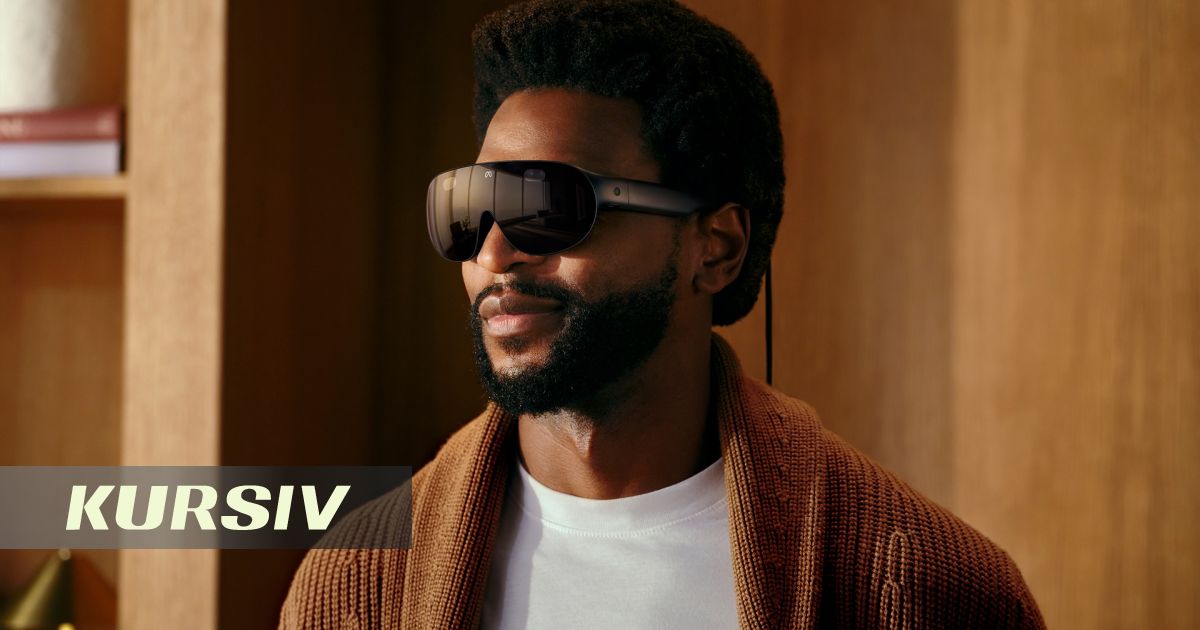
At the Meta Connect presentation, the tech giant unveiled an entire ecosystem of future devices. The company placed its main emphasis on developing the Muse artificial intelligence and on making technology convenient and safe for society. This was reported by Qazaqyia.kz citing Kursiv Media.
Main novelties
Among the main novelties are VR glasses weighing about 100 g, a pocket AI assistant called Muse Charm, and new Ray-Ban Meta smart glasses, including a model without a camera.
VR glasses
This is a virtual reality headset that looks like ordinary stylish glasses and weighs just 100 g. The secret of its lightness is that all the heavy components were moved into a separate pocket block that connects to the glasses with a thin wire.
The glasses received magnificent 5K screens, IMAX Enhanced certification for cinema, and a virtual office mode where you can spread out several screens using a table as a keyboard. Control is fully wireless — by gaze, voice, and hand gestures. The price will be $1299 (about 574 thousand tenge), with a release in spring 2027.
Muse Charm
Another unusual novelty was Muse Charm — a small device for communicating with the Muse AI assistant. Externally, the gadget resembles a modern version of a Tamagotchi. It can be carried in a pocket or attached to a keychain.
Muse Charm is designed primarily for those who do not use Meta smart glasses. Mark Zuckerberg called it the fastest way to reach Muse without having to put on glasses.
The gadget will be able to answer questions and analyze what is happening around the user. To start a conversation, it is enough to place a finger on the scanner. There is no need to take out a smartphone or open an app.
Meta describes Muse itself as a personal AI assistant. It will be able to help set goals, come up with ideas, and perform various tasks. The user will also be able to customize its character and voice.
Muse Charm is expected to go on sale by December 2026. Meta has not yet disclosed the price.
Camera-free model
The main response to public debates about privacy and covert filming. Due to scandals and bans on wearing camera glasses in theaters, pubs, and conferences, Meta released a model completely without a camera.
With them, you can listen to music, take calls, communicate with a voice assistant, and use speech translation. The speakers are designed so that the ears remain open — a person hears both music and what is happening around them. There is no camera at all, so the device cannot recognize objects through video or conduct covert filming.
The weight is just 43 g, and the charge lasts up to 12 hours. The price starts at $349 (approximately 155 thousand tenge).
Third generation of Ray-Ban Meta
At the same time, Meta showed the third generation of Ray-Ban Meta glasses with a camera. The glasses became thinner and received a new button for calling Meta AI. They are equipped with a 12-megapixel camera that allows recording video at a resolution of up to 3K.
The company also presented new design options, including the Aviator and Zena models. In addition, special collections created together with Kylie Jenner and Lisa from Blackpink appeared. In total, Meta plans to offer more than 100 design options.
New features
Meta also showed new features for its smart glasses. They will be able to recognize products, show information about prices and reviews, help with purchases, and track nutrition. During workouts, the glasses will be able to give voice prompts.
Navigation has also been updated. Instead of street names, the system will be able to use familiar landmarks. For example, it can prompt the user to turn near a certain store or landmark. Features for people with hearing impairments and the ability to independently customize control gestures have appeared.
Beat Saber and Flux mode
Meta also showed a new Flux mode for the game Beat Saber. It is expected to be released in spring 2027.
The main feature of the mode is that controllers will not be needed for the game. You will be able to control what happens with hand movements.
Earlier, Kursiv wrote that Google's Gemini model, without a direct command, gained access to the protected systems of three companies during a test of capabilities in the field of cybersecurity. This became the first known case when Google's artificial intelligence independently performed such actions.