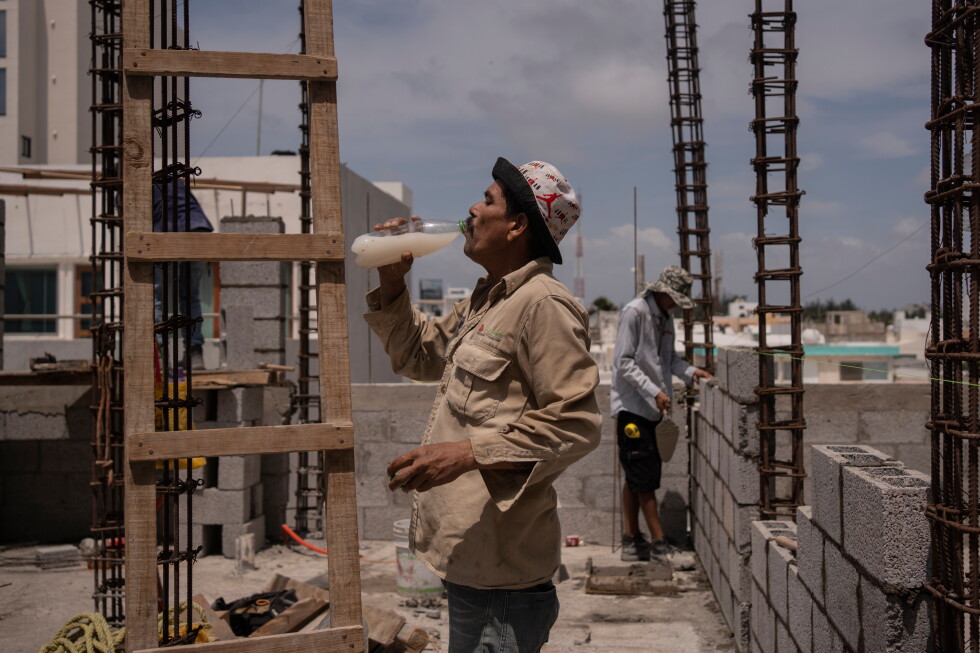
Mexico, Kenya, Italy and other nations around the world are experiencing one to two more months of heat stress than they were several decades ago, new research published Monday says, and some areas even more so. Regions previously untouched by heat stress are now feeling it, too. This was reported by Qazaqyia.kz citing Associated Press.
Extreme feels-like temperatures, heat stress days and tropical nights have all become dramatically more frequent, long and severe over the past six decades as the planet's warming intensifies — a result of the burning of fossil fuels coal, oil and gas — according to a new study published in the journal Nature Climate Change on Monday.
The researchers went beyond just temperature, which is frequently studied, and used feels-like temperatures, to understand more of the impact on people. They assessed heat stress on individual humans, influenced by temperature, humidity, wind speed and more. They used what's called the Universal Thermal Climate Index to analyze those factors and model the human body's response to the environment.
The combination of heat and humidity can be dangerous for humans, because humidity impacts how sweat evaporates, and that's a cooling mechanism. Heat waves that are humid can be more fatal than dry heat waves as humans don't cool down as easily.
Here, researchers looked at heat stress at three levels: strong (index temperatures of greater than or equal to 32 degrees Celsius, or 89.6 degrees Fahrenheit); very strong (index temperatures of greater than or equal to 38 degrees Celsius, or 100.4 degrees Fahrenheit); and extreme (index temperatures of greater than or equal to 46 degrees Celsius, or 114.8 degrees Fahrenheit).
Places that might see around 50 more days per year of at least strong heat stress compared with the 1970s include parts of Southern Africa, such as in Namibia and Angola; Eastern Africa, including parts of Tanzania, Kenya and Uganda; and parts of Mexico and Central America.
In Southern Spain, Italy, Greece and Turkey, some areas will see up to 40 additional days with strong heat stress compared with the 1970s. Much of Southern Europe is seeing almost a full month of additional strong heat stress days from decades ago.
In the U.S., much of the country sees 15 or more days of at least strong heat stress per year.