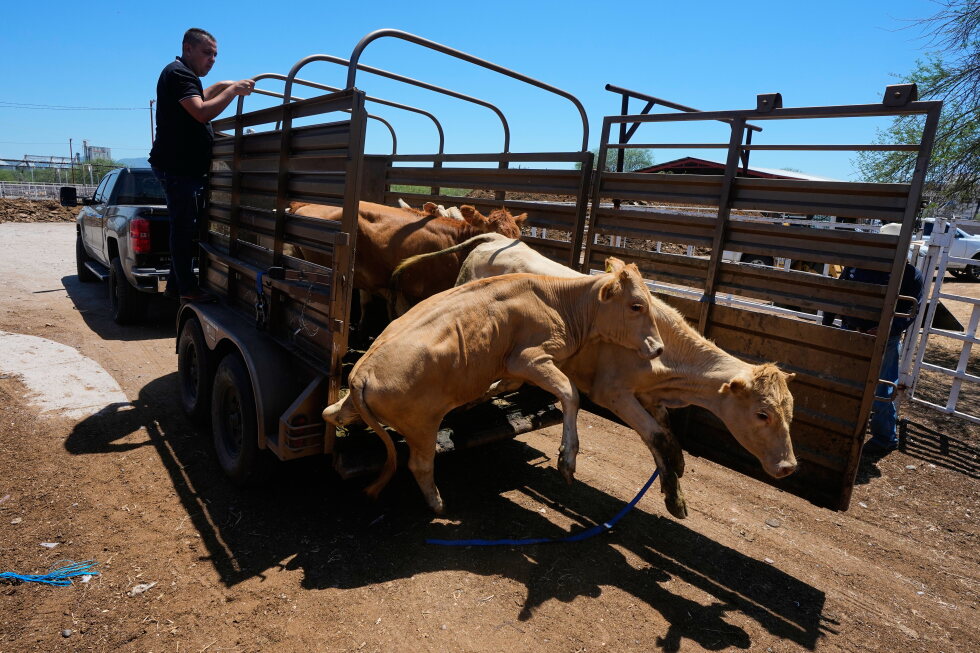
Mexico resumed live cattle exports to the United States on Monday after they were halted for nearly two years by restrictions imposed by the Trump administration following a screwworm outbreak. This was reported by Qazaqyia.kz citing Associated Press.
Even under strict limitations, the reopening of the trade channel brought relief to Mexico's ranching industry, which was dealt an economic blow by the controls. The flesh-eating worm is now present on both sides of the border.
The U.S. Department of Agriculture (USDA) has allowed cattle imports from Mexico, but only under certain conditions. This was stated by U.S. Agriculture Secretary Tom Vilsack. According to him, this decision takes into account the interests of the livestock industry in both countries.
Mexico's Agriculture Secretary Victor Villalobos welcomed the decision, noting its positive impact on Mexico's livestock industry. He also emphasized that measures to combat screwworm will continue.
Screwworm is the larva of a fly that lays eggs on the skin of animals and feeds on living tissue. The outbreak was detected in Mexico in 2024, after which the U.S. imposed a ban on cattle imports from Mexico.
Mexico's livestock industry suffered significant losses due to the ban. According to industry representatives, income from cattle exports decreased significantly during the ban.
Now, with the resumption of exports, Mexican farmers and ranchers are working with renewed hope. However, under the new rules, exports are only allowed from certain regions and under certain conditions.
USDA officials said they will monitor compliance with the new rules and take additional measures if necessary.
Mexico's northern states, especially Sonora, Chihuahua, and Coahuila, are the main cattle export regions. Ranchers in these regions welcomed the resumption of exports with great joy.
However, some experts warn that screwworm has not been completely eradicated, and strict control measures must continue to prevent a new outbreak.
Cattle trade between the U.S. and Mexico is one of the important economic ties between the two countries. Every year, Mexico exports millions of head of cattle to the U.S., bringing significant benefits to the agricultural sector of both countries.
Under the new agreement, to obtain an export permit, Mexican farmers and ranchers must meet certain requirements, including animal health certificates and veterinary inspections.
This decision is expected to have a positive impact on the economies of both countries. Mexico's livestock industry plans to increase its annual income with the resumption of exports.
According to USDA, the new rules are aimed at preventing the spread of screwworm. These measures will help protect livestock health in both countries.
Mexico's Ministry of Agriculture also stated that it will strengthen measures to combat screwworm. These measures include vaccination of livestock, monitoring, and strict quarantine measures to prevent the spread of the infection.
According to experts, the resumption of exports will give Mexico's livestock industry a chance to breathe, but for long-term stability, complete eradication of the infection is necessary.
Cooperation between the USDA and Mexico's Ministry of Agriculture has reached a new level. Both countries have expressed readiness to work together to protect livestock health and develop trade relations.
This event highlights the importance of economic cooperation between the two countries. The resumption of cattle exports is expected to give new impetus to the agricultural sector of both countries.