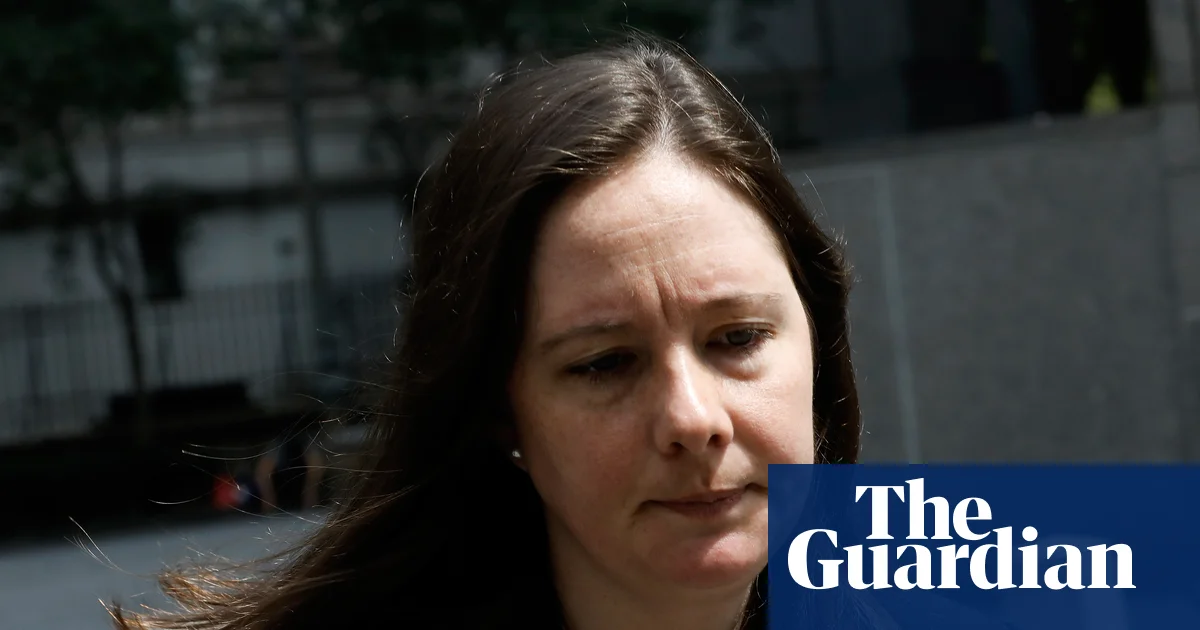
Judge Jesse Furman ruled this week that the Department of Justice’s firing of assistant US attorney Maurene Comey without cause was unlawful. This was reported by Qazaqyia.kz citing The Guardian.
Comey, the daughter of former FBI director James Comey, successfully litigated numerous high-profile cases during her tenure at the southern district of New York, including guilty verdicts against Ghislaine Maxwell and Sean “Diddy” Combs.
“It looks as if Judge Furman has completely vindicated her and rejected just about all of the arguments made by the government,” said Carl Tobias, Williams chair at the University of Richmond School of Law. “And so it’s really important to have this because of the way she was essentially summarily fired, and so it sets a valuable precedent.”
The Department of Justice, which fired her without cause, had argued that article II of the US constitution, which defines presidential power, imbued Trump and his attorney general with a right to fire line prosecutors – who are not political appointees.
But Furman this week rejected the department’s position, ruling Comey’s firing was not greenlighted under any law and in fact, violated the Civil Service Reform Act.
The justice department’s claim “flies in the face of nearly two centuries of Supreme Court precedent”, Furman said. “It is also without merit. Indeed, to accept Defendants’ argument would be to unsettle the very equilibrium established by this Nation’s constitutional system.”
For legal observers, Furman’s decision is cause for optimism – even if optimism of the cautious sort – amid the Trump administration’s alleged repeated attacks on the rule of law. While one judicial opinion does not a panacea make, they said, such a ruling can send a strong message and be considered by other judges weighing similar cases.
“One thing I would caution is that it’s very clear the government will appeal this,” Tobias said. The justice department would do this via the second circuit court of appeals.
“I expect that Furman would be affirmed by that court, and then I assume the administration would then appeal to the US supreme court,” he added.
Then, it would up to the US supreme court to decide whether they even want to hear the case – and if they decline, the lower appeals court decision would stand.
“You are seeing the courts step up and stop and prevent the administration when they are violating the rule of law,” said Neama Rahmani, founder of West Coast Trial Lawyers and a former federal prosecutor. Just this Monday, Los Angeles federal court judge David Carter rejected Trump’s attempt to set aside 20,000 ballots in California, Rahmani noted.
“Whether it’s the supreme court and birthright citizenship, or even individual cases like this, there have been limited, I would say, rulings by the court that have limited what President Trump can do.”
Like Tobias, Rahmani said the justice department can fight federal district and appeals court decisions. And, this kind of case does contain legal issues that might pique the supreme court’s interest – especially if different federal appeals courts were to reach different conclusions.
If the supreme court did decide to hear arguments on Comey’s case, it would by no means guarantee a check on Trump’s power.
“There are a lot of the justices on the supreme court that really don’t believe there should be much of any restrictions on what the president can do,” Rahmani said. “So this is far from the silver bullet.”
For now, though, Furman’s decision can prove influential.
“The decision can be used by other folks who do believe that they were terminated lawfully,” Rahmani said, adding, “It is not binding at all, but it’s certainly something that judges look to with similar or exact same facts.”
Elizabeth Wolstein, a partner at Schlam Stone & Dolan LLP and former Manhattan federal prosecutor in the civil division, said that a judge’s decision in one case could potentially affect how other judges’ weigh similar issues.
“It doesn’t have any binding effect on another judge, even in the same district, as opposed to how a second circuit or US supreme court case would be binding,” Wolstein said. But, “if it’s well reasoned and persuasive, it is definitely going to be persuasive to another judge faced with a similar issue.”
Comey filed suit over her ouster in September 2025. Comey said she neither received notice nor explanation of her firing. Instead, Comey on 16 July 2025 got a letter that stated “your employment with the Department of Justice is hereby terminated, and you are removed from federal service effective immediately.”
When Comey asked the then Manhattan US attorney, Jay Clayton, about this notice, he allegedly said “all I can say is it came from Washington. I can’t tell you anything else,” per court papers.
The Department of Justice has said Comey’s firing was directed by the former US attorney general Pam Bondi and subsequently “ratified” by her successor, Todd Blanche.