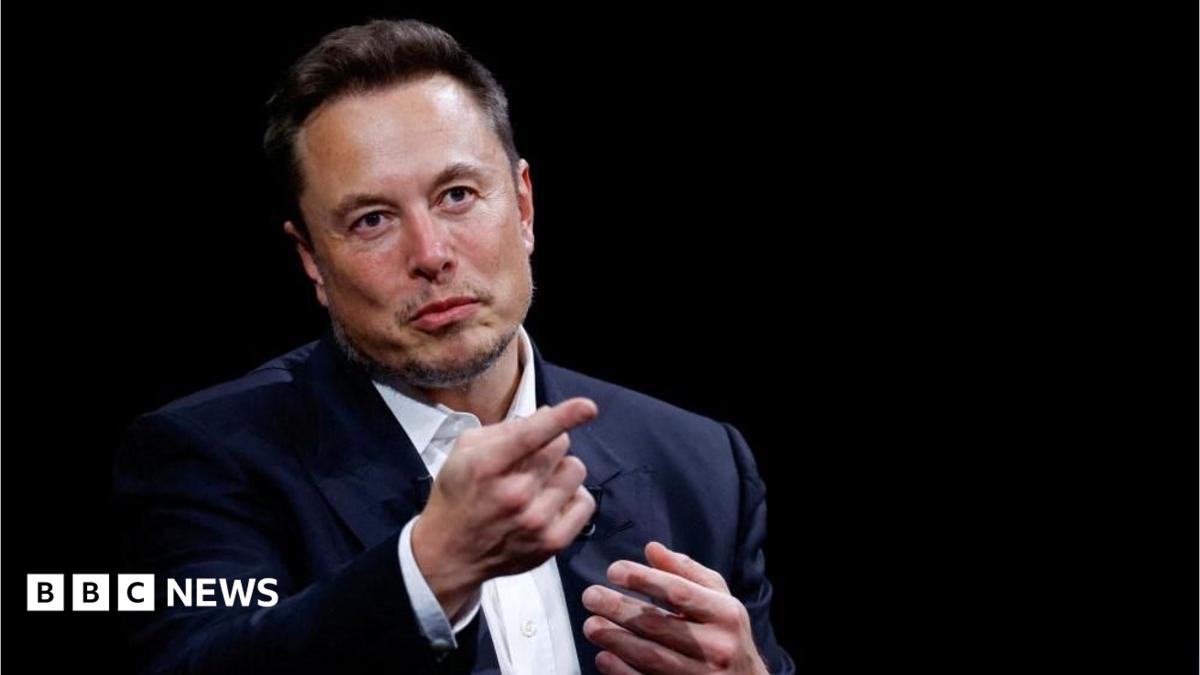
Elon Musk has suggested that the US government may be behind restrictions on the speed at which some of Ukraine's weapons can travel and stay connected to SpaceX's Starlink internet network. This was reported by Qazaqyia.kz citing BBC News.
Starlink is a vital tool allowing Kyiv to guide drones to Russian targets and also protect its own skies, but on Tuesday night Ukraine said unexpected new speed limits were disrupting its battlefield missions.
An adviser to President Volodymyr Zelensky said he believed the restrictions were not a coincidence and were related to the latest strains between Kyiv and Washington.
Musk said that Starshield, the military-grade sister service to Starlink, is controlled by the US government, and "any limits on speed or usage are decided by the US military and ultimately [the US president]".
Musk - writing on X - had been responding to pleas from Ukrainian officials to restore connectivity, including from Zelensky who told UK media: "I hope that it's a mistake, maybe (a) huge technical problem. I don't know, but we are asking to... switch (it) on."
Starlink, which is owned by Musk's SpaceX, restricted speed limits on Tuesday night to 100mph (160km/h), meaning any weapons that travelled faster than that lost connectivity to the network.
It had been partially restored by Wednesday evening, Ukraine's former defence minister Mykhailo Fedorov said.
"Removing Starshield's speed limit entirely is now critical for Ukraine's defense," he wrote on X, thanking Elon Musk and asking for his "continued support".
About an hour later, Musk replied to that post, defending his company's involvement.
"Starshield systems are owned and controlled by the US government. Any limits on speed or usage are decided by the US military and ultimately POTUS," he wrote.
Musk added that Starlink is for "civilian or defensive activities and cannot be used for offensive military action, as doing so would be inappropriate for a commercial company".
While both companies are owned by Musk's SpaceX, Starlink is a civilian service that uses satellites in low Earth orbit to provide internet access, particularly in remote areas, while Starshield is designed for government and military use.
The restrictions on Tuesday night came as Russia launched deadly attacks against Ukraine that killed several people in Kyiv, officials said, and hit communications and energy facilities used by Ukraine's military.
President Zelensky said it was "one of the largest attacks" from Russia, and while "a significant part of the drones were shot down" there were "also hits".
At least 600,000 people across Ukraine were left without electricity, and residents said they received no warning of incoming drones before they hit.
"It is clear that this action cannot be a coincidence and is related to the current political situation," Zelensky's adviser Serhiy Beskrestnov wrote on Telegram on Wednesday morning.
To play this video you need to enable JavaScript in your browser. This video can not be played
Watch: What we know about Russia's overnight strikes on Ukraine
US President Donald Trump has grown increasingly frustrated towards Ukraine as it continues to strike Russian energy facilities.
Zelensky has said that the US threatened to restrict intelligence sharing if he did not sign up to Trump's energy ceasefire, but on Tuesday, Trump denied this.
Speaking during a visit to London on Wednesday, President Zelensky agreed that he had felt betrayed after the US made a deal with Russia to import 300,000 tonnes of its diesel.
"Really yes... but it's a little bit more complicated than just my emotions or my feelings," Zelensky said, when asked by UK journalist Piers Morgan if he felt betrayed.
During his one-day visit, Zelensky was greeted with a hug by UK PM Andy Burnham at Downing Street and held an audience with King Charles.
Ahead of the president's arrival, No 10 announced it would speed up delivery of lightweight multirole missiles to Ukraine, which have been used to bring down Russian drones.
"We are behind you and that will not change," Burnham told Zelensky.