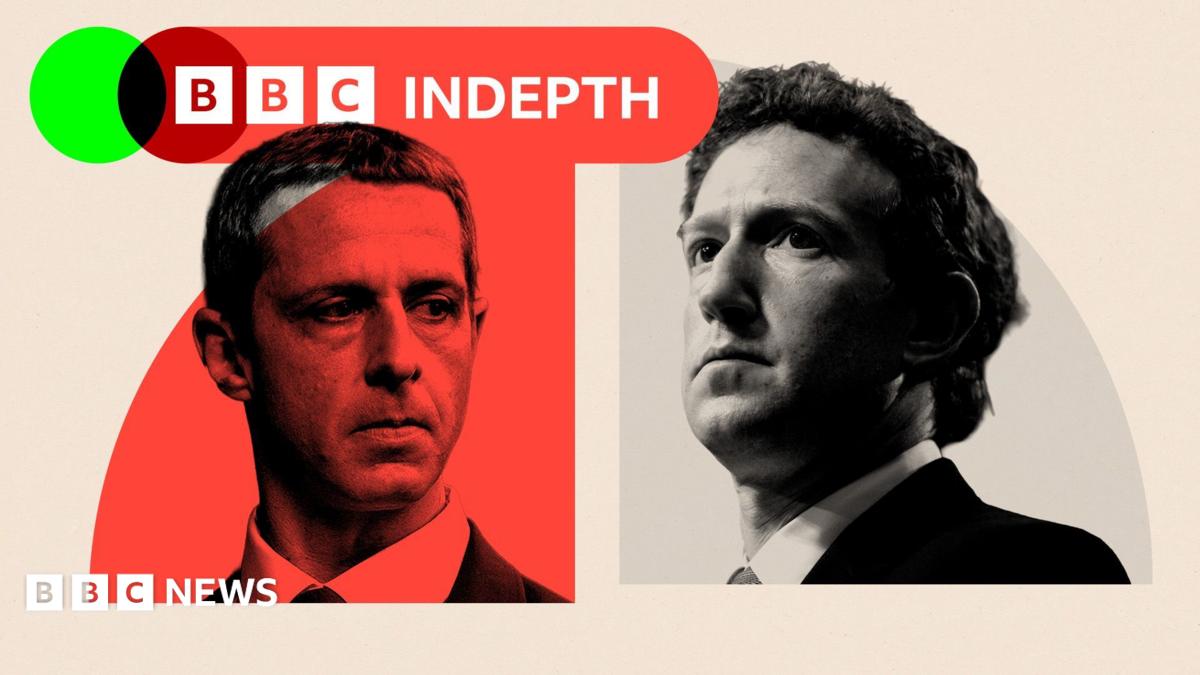
Mark Zuckerberg has an image problem, yet Meta's business is booming. This was reported by Qazaqyia.kz citing BBC News.
At the company's annual Meta Connect event last month, Zuckerberg used his keynote to discuss new AI products: the Muse chatbot, smart glasses, and a Tamagotchi-like AI gadget. But during a nearly hour-long presentation, he did not mention Instagram or Facebook at all.
Over the past year, Meta has faced a series of lawsuits accusing it of deliberately designing addictive products for young users. Internal emails, corporate documents, and whistleblower testimony have been released. A Pew Research Center poll last year found two-thirds of Americans had an unfavourable opinion of Zuckerberg.
His reputation is unlikely to be helped by Aaron Sorkin's film "The Social Reckoning," released this week, about whistleblower claims that Meta executives knew their products harmed young people. Succession actor Jeremy Strong plays Zuckerberg as a "full-on villain."
Yet Meta's products are doing better than ever. Usage is rising, and users are flocking to its new AI assistant. It raises the question: can anything really clip Meta's wings, or is it now a 'Teflon' company?
It has been a year of bad headlines. Last summer, Reuters revealed Meta allowed its chatbots to engage children in romantic or sensual conversations and provide false medical information. Meta revised those policies and said such responses should never have been allowed.
In March, a jury awarded $6m to a 20-year-old California woman who claimed mental health harms from Instagram and YouTube. Around the same time, New Mexico became the first state to succeed in a lawsuit against Meta over child safety. A jury found the company failed to warn the public and fined it $942m. The judge called Meta a "public nuisance" akin to air pollution. Meta disagrees with the verdicts and is appealing both cases.
In May, Meta settled a case brought by a Kentucky school district for $9m. This summer, Meta struck an $18bn settlement with 48 US states, plus the District of Columbia and three US territories. As part of the deal, the firm promised two-hour daily time limits for young users, night-time blocks, and muted notifications during school hours.
The company faces other lawsuits, including one starting later this month in Los Angeles. Several countries have moved to ban social media for children entirely, starting with Australia last December. A Reuters/Ipsos survey suggests 85% of Americans think social media can be addictive for children, and 61% support greater government oversight.
To some, the trust issue feels existential. "Once the public has stopped trusting you, it's kind of a downward spiral," says associate professor Alison Taylor of New York University's Stern School of Business. "The trust deficit is so big, I just don't know that they're going to be able to recover."
But despite those high-profile cases, the company reported that the number of people using some of its apps, like Instagram and WhatsApp, has risen 3% year on year.