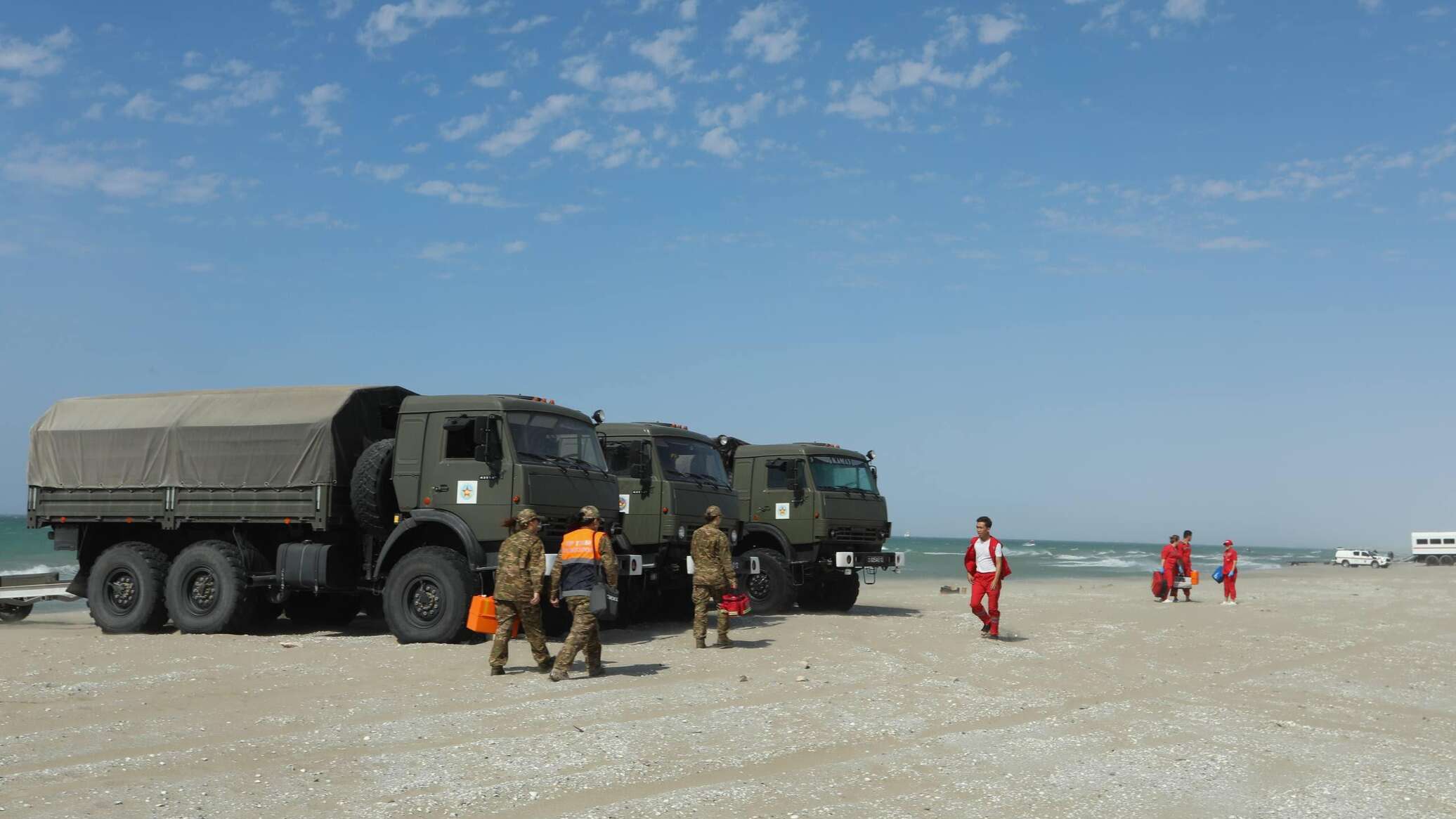
False information was spread after the tragedy in the Mangystau region. This was reported by Qazaqyia.kz citing Sputnik Kazakhstan.
Kazakhstan's Anti-Disinformation Center reported that it had monitored the information situation from the first hours after the tragedy in the Mangystau region. On 24 September, 14 people died during exercises and three were rescued. According to the center, social media users generally showed responsibility and treated the families of the victims with respect.
"However, at the same time, cases appeared where the tragedy was used to gain views, promote accounts and spread unverified information. Messages with signs of coordination were also identified, including posts published from anonymous accounts and accounts of people located outside Kazakhstan," the center reported.
Archived video circulated as a "last call"
One of the clearest examples is a video of a father talking to his son. It was circulated as the last call of a serviceman before his death during the exercises.
"It was established that the information is false. The young man in the video is alive and turned out to be a cadet at a higher military educational institution. The recording was made earlier and has nothing to do with the tragedy in Mangystau," the center noted.
Nevertheless, the false version had already spread widely on social media. It was distributed by anonymous public pages, while some media outlets republished the information without proper verification.
Archived footage presented as events in Mangystau
Videos filmed during the January events also circulated on social media, published together with statements that protests were taking place in Mangystau after the tragedy. Linking real video to a false date, place or circumstances is one of the common ways of creating a false impression of an event that did not actually happen.
AI-generated videos
The mass spread of videos created with the help of AI based on photographs of deceased servicemen also draws particular attention. The authors were not stopped even by the fact that the people had died only recently: they "revived" the photographs, made them say invented words, and created reconstructions based on artificial scenes and supposed events.
"Such content also caused outrage among representatives of Kazakhstan's creative industry. Producers, directors and creators publicly noted that it is unacceptable to use human tragedy to gain views, self-promote and attract audiences. The fact that such materials may be seen by the parents and relatives of the deceased makes the issue even more pressing," the Anti-Disinformation Center noted.
Topics targeted by spreaders of false information
The particular focus of those spreading false information may include funeral and memorial rites, interim statements by the investigation and the Government Commission, decisions concerning officials, discussion of issues of compulsory military service and conscription, as well as messages about the "concealment" of information.
During this period, plausible reconstructions created with the help of artificial intelligence may spread, based on the real facts of the tragedy but not corresponding to reality.
Fundraising is another risk area
Another risk area is fundraising. The initiative to provide assistance to the families of the victims received broad public support. In Mangystau, a single operator was designated to systematize the assistance provided, the necessary funds were collected, and further fundraising was stopped.
At present, the main task is to prevent the real tragedy from becoming the basis for an artificial information agenda.
"The grief of society is a natural state. The emergence of questions about the causes of the incident is legitimate. Demanding an objective investigation is a normal situation. However, while the investigation continues, statements about the causes of the tragedy, the actions of specific officials or circumstances that are allegedly being concealed cannot be considered as a version without confirmation from the competent authorities," the center noted.
The Anti-Disinformation Center also stated that it will continue to monitor the information situation and will pay attention to attempts to manipulate public reaction regarding the tragedy.