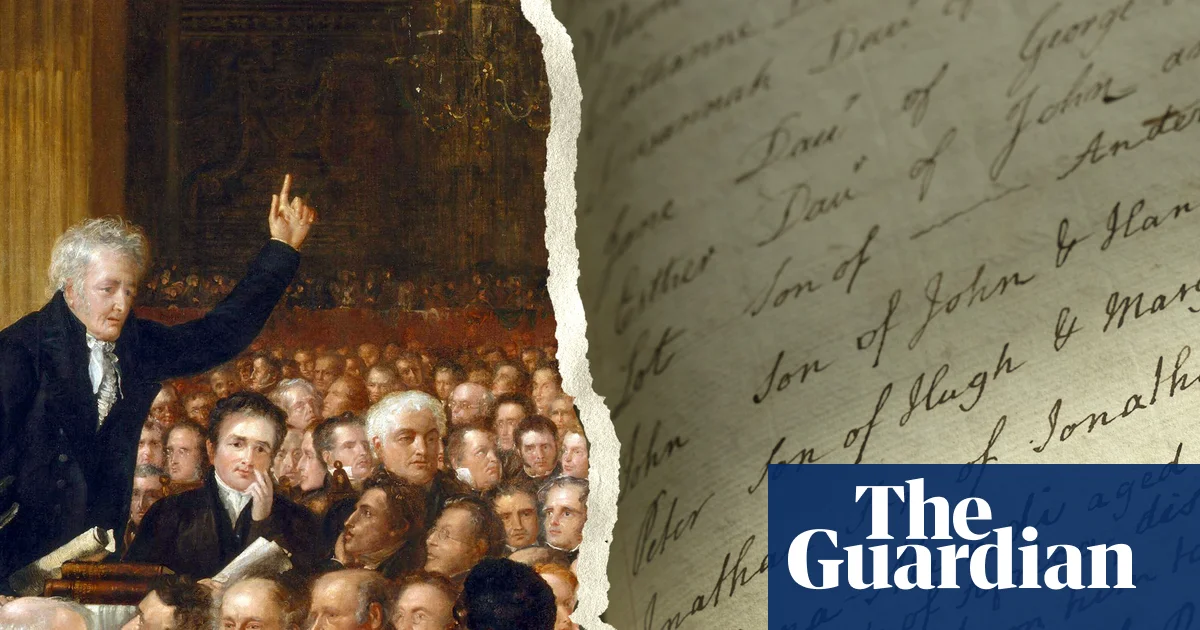
When the abolitionist Thomas Clarkson gave a sermon in 1787 at Manchester Cathedral – during the city's first mass meeting against the transatlantic trade in enslaved Africans – he saw a "great crowd of black people standing round the pulpit." This was reported by Qazaqyia.kz citing The Guardian.
However, little is known about Black Mancunians in the Georgian era, which makes one recently rediscovered entry in parish records at Manchester Cathedral particularly significant.
The handwritten entry offers a glimpse into the life of an enslaved African teenager who lived in the city in the 18th century, when it is estimated there were up to 20,000 Black people living in England.
Dating back to 26 December 1798, the entry says: "Indiana Mundi, aged 14. A negro girl from Congo on the coast of Africa, disposed of to Mr Paton at St Kitts & transferred from him to Arch.d Paton MD baptised this day."
It is now expected that Indiana – and others enslaved in Manchester – will finally be honoured with a memorial at the cathedral, supported by Heritage Lottery funding. It will be unveiled on Clarkson Day, the cathedral's annual 28 October event to confront the legacies of slavery.
Though the existence of Indiana's unusually detailed baptism notice had been noted in earlier research, cathedral research officer Cathy Hirst recently rediscovered the original entry by chance while working through 18th-century ledgers.
Other records reveal that Archibald Paton, the man who brought Indiana to Manchester, was a Liverpool doctor who had married Sarah Burton at the cathedral just a year earlier, in November 1797.
Indiana is thought to have been a servant in the Patons' household at a time when Black servants were a status symbol. "Exotic" names were also fashionable – Mundi, meaning "of the world" in Latin, is likely to have been chosen by the Patons.
Malik Al Nasir, a Cambridge University academic and author of Searching For My Slave Roots, explained that British people returning from Britain's colonies brought enslaved people with them to work as house servants, footmen, farm workers or pages. Girls were "prized", but were vulnerable to sexual exploitation.
While we know little of Indiana's experience, "a baptism would indicate somebody's formed an attachment and just wanted to bring them into their family," Al Nasir added.
At the time of Indiana's arrival, enslaved people from west and central Africa were being transported via the treacherous Middle Passage to British colonies such as St Kitts, which had about 70 sugar plantations by the late 18th century.
Baptism during enslavement was of political as well as spiritual significance for Black people. Baptism was actively discouraged throughout British colonies, Al Nasir said. Plantation owners feared that Christian teaching – particularly stories such as Moses leading the Israelites out of bondage – would encourage literacy and resistance.
There was also a widespread belief that baptism conferred legal freedom. As Al Nasir explained: "The argument was that you can't baptise a thing, you can only baptise a person – and because he's a person, you cannot treat him as property."
This argument proved pivotal to the abolitionist cause. In 1771, in London – 20 years before Indiana was baptised in Manchester – an enslaved Black man named James Somerset was baptised, with three abolitionist godparents, before refusing to work any longer for his "master", Charles Stewart. It was a significant moment in Black British history.
On Stewart's orders, Somerset was kidnapped to be shipped to Jamaica. But the judge in the resulting court case – Somerset v Stewart – ruled that no master had the right to detain an enslaved person by force for the purpose of transporting and selling them abroad.
Somerset was a free man but it was a narrow ruling. The judge, Lord Mansfield, whose own niece Dido Belle was of mixed heritage, did not want to upset the merchant classes who profited from enslavement.
Nonetheless, the case exposed the fact that no law permitted enslavement on English soil, with the judge declaring that slavery "is so odious, that nothing can be suffered to support it, but positive law." The ripple effects were profound.
Benjamin Franklin, the founding US politician, had been in the gallery for the Somerset case. He returned to America and reported the direction of legal thinking in London. According to Al Nasir, this contributed to the growing conviction among American colonists that as a British colony they would eventually be compelled to emancipate enslaved people – and that this prospect became one of the drivers behind the American war of independence.
In England, enslaved people in London ran away from their masters, declaring themselves free. News spread to Manchester. Masters began shipping enslaved people out overseas to retain control, while others sought passage to England precisely to seek baptism and freedom.
Yet neither the crowd of Black people nor the abolitionist movement itself provides a complete picture of Black Mancunian life, but this record is an important window.