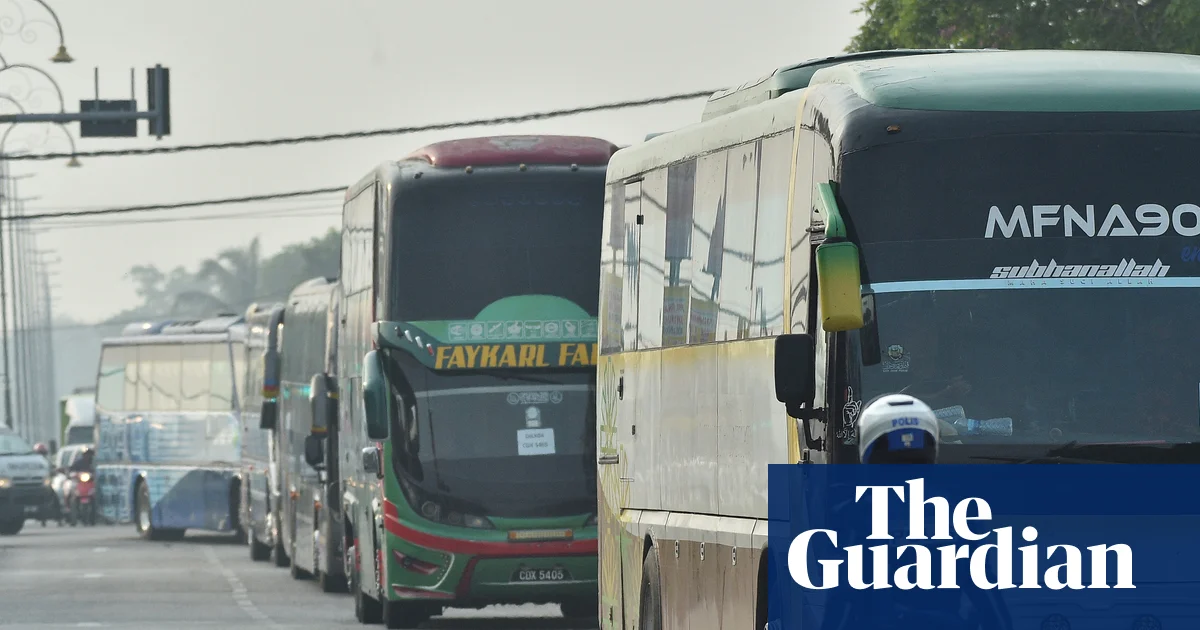
Malaysia began sending back about 1,500 Myanmar nationals on Tuesday, the government confirmed, as it launched a scheme that rights groups say may endanger migrants and asylum seekers by returning them to the war-torn country. This was reported by Qazaqyia.kz citing The Guardian.
The group is the first of 5,000 Myanmar citizens that Kuala Lumpur says agreed to "voluntary" repatriation from detention centres amid a huge uptick in anti-migrant sentiment in Malaysia.
Concern from the UN and rights groups
Both the UN and advocacy organisations voiced concern on Tuesday, saying the group could face a dangerous homecoming in Myanmar, where a civil war has raged since 2021.
Neither Malaysia nor Myanmar have officially clarified the number of Rohingya people in the first group, and there is worry they may be returned to a country where they face persecution rights groups say amounts to genocide. The Rohingya, a Muslim minority group, make up two-thirds of the 190,000 Myanmar refugees and asylum seekers in Malaysia, according to the UN.
Many of the Rohingya escaped to Malaysia during a brutal military crackdown in 2017.
Ships and buses
On Tuesday afternoon, AFP reporters saw three ships belonging to the Myanmar navy, used in a previous repatriation exercise, departing from Malaysia's Lumut naval base. The Myanmar nationals were processed at the naval base before boarding dozens of buses which arrived under police escort at the Majlis Perbandaran Manjung stadium.
Malaysia's interior ministry confirmed that the repatriations were under way.
It said in a statement that the repatriation was part of the government's plan to resolve the "legacy issue" of foreign asylum-seekers in Malaysia – of which it said 95% were from Myanmar.
"This long-standing issue has imposed a significant financial burden on the nation, triggered serious social crises, and created tangible security threats for the Malaysian people," the statement said.
UN rights chief's appeal
But in Geneva, the UN rights chief, Volker Turk, urged Malaysia to stop the process immediately, saying nobody should be deported to Myanmar, given the severity of the situation on the ground.
"This is no time to return anyone forcibly to a country plagued by egregious human rights violations and abuses, and where many cruelly face the real risk of more of the same violence again upon their return," he said in a statement.
"The conditions are far from safe and sustainable, and it is deeply questionable whether any return in these circumstances can be considered truly voluntary.
"The hundreds of thousands who have fled Myanmar in fear for their lives must be protected, and their fundamental human rights to seek asylum and protection abroad properly considered."
How the plan was announced
The Malaysian prime minister, Anwar Ibrahim, announced in July that Myanmar had agreed to take back 5,000 Rohingya. The plan was announced after authorities detained more than 100 Rohingya who had gathered outside the UN refugee agency's office in Kuala Lumpur.
They were seeking help after being threatened with eviction from an informal settlement in northern Penang state. They were later released after officials confirmed they held valid UN documentation.
Myanmar earlier this month pledged "safe and dignified" returns for its citizens displaced abroad, after criticism from the UN and rights groups.
Last week more than 160 civil society groups in a joint statement called upon the Malaysian government to "immediately halt the deportations," pending talks with civil organisations about the situation on the ground in Myanmar.
Malaysia, which shelters one of Southeast Asia's biggest refugee populations, is not a signatory to the 1951 Refugee Convention and does not formally recognise refugee status.