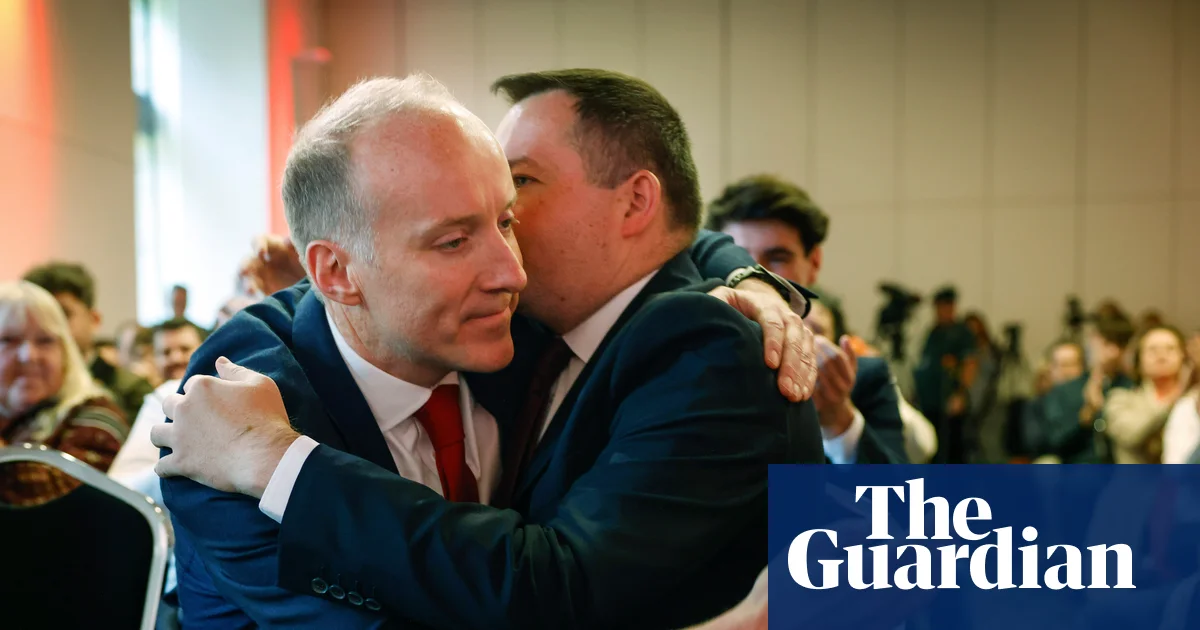
Michael Marra has been elected as the new leader of the Scottish Labour party, winning almost two-thirds of the vote to lead the party in Holyrood. This was reported by Qazaqyia.kz citing The Guardian.
The MSP for North East Scotland is Scottish Labour's 11th leader, replacing Anas Sarwar after his shock decision to resign in July to join Andy Burnham's new government as a trade minister.
In his acceptance speech, Marra said he would spend time reconnecting with Scottish voters. "May hurt so much because we know the SNP didn't deserve a fifth term in power. But the truth is Scotland didn't think we would be much better," he said.
"Scots know what we are against. They can't tell you what we are for. And that vacuum was filled by the poison, racism and bigotry of Reform. We must be clear in our values. We must lead with our values," he said.
"For a decade now Scotland has gotten weaker. We must reconnect with the country if we are ever to form a government in Holyrood to face these historic challenges."
Marra faces an uphill battle to reverse the party's fortunes in Scotland. While 37 Labour MPs from Scotland sit in Westminster, the party has lost seats at every Holyrood election since devolution in 1999.
In May, the party suffered its worst ever results – winning just 17 seats as the SNP retained power. Labour has as many seats as Reform in Holyrood, just two more than the Scottish Green party and five more than the Conservatives.
In a subdued campaign with few policy differences between candidates, both Marra and his main rival, Joe Fagan, were criticised for struggling to outline the circumstances in which Scotland should be allowed a second independence referendum.
Marra expressed his support for drilling in Rosebank oilfield and Jackdaw gasfield, arguing they were cleaner than sources from abroad while also supporting jobs in Scotland.
In total, 6,751 votes were cast in the leadership election, representing 49.43% of the Scottish Labour party membership. Fagan won 2,485 votes, while Marra won 4,266.
Dr Eric Shaw, a research fellow at the University of Stirling who co-authored The Strange Death of Labour in Scotland, said the party had to reconnect with working-class voters to win back support.
"The party is facing three main issues: the continued salience of independence, the association between Scottish Labour and Labour in Westminster, and the erosion of Labour's historic base in Scotland. The plight of the party is reflected in the fact that Labour did better amongst the professional middle class than it did in the working class in the most recent election."
Dr Ewan Gibbs, a lecturer in economic and social history at the University of Glasgow, said the new leader had to ask difficult questions about who the party was meant to represent in Scotland.
"We are approaching 20 years of failure with the government in Holyrood if we look at the performance of public services, educational attainment, ongoing income and wealth inequality in Scotland. But Scottish Labour isn't a party that seems equipped to mobilise that opposition and disappointment at the moment."