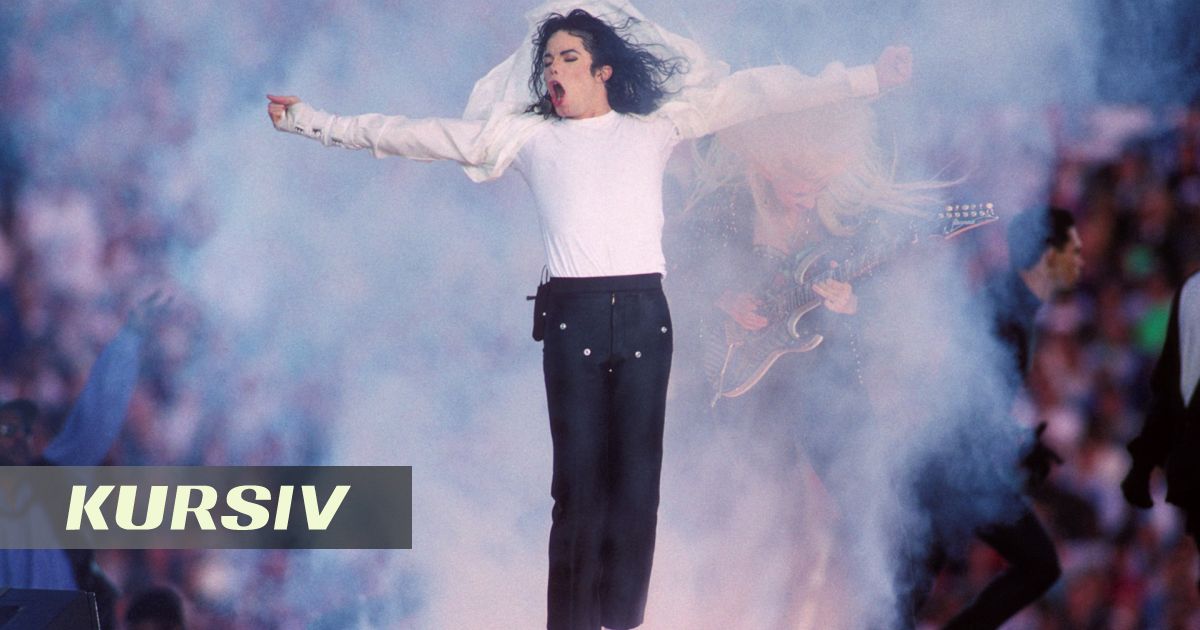
August 29 marks Michael Jackson's birthday. For the music industry, this date has long been a reason to revisit 'Thriller' and 'Bad'; for the fashion industry, it's a reminder that long before stage personas became a marketing tool, Jackson turned his own wardrobe into a separate art form. The white glove, the red leather jacket, military jackets with epaulets, and loafers that allowed a 45-degree lean—all of this has long lived a life of its own, separate from his music, and continues to appear on runways, in music videos, and in fashion house collections. This was reported by Qazaqyia.kz citing Kursiv Media.
Michael Jackson began in the late 1960s with his brothers in 'Jackson 5' under the guidance of Motown Records. What did the group look like? Bright prints, wide collars, flared pants—characteristic signs of the fashion of that time. But even then, according to people who later worked with Jackson, he was forming his own vision of a wardrobe (or his own style), inspired by fashion history and art, not just stage trends.
The late 1970s saw the release of 'Off the Wall'. On the famous album cover, Michael Jackson wears an elegant black tuxedo, a white shirt, and a satin bow tie, but with cropped pants and white socks with black shoes. The singer would almost always appear on stage in cropped pants and contrasting socks—so that even in the back rows, audiences could see how his legs moved.
1983 was a turning point: during a performance of 'Billie Jean' at a TV special celebrating Motown's 25th anniversary, Jackson first appeared on stage in a white glove (one!), completely covered in rhinestones. From that moment, the glove became inseparable from his image—they remained in his wardrobe throughout his career and were sold at auctions after his death for record sums from $100,000 to $420,000. Recently, it was announced that the famous glove would be auctioned again—this time in Abu Dhabi in December of this year, with an estimated value of $40,000–$60,000.
Jackson's costumes only became more complex—both in concept and execution. The 'Thriller' era gave us the iconic red leather jacket with black inserts—later, for the 'Bad' tour, his costumers reimagined it to light up and pulse in time with the music. The 'Bad' tour itself added a biker jacket with straps and buckles to his wardrobe (the look from the video where he moves sharply and aggressively in a subway).
The following years—'Dangerous', 'HIStory', performances at the Grammys and the White House—turned the stage into a parade ground: military jackets with gold embroidery, epaulets, and crowns on buttons, inspired, in Jackson's own words, by British heraldry and the history of monarchies. Designer Michael Bush wrote in his book 'The King of Style: Dressing Michael Jackson' that the singer 'was crazy about British military history'.
Speaking of Michael Bush: he and his partner Dennis Tompkins were Jackson's costume designers for nearly 25 years—by their own account, they made tens of thousands of items for him, each custom-tailored and usually for a single public appearance. They designed the iconic white suit and fedora for 'Smooth Criminal' and, together with Jackson, even co-owned a patent for special shoes that allowed him to perform his famous 45-degree lean on stage.
The glove itself, covered in crystal rhinestones, was created by costumer Bill Whitten.
After Jackson's death in 2009, not only that glove but many of his other stage costumes repeatedly became top lots at major auctions: for example, the jacket from the 'Thriller' video sold at Julien's Auctions in California for $1.8 million, and 55 items were purchased by Lady Gaga—who said she wanted to carefully preserve the artist's legacy.
However, Jackson's influence on fashion is not limited to nostalgia—it systematically 'grows into' the work of subsequent generations of designers. The most striking example is the Louis Vuitton fall-winter 2019 collection, which Virgil Abloh (then creative director of the house's menswear line) built entirely as a homage to Jackson: the runway recreated the New York intersection from the 'Billie Jean' video, guests were sent rhinestone gloves as invitations, and the collection itself featured suits and sweatshirts covered in crystals.
'When a Michael song plays in the background, the clothes change—the shirt becomes different, the shoes, the fit of the pants. Music is the key,' Abloh said, explaining his turn to Jackson's legacy.
However, the story took an unpleasant turn: shortly after the Louis Vuitton show, the documentary 'Leaving Neverland' was released with accusations against the artist, and LVMH decided not to release items directly referencing his image.
Another example is Beyoncé's appearance at Super Bowl 50 in 2016 in a leather jacket with gold military hardware by Dsquared2: many immediately saw a direct reference to Jackson's performance at Super Bowl XXVII in 1993, although the designers themselves, Dean and Dan Caten, later said the coincidence of military aesthetics was not intentional.
The list of those who directly or indirectly continue the dialogue with his image could go on: from Kanye West and Lady Gaga, who build stage personas as separate works, to streetwear brands like Supreme, which released capsule collections with his portraits. The common thread in all these references is the idea that Michael Jackson established among the first: a stage costume can tell a story as well as the song itself.
In 2026, a new reason was added to the conversation about Jackson's style—the biopic 'Michael' starring his nephew Jaafar Jackson. Costume designer Marcy Rodgers and her team recreated iconic looks by hand, relying on archival materials and original fabrics—the red leather jacket from 'Thriller', the biker jacket from the 'Bad' era, the white suit and fedora from 'Smooth Criminal', and the ceremonial military jackets from the 1984 Grammys.