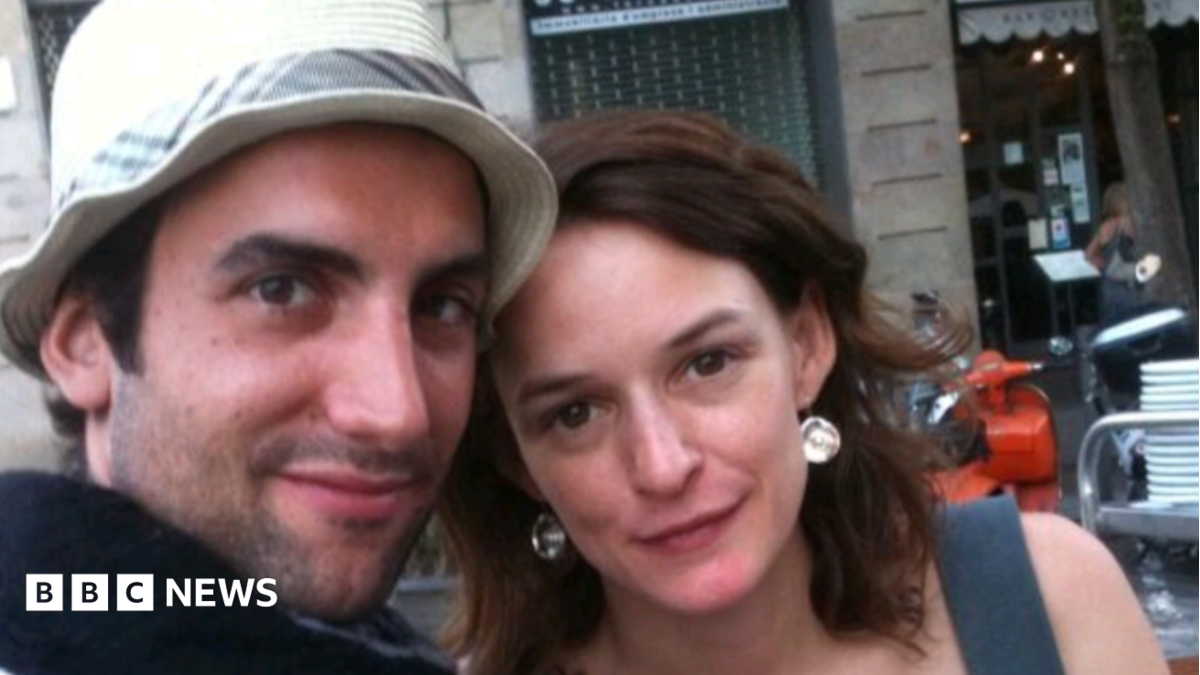
In Paris, donor children Arthur and Audrey Kermalvezen fell in love, but they needed to find out if they were related. This was reported by Qazaqyia.kz citing BBC News.
Arthur, a sperm donor child, spent years seeing possible fathers everywhere: "I imagined it might be my teacher, the people I saw on the bus... and I was very angry because it's impossible to live like this."
Audrey, who met him at a gathering for donor-conceived activists in 2010, described it as "love at first sight". But was this connection romantic or genetic?
When they were born, there were only two sperm banks in Paris, and many men had made multiple donations, so there was a real possibility they could be half-siblings.
In France, laws governing genetic testing and donor anonymity made finding the answer extremely difficult. It is a criminal offence to take a home DNA test, with fines exceeding €3,500 ($4,288; £3,191). As a result, companies such as 23andMe, Ancestry and MyHeritage don't make their kits available in France.
Supporters of the law, in place since 1994, say it stops sensitive genetic data being given to commercial companies and prevents family disputes. But Arthur points out that France is the only country in Europe that criminalises the use of such tests.
Audrey, a lawyer specialising in bioethics law, fully understood that French law guaranteed donor anonymity. But she had been conceived in 1979, before any such legislation existed.
Arthur and Audrey met while searching for other donor-conceived people born before 1994. Arthur had written a book detailing his desire to learn more about his biological origins. Audrey was struck by how precisely he expressed feelings she herself had struggled to articulate.
When they met in person, the chemistry was immediate. But before they could move from platonic friendship to a romantic relationship, they had to know the truth about their fathers. After months of searching, they found a doctor in southern France who, for €900 ($1,028; £764) in cash, conducted a genetic test which found that they were not related. But their unease remained as the doctor was breaking the law in sharing that result.
"We were worried he was a charlatan," Audrey says.
They considered using a home-testing kit to confirm the result, but as a lawyer, Audrey was determined to act within the law. So, from 2010, she launched a series of legal challenges to the French system.
She wanted to know whether her donor was still alive and, if so, whether he still wished to remain anonymous. Could she access non-identifying information about how many times he had donated and whether Arthur could be among her half-siblings?
After three years of legal challenges, the couple took a 'leap of faith' and got married. In 2015, France's highest administrative court rejected Audrey's final appeal.
Shortly before the birth of their first child, a doctor agreed to investigate what information might exist about their respective donors. Under French law, a medical practitioner has access to this information about their patients, but is not allowed to share it with them.
The doctor found that their donors were born in different years - and so could not be the same man. A life-changing piece of information, but one they only gained because a doctor agreed to break the rules.
"It's completely weird," Audrey says, "because it means that the doctor can know more than me... about me."
Even with this new information, Arthur still worried they could be related, so after years of resisting it, they finally took a home DNA test.
Campaigners say the French ban has done little to stop people taking home tests, with the advocacy group DNA Pass estimating that well over a million French people have taken one. Many order them via friends in countries where they are legally obtainable - or by using forwarding services in neighbouring countries.