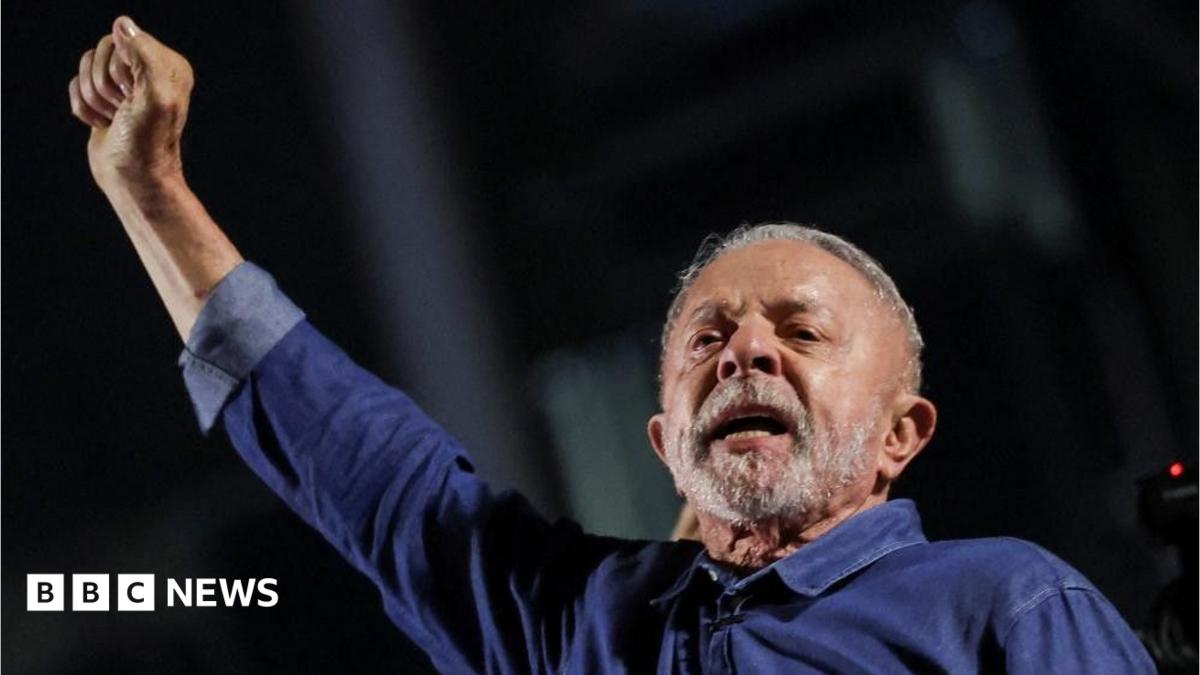
Luiz Inácio Lula da Silva has been re-elected as Brazil's president. This was reported by Qazaqyia.kz citing BBC News.
Before his first successful run for the presidency in 2002, he had tried three times unsuccessfully. When he became president in 2003, he came to office as the first leftist leader of Brazil in nearly half a century. Now aged 80, he has bucked the trend of electoral victory for right-wing leaders in Latin America.
Lula was born into a poor, illiterate peasant family. As a child, he worked as a peanut seller and shoe-shine boy, only learning to read when he was 10 years old. He went on to train as a metalworker and found work in an industrial city near São Paulo, where he lost the little finger of his left hand in an accident in the 1960s.
Lula was not initially interested in politics but threw himself into trade union activism. Elected leader of the 100,000-strong Metalworkers' Union in 1975, he transformed trade union activism in Brazil by turning what had mostly been government-friendly organisations into a powerful independent movement.
In 1980, Lula brought together trade unionists, intellectuals, Trotskyites and Church activists to found the Workers' Party (PT), the first major socialist party in the country's history. The PT went on to gradually replace its revolutionary commitment with a more pragmatic, social democratic platform.
Lula came to power promising major reforms to the country's political and economic system. He vowed to eradicate hunger and create a self-confident, caring, outward-looking nation.
In his time in office, Lula pumped billions of dollars into social programmes. By increasing the minimum wage well above the rate of inflation and broadening state help to the most impoverished with a family grant programme, the Bolsa Familia, he helped some 44 million people and cemented his support among the poor. However, many commentators argue that the programme failed to address the structural problems that underpin poverty, such as a lack of education.
He left office eight years later, after serving two terms as president, enjoying exceptionally high popularity ratings. He raised Brazil's profile on the international scene and presided over the longest period of economic growth in three decades. Unable to run for a third term, Lula left the presidency and, shortly afterwards, was diagnosed with throat cancer. He even shaved his trademark beard during treatment. Doctors declared him cured of the disease in 2012.
Under his chosen successor, progress stalled. The economic boom also gave way to recession, and the country's political scene was rocked by a huge investigation into top-level corruption, known as Operation Car Wash.
Lula was among those to get caught up in the scandal. In July 2017, he was convicted of corruption and sentenced to more than nine years in prison for accepting a beachside flat as a bribe from engineering firm OAS - a sentence increased on appeal to 12 years. Lula was also jailed for 12 years and 11 months for corruption and money laundering for receiving bribes from two construction and engineering firms by way of funding improvements in a country house he and his family used.
He has always maintained his innocence, insisting accusations against him were politically motivated. In 2019, he was released after having served just over 18 months, after a Supreme Court ruling that the incarceration had been illegal, having come before all appeals had been exhausted. Those convictions were annulled in 2021, leaving Lula free to run for a third term in 2022, beating right-winger Jair Bolsonaro.
When he re-entered office in 2023, he vowed it would be his last term, and yet his party endorsed him as their candidate again this year, even though he will turn 81 on Tuesday.