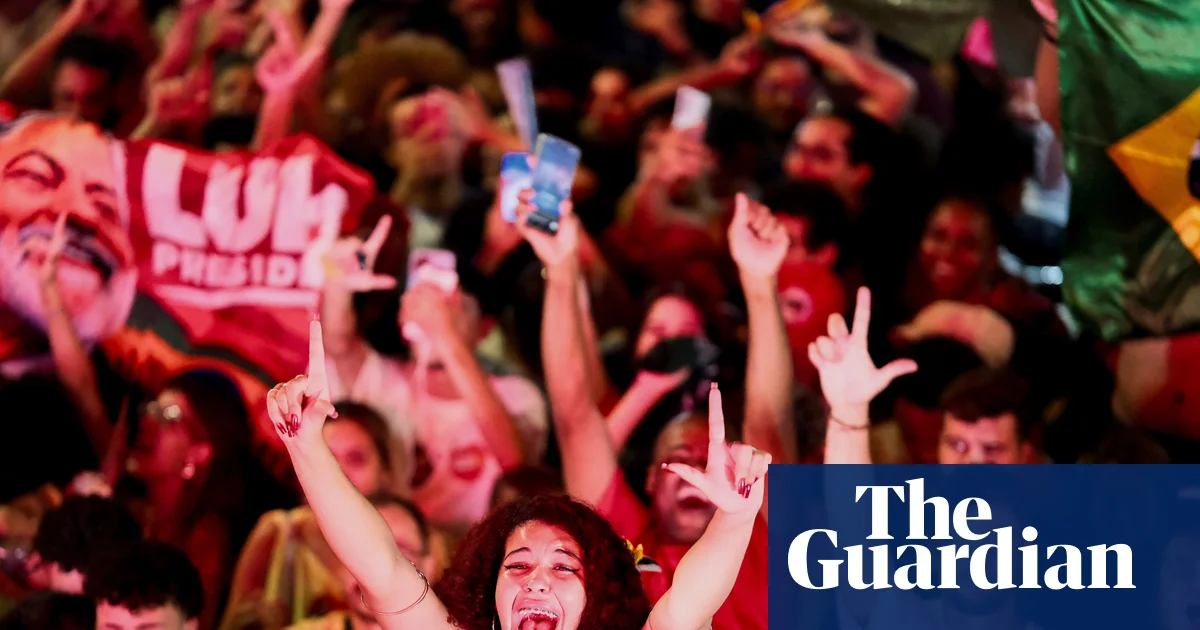
Luiz Inácio Lula da Silva has been elected president of Brazil for a fourth nonconsecutive term. The 80-year-old leftist won 51.79% of the vote in the second round, defeating far-right senator Flávio Bolsonaro, who received 48.21% — a margin of about 4.3 million votes. Lula called the result "a defeat for denialism." This was reported by Qazaqyia.kz citing The Guardian.
A historic turnaround
The choice of Brazil's 159 million voters was narrow but clear. The outcome was an unprecedented turnaround after a populist surge in first-round voting at the beginning of October left Brazil's progressives reeling. In those early October elections, Flávio Bolsonaro received 56.1 million votes to Lula's 53.8 million — 47.03% to 45.16%. Not once since the return of democracy to Brazil in 1985 has the first-round runner-up managed to turn the game around and win the second ballot.
In the intervening weeks, the polls tightened dramatically, putting Bolsonaro ahead by only fractions of a percentage point. But Lula persuaded voters to turn out and secured victory by 4.3 million votes.
"This is the crescendo of an incredible, if sometimes controversial, 50-year political career," says Tom Phillips, the Guardian's Latin America correspondent, who was in São Paulo at the Workers' party vote count. "It saw Lula go from rural poverty to union leader to the first elected working-class leader of Brazil, who has helped millions of people escape poverty and rode a commodities boom in his first two terms."
Bolsonaro refuses to concede
Flávio Bolsonaro has refused to concede, citing a decision to extend voting for an extra two hours — although both sides had called for it, for different reasons. This makes the victory a tense one.
Lula's rival is far-right senator Flávio Bolsonaro, who spearheaded the radical populist movement built by his father and former president, Jair Bolsonaro. Jair Bolsonaro is serving a 27-year prison sentence for plotting a coup after he lost the 2022 election.
What it means for Brazil
For Brazil, a Lula win represents stability and the assurance that the country's democratic future is secure, at least in the short term. "Over the past four years, Lula has reduced deforestation in the Amazon by more than 70%. He's come to the help of the Indigenous people who live there. He's cracked down on illegal mining," Tom Phillips says. "It's very positive news that all this will continue."
However, "Bolsonarismo is a far-right movement … that has put down deep roots in Brazilian society," Bernardo Mello Franco, a political columnist for the Rio broadsheet O Globo, told Tom earlier this month, pointing to a series of societal shifts that have contributed to this.
Evangelical Christianity has expanded across Brazil in recent decades, with church leaders throwing their support behind the socially conservative policies favoured by Bolsonaro Sr and Jr.
Pro-gun Flávio Bolsonaro harnessed voter frustration at chronic levels of urban crime and violence. Despite being embedded in Brazilian politics for decades, he successfully portrayed himself as an anti-establishment outsider, using social media far more effectively than his rival.
And others believe he had significant help: a dozen watchdogs and research groups have published reports alleging that Meta may have favoured the senator's campaign. The controversy grew after Brazil's electoral court ordered Meta not to give the candidates "unequal treatment," while the company called the allegations "false and unfounded."
International implications
Lula's victory is also significant on the international stage. As the leader of one of the world's largest economies, he plays a key role in the fight against climate change. His policies to reduce deforestation in the Amazon are highly praised by international environmental organizations.
Moreover, Lula's victory strengthens the leftist wave in Latin America. However, Bolsonaro's refusal to accept the result could lead to political instability, testing the country's democratic institutions.
Lula turns 81 on Tuesday. The victory is an early birthday present for the veteran leftist.