Brazilian President Luiz Inácio Lula da Silva has vowed that dictatorship and fascism will never return to Brazil after winning a historic fourth term in power by defeating his far-right opponent, Flávio Bolsonaro. This was reported by Qazaqyia.kz citing The Guardian.
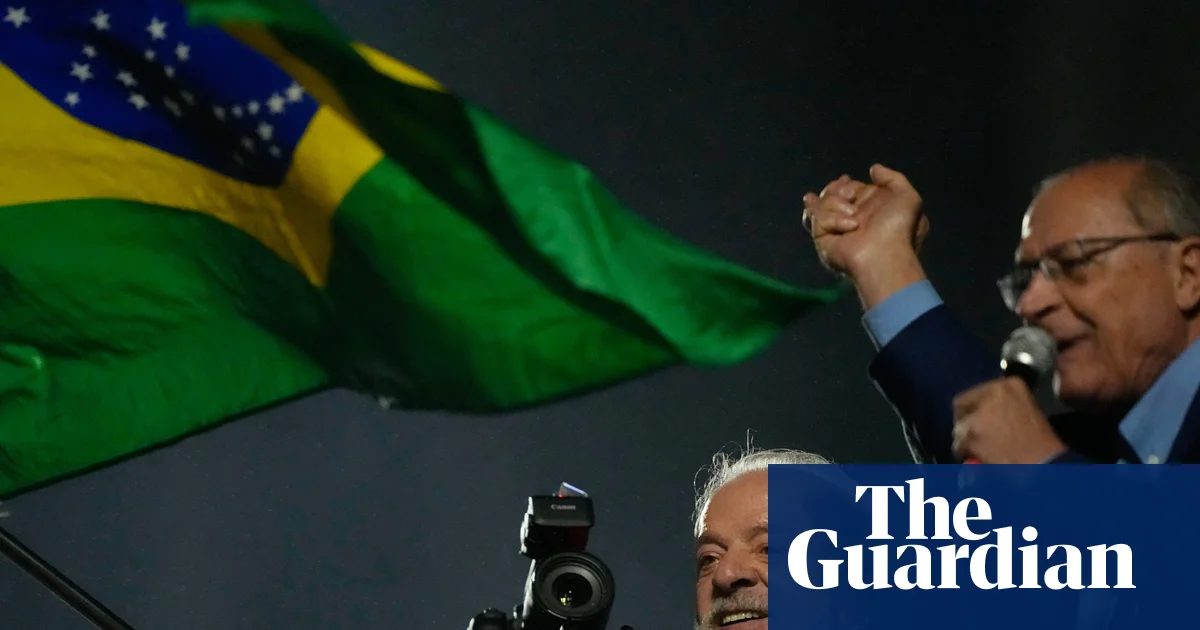
“This is God’s work – and it’s thanks to all of you,” Lula told tens of thousands of supporters who had gathered in central São Paulo in the early hours of Monday to celebrate his dramatic election comeback.
A few hours earlier, Lula pulled off the most stunning political fightback in modern Brazilian history, bouncing back from a first-round defeat in early October to trounce Bolsonaro by more than 4m votes in the runoff.
“Today is a historic day,” Lula declared, before telling a sea of elated supporters: “Democracy always, dictatorship never again. Democracy always, fascism never again.”
Never, since the return of democracy after the 1964-85 military regime, had the first-round loser managed to win the second vote. But Lula did precisely that on Sunday, prompting joyous scenes on the streets of São Paulo and cities all across Brazil. He won with 64.2m votes to Bolsonaro’s 59.8m, a 51.79% to 48.21% victory. It was at least 10m more votes than Lula secured in the first round.
Lula’s health minister, Alexandre Padilha, told the Guardian shortly after the result was confirmed: “This is a huge victory for the Brazilian people who in the second round had the chance to think about what President Lula means for the environment, for the defence of our national health service and our education system and the Brazilian constitution. And the risks that the extreme right candidate entailed.
“It’s a massive victory – not just for Brazil. It’s also an important signal to the rest of Latin America and to the world,” Padilha said at the hotel where the president’s team was following the count in São Paulo.
Bolsonaro rejected the result, following in the footsteps of his father, the former president Jair Bolsonaro, who refused to concede after losing the 2022 election to Lula and was later convicted of plotting a coup. He called Lula’s victory “sacanagem”, a Portuguese word that roughly translates as “bullshit”.
But political leaders and governments from across the spectrum were quick to recognise Lula’s victory. Mexico’s leftwing president, Claudia Sheinbaum, tweeted: “Long live democracy, the people of Brazil won.” Spain’s prime minister, Pedro Sánchez, wrote: “The global progressive resurgence has just begun.”
The UK foreign secretary, Ed Miliband, called Lula’s victory “a historic win for the global progressive movement” and said his government looked forward to continuing to collaborate on “shared values of democracy, social justice and climate action”.
Rightwing South American leaders also recognised Lula’s victory, with Chile’s president, José Antonio Kast, calling Lula to offer congratulations and Peru’s president, Keiko Fujimori, saluting “the Brazilian people for this democratic day”.
The European Commission president, Ursula von der Leyen, said: “Democracy and multilateralism have won in Brazil.”
A spokesperson for China’s foreign ministry said: “China respects the choice of the Brazilian people.”
There was silence from Donald Trump, whose administration had been rooting for a Bolsonaro victory that would have seen the so-called pro-Trump “orange wave” continue its sweep across the region into Latin America’s largest democracy.
In the lead-up to Sunday’s vote, the US had been accused of seeking to influence the result through a campaign of economic and diplomatic pressure. Erika Hilton, a transgender lawmaker who recently became the most voted-for woman in Brazil’s congress, said those efforts had failed. “We have defeated the interference of the US government, which thought it could turn our country into its back yard. Brazil and the Brazilians are too gigantic to be anybody’s back yard,” she said.
Lula’s victory will also have profound consequences for the environment and the Amazon rainforest in what is the world’s most biodiverse nation. On the eve of the vote, the former environment minister Marina Silva had warned that Bolsonaro, if elected, would seek to finish the “perverse project” of rainforest destruction started by his father, whose 2019-22 administration coincided with a surge in deforestation.
On Sunday night, Silva was in a buoyant mood, telling the Guardian: “My heart is happy and filled with gratitude to God and the Brazilian people.”
She said: “The thing I most feared was that our Indigenous territories would be invaded again [under another Bolsonaro government]. Now, I am certain that they will be preserved and that there is no risk of illegal miners returning to destroy these populations.”
For Flávio Bolsonaro, the future looks bleak. As the scale of Lula’s victory became clear on Sunday night, the mood at the Brasília mansion where Bolsonaro was watching the count soured, with what had initially resembled a lively birthday party turning into something closer to a wake. Like football supporters heading for the exits midway through the second half because their team was being thrashed, guests began to leave.