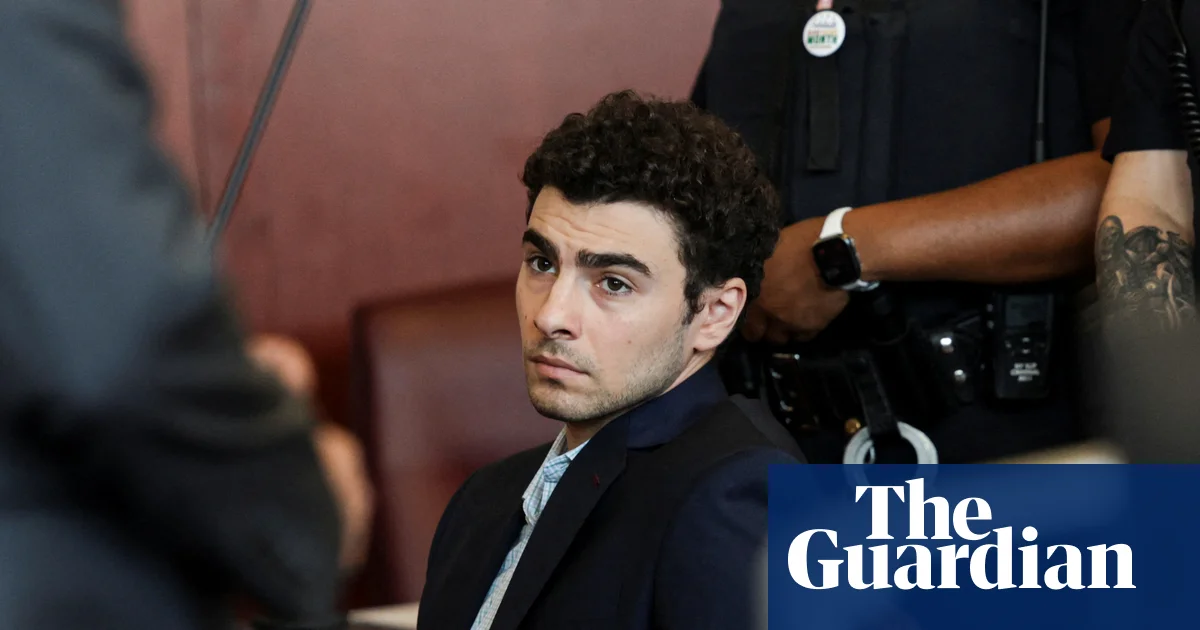
Luigi Mangione, accused of killing UnitedHealthcare CEO Brian Thompson, is set to face a jury in the coming weeks. The highly anticipated proceedings have the potential to reach trial-of-the-century status. Intense global interest in Mangione's case is unfolding against a media landscape where news consumers expect minute-by-minute updates, complicated by social media influencers who obtained press credentials and often flock to major US criminal cases. Mangione is accused of gunning down Thompson on the streets of Manhattan, triggering an intense manhunt that ended with his arrest in a Pennsylvania fast-food restaurant. The case also sparked public anger over America's for-profit healthcare firms. The current media access plan for the trial, which does not include an overflow room, only adds to fears that Mangione's trial will become a circus. This was reported by Qazaqyia.kz citing The Guardian.
Mangione's defense lodged sensational allegations about press access in a letter to Judge Gregory Carro late last week. They objected to "partial exclusion" of the public and press, alleging that court administrators and prosecutors engaged in "hand-choosing the reporters permitted to attend the proceeding." They claimed that only six journalists will be permitted to cover jury selection, "in a dramatic break from customary practice." They demanded lists of names for the six journalists covering jury selection, scheduled for 8 September, and for 68 reporters on a reserved seating list, and asked for a hearing about which journalists were "granted general access" to the trial. They argued that whatever collusion and exclusion might be happening threatened Mangione's sixth amendment right to an open trial.
However, news coverage of this letter swiftly debunked the claims, including false accusations of prosecutor involvement in journalist selection. Manhattan prosecutors told Carro in a 3 August letter they had "no role in developing" court administrators' media access plan and "will have no role in selecting which news reporters attend the trial." Mangione's team responded with a letter "to clarify their position," saying they had "no personal knowledge" about whether court administrators and prosecutors discussed press access issues, but wanted to know whether there was any discussion between them.
Experts say that Mangione's trial could proceed more smoothly if steps were taken to improve access. As for jury selection, there would be a limit on reporters in the courtroom, given logistical constraints. "That is where the pool comes in," said Laura Italiano, a freelance journalist covering the trial. She pointed to two prominent examples of this pool system: Donald Trump's 2024 hush-money trial and Sean "Diddy" Combs's 2001 nightclub shooting trial. "It's usually chosen by agreement of the veteran reporters who have covered that court. It's never acrimonious," Italiano said. She called the defense claim that a pool breaks from "customary practice" "absolutely false."
The defense has requested a video feed to an overflow courtroom. Experts believe an overflow room could lessen this acrimony. "There was universal shock when the state court system announced that the press plan was not to have an overflow room," Italiano said. "Every big trial where there is this kind of demand for coverage has had overflow courtrooms." Ron Kuby, a defense attorney, said: "It seems like the whole problem could be solved by having an overflow courtroom, which is routinely done. I don't understand what's going on here, but it doesn't seem to make any sense, hence this sort of sniping back and forth between the prosecution and the defense."