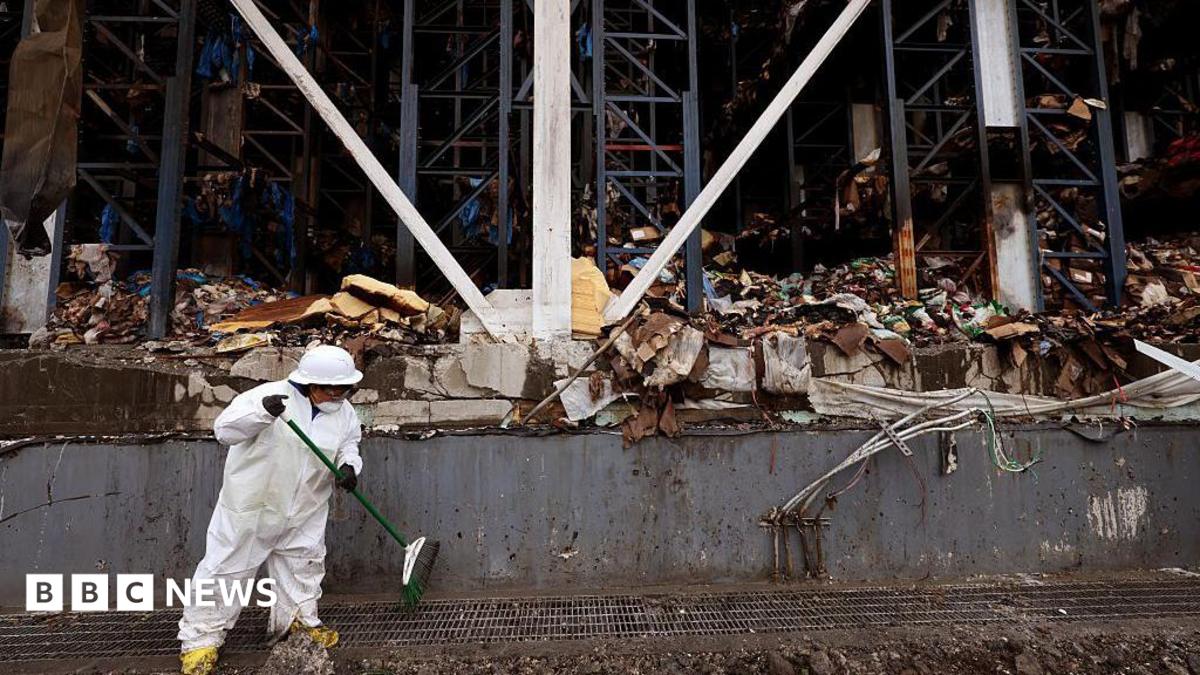
Residents of Boyle Heights in Los Angeles are suffering from the unbearable stench of rotting food left after a warehouse fire. This was reported by Qazaqyia.kz citing BBC News.
The fire on 17 June destroyed a large cold-storage warehouse, leaving behind some 85 million lb (39 million kg) of rotting food, including beef, pork, poultry and seafood. Nearly two months later, residents say the clean-up has taken longer than expected, and they are frustrated with the pungent odour hovering over the area.
Mesha, a 37-year-old security guard, says: "It smells really bad, like really bad ... to the point that you want to throw up. It's like a dead body."
Lineage, the company that operated the warehouse, said that as of Monday about 80% of the food waste had been removed. But city officials said this week that the company's response "has fallen short", and that they have issued public health and safety violation notices.
Alexis Sicairos, 30, who runs a coffee stand, says: "It's been tough. We shut down for two weeks because of the fire, but now demand isn't the same. Flies have been swarming relentlessly, and the warehouse workers who used to buy coffee haven't been showing up. We lost those customers, but we also lost customers that don't want to be around the smell, the smoke, the flies. It's understandable. But we have to keep paying our bills, so we're still here."
A city-commissioned inspection report found that waste and high temperatures at the warehouse could speed up the breeding of flies capable of infecting wounds in both people and animals, a local NBC affiliate reported. The report from a pest control company said it could put people and animals with open wounds at risk of contracting disease.
People in the community have also reported seeing large rats, and they say traps placed along sidewalks aren't big enough to hold them. Many residents blame the city for what they deem an inadequate response to the fire and a lack of transparency and resources.
Los Angeles Mayor Karen Bass told the BBC: "I understand why residents are frustrated. They deserve transparency, clear communication, and meaningful support. Since day one, I have been in Boyle Heights listening to residents, meeting with families, and making sure their voices guide our response."
The mayor has directed city departments to work with local, state, federal, nonprofit and community partners to deliver immediate support and solutions. She has also issued executive orders to mobilise resources and speed up the cleaning process. The city says they and other local partners have brought mobile health clinics to the neighbourhood and delivered thousands of air purifiers.
Late last month, the county's public health department fined Lineage for "unsanitary and nuisance" conditions with $500-a-day citations. The mayor has given Lineage a 13 August deadline to complete the cleanup. The company said on Monday they are 80% of the way there - up from 60% on July 31.
A Lineage spokesperson told the BBC: "Our goal is to complete bulk food waste removal from the site next week. We expect to spend between $80 million to $100 million on the cleanup."
In a letter shared on Tuesday, Bass said the company's response "has fallen short". She wrote to Lineage shareholders: "Residents, public agencies, and elected officials have repeatedly sought timely information regarding the cleanup, remediation, environmental monitoring, and recovery. Too often, those requests have been met with delayed communication, limited transparency, and insufficient public engagement."